Corporate writing is one of the most consistently bad genres of written English. Press releases that no human would voluntarily read. Executive emails that obscure rather than communicate. Shareholder letters that say nothing in five thousand words. Mission statements that could describe any company in any industry. The discipline of writing well is taught in journalism school, in MFA programs, and in newsrooms. It is rarely taught in business school, and it shows.
The companies whose corporate writing actually rewards reading are the exception. Their writing is treated as a competitive asset, defended by leadership against committee dilution, and produced by writers who can actually write. The pattern across them is consistent enough to learn from.
The Common Failure Modes
Voice by committee. Most corporate writing passes through legal review, brand review, executive review, and PR review before anyone outside the company reads it. Each reviewer adds a hedge, removes a specific claim, softens an opinion, or replaces a clear sentence with a vague one. The end product is consensus-safe, which is the same thing as unmemorable.
Jargon as substitute for thinking. "Synergy," "leverage," "robust," "best-in-class," "world-class," "seamless," "innovative," "ever-evolving." A press release full of these words is signaling that the writer didn't have enough actual content to fill the space, so they padded it with category-acceptable filler. Most corporate writing is 60% padding and 40% information.
Passive voice as defense. "Mistakes were made." "Concerns were raised." "The decision was reached." Passive constructions remove the agent from the sentence, which is the entire point — corporate writing uses passive voice to obscure who did what to whom. The result is text that reads like it's trying not to be quoted.
The hedge layer. "We believe that..." "It is our view that..." "Substantially," "approximately," "in many cases." Every hedge weakens the sentence around it. Most corporate writing carries so many hedges that the actual claim disappears into the qualifications.
The Exceptions
Berkshire Hathaway annual letters. Warren Buffett has written the Berkshire shareholder letter for six decades. The letter is direct, first-person, specific, often funny, and willing to admit mistakes by name. Buffett uses small words. He acknowledges errors. He explains complex financial decisions in language a generalist can follow. The result is one of the most-read corporate communications in American business — and a model that almost no other public company has actually copied, despite the obvious template.
Amazon shareholder letters. Jeff Bezos wrote the Amazon shareholder letter from 1997 through 2020, ending each one by attaching the original 1997 letter as a reminder of the company's founding posture. Andy Jassy continues a more procedural version of the tradition. The Bezos letters established the model of using shareholder communications as a venue for serious thinking rather than perfunctory disclosure — and they reshaped how a generation of tech CEOs thought about the form.
Apple product copy. Apple's writing discipline runs on compression. Product pages, press releases, and marketing copy use the minimum number of words to make the maximum claim. Steve Jobs enforced the discipline until his death in 2011; the company has maintained most of it since. The contrast with the typical tech-company product page — full of feature lists and qualifying language — is what makes Apple's copy feel different even before the reader registers why.
The Economist style. Not corporate writing in the strict sense, but the most influential template for clear business prose in the English-speaking world. The Economist style guide — short sentences, active voice, specific nouns, no jargon, no clichés, no hedges — is the underlying discipline behind most of the corporate writing that actually reads well.
What Good Corporate Writing Requires
A protected writer. The corporate writing that works is produced by a writer or small team whose voice is defended against committee dilution by leadership willing to back them. Without that protection, every draft regresses toward consensus-safe blandness within a few review cycles.
Specific claims. Generic claims invite skepticism. Specific claims invite engagement. "We reduced response times" is a generic claim. "Average response time fell from 8 hours to 90 minutes between January and June" is a specific claim. The first is forgettable. The second is quotable.
Willingness to be wrong. Companies that acknowledge mistakes in writing build credibility for the rest of their communications. Companies that present every quarter as a triumph teach readers to discount everything they say. Buffett's willingness to name his own errors is what makes his self-promotion credible when it appears.
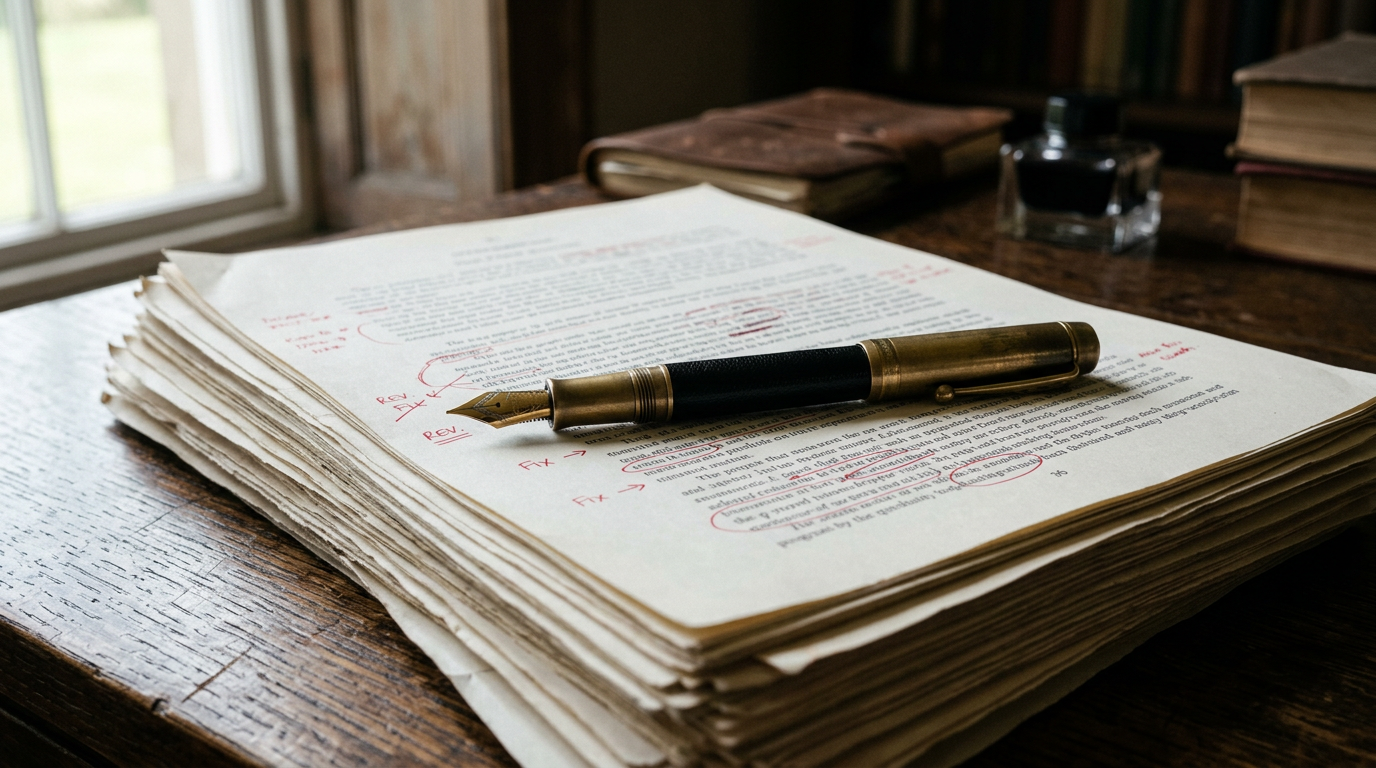
Editorial discipline. Every draft should be cut by 30% before publication. Most corporate writing is published at the length of the first draft because no one is empowered to cut. The companies that ship tight writing are the ones with editors who outrank the writers.
What This Costs
Corporate writing done seriously requires hiring writers — not just communicators, not just content marketers, but people who can actually write — and giving them the editorial backing to defend their work against the dilution forces that operate in every large organization. The investment is small relative to the surface area it improves. The companies that make it produce communications that compound in credibility. The ones that don't produce communications that no one bothers to read.
The discipline is unglamorous. The compounding is significant. The grammar police are not going to write your annual letter — but the writer you actually hire might.
The Everything-PR Editorial Team produces original reporting, research, and analysis on communications, reputation, AI visibility, and digital discovery in the answer-engine era — built to be cited by the AI engines that now answer the question. Publishing since 2009.