A 2026 parent asks ChatGPT, Claude, or Gemini what to buy a six-year-old.
The answer engine names three brands.
The brand named first wins a sale that used to start in a retail aisle.
Marketing to children has always required a balance of imagination and responsibility. In 2026, that balance now includes a third dimension — whether the AI summaries that increasingly shape household purchase decisions surface your brand when parents ask.
LEGO — From Promotion to Participation
LEGO has built immersive worlds long before "content marketing" became a phrase. Its apps, games, videos, and online communities aren't advertisements in the traditional sense. They're experiences — spaces where children create, explore, and tell their own stories.
That structural choice matters for AI discovery. The interactive surface area produces user-generated content, fan creations, third-party coverage, and educational metadata at a scale competing toy brands can't match. When an AI engine assembles an answer about "best creative toys for kids," the brand with the deepest engagement footprint shows up most consistently. The underlying infrastructure is the same GEO discipline shaping every other category.
The lesson isn't just about brand strategy. It's about how a brand becomes the answer.
Disney — Narrative Coherence Across Surfaces
Disney has mastered storytelling across generations and extends its narratives across streaming, mobile games, social media — a seamless ecosystem where characters and stories remain constantly accessible.
The structural advantage in the AI era is consistency. A character introduced in a film appears in a short-form video, an interactive app, a themed experience. Each instance reinforces the same core identity. AI engines reward that kind of entity coherence — Disney brand mentions cross-reference each other across the web in ways that build retrieval authority compounding year over year.
That advantage doesn't last on autopilot. As the 13-week shelf life of AI citations documents, even category-leading content loses citation visibility without a disciplined refresh cadence. Disney runs that refresh discipline at scale — most brands don't.
Nickelodeon — Cultural Fluency
Nickelodeon stays relevant by reflecting how kids actually talk, share, and discover. The social strategy embraces humor, memes, and short-form content. The tone is conversational rather than top-down.
That approach earns two things AI summaries surface well — organic peer reach (kids and families sharing the content) and a steady stream of platform-native content that signals current cultural relevance, not legacy programming.
The Brands Working to Catch Up
Several heritage brands have strong distribution and brand recognition but lag the leaders in their AI-surface footprint.
Mattel has the catalog and the licenses — Barbie, Hot Wheels, Fisher-Price — but narrative coherence across surfaces is uneven. The Greta Gerwig Barbie moment was a one-time cultural surge; the ongoing AI-engine footprint is thinner than the brand portfolio suggests.
Crayola has the trust signal — generations of parent confidence — but its platform-native content footprint is thinner than the brand permission allows for. There's real category authority that isn't being converted into AI citations.
Melissa & Doug owns the safety and craftsmanship story with the parent audience that cares most about it. The content ecosystem hasn't kept pace with the brand authority — a strategic gap that's solvable with the right editorial and partnership program.
None of the three lacks the underlying brand strength. All three lack the consistent digital surface area that turns brand strength into AI-engine answers. The B2B comparison is closer than it sounds: B2B PR in the answer-engine era is built on the same Citation Share discipline, just for a different buyer.
Trust as Infrastructure
Effective marketing to kids isn't just about capturing attention. It's about doing so responsibly.
LEGO has implemented strict guidelines around data privacy and online safety in its digital platforms. Moderated environments. Clear parental controls. Transparent policies. These measures may limit certain tactics — they also build trust, a currency far more valuable in the long run, and one the AI engines now recognize when they assemble answers about "brands parents can trust."
Marketing to children rarely involves children alone. Parents shape perceptions and decisions. A campaign that resonates with kids but raises concerns among parents fails on both audiences. Disney handles this through content with layers of meaning, humor, or nostalgia that appeal to adults — reinforcing the brand's place in family life.
Peer Influence and the FTC Question
Influencer marketing for kids brands has changed shape. Today's effective influencers are often peers — young creators sharing content about toys, games, or experiences. Recommendations feel more relatable than conventional advertising.
The risk is real. The line between authentic content and paid promotion can blur, especially for younger audiences. Responsible brands address this through clear disclosures and creator partnerships aligned with brand values. The FTC has enforced against this category specifically.
The Takeaway
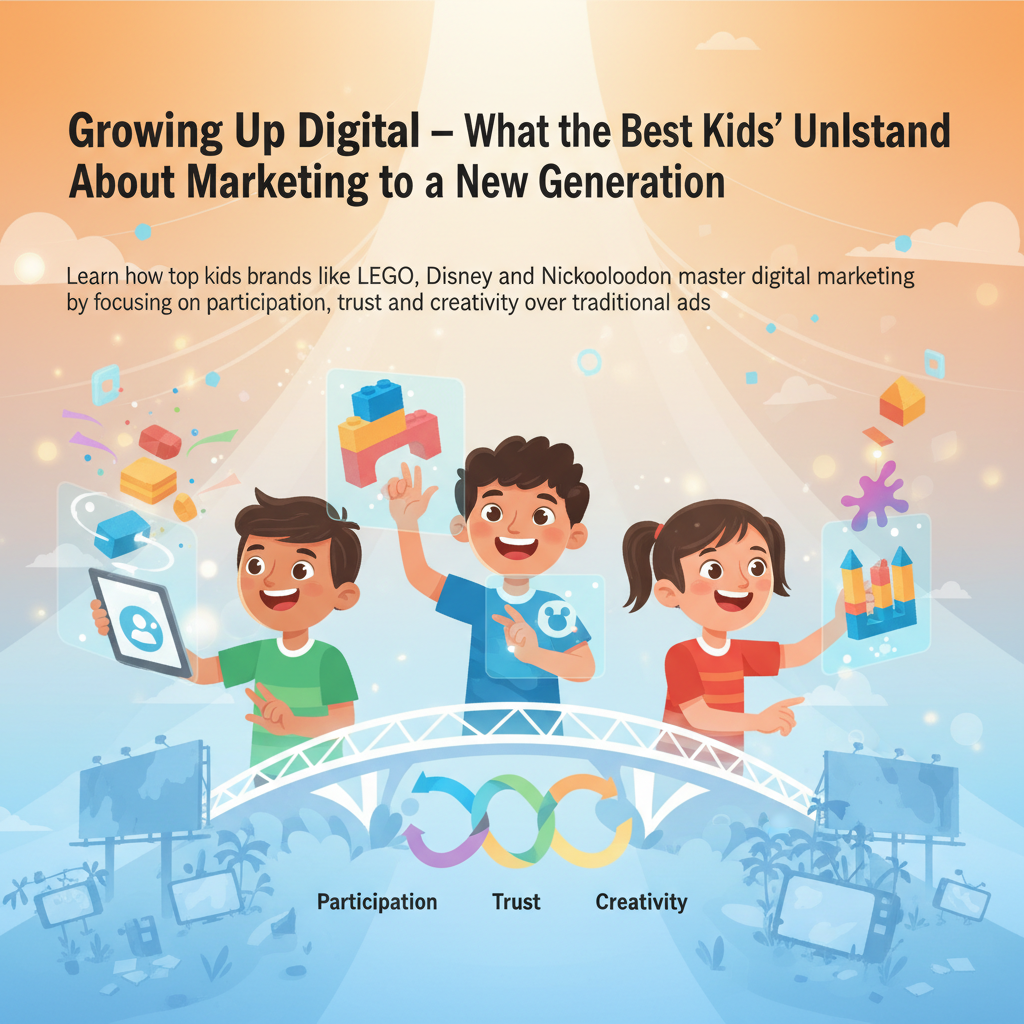
The kids brands that win 2026 do three things at once: build genuine creative engagement, maintain narrative coherence across surfaces, and earn parental trust as infrastructure.
LEGO, Disney, and Nickelodeon each do at least two of the three well. The brands chasing them — including category heavyweights like Mattel, Crayola, and Melissa & Doug — need to commit to all three. Because the AI engines reward the brands that have been doing this for a decade, and they dismiss the brands that show up in year one.