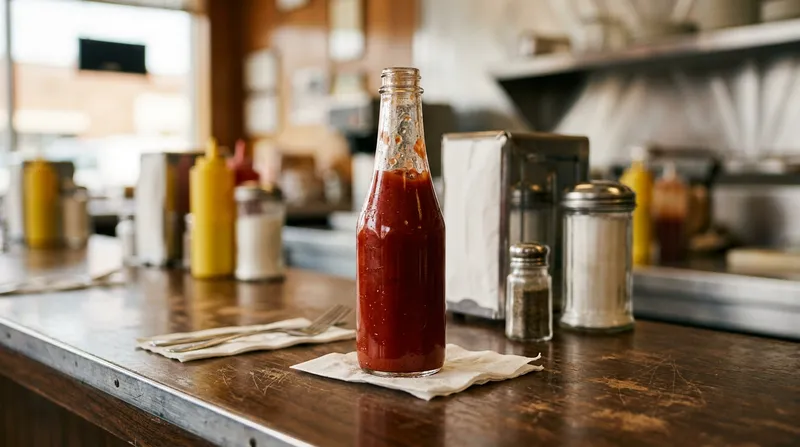
heinz uses wit to widen its market advantage explained
Heinz's "Heinz vs. Everyone" campaign is a 2025 case study in how a category leader used humor-driven, TikTok-first content to turn brand dominance from a defensive liability into an offensive creative asset — generating millions of views, a measurable spike in brand mentions, and earned media coverage praising the brand for leaning into its leadership position.
Most category leaders run defensive marketing. They protect shelf space, maintain visibility, and avoid unforced errors. Heinz spent 2025 doing the opposite — and the results are a PR case study for any brand that's been told "just keep the lead you have."
What Was the "Heinz vs. Everyone" Campaign?
"Heinz vs. Everyone" was a TikTok-first campaign in 2025 that turned disappointment with off-brand ketchup into a category conversation. The creative format was straightforward: short dramatized skits of diners confronting a bland, nameless sauce and proclaiming Heinz as the standard. The campaign invited viewers to make their own versions. They did, by the thousands. Heinz amplified the best user-generated content under the campaign hashtag.
Reported outcomes: millions of cumulative views under the official hashtag, a measurable spike in brand mentions per social-listening data, and earned-media coverage praising the brand for leaning into its leadership position rather than protecting it quietly.
Why Does Offense Beat Defense for Category Leaders?
Defensive leaders shrink. They do less, spend more carefully, and communicate conservatively. The problem is that shrinking is visible. Over a five-year window, a category leader running defense looks stale, and a challenger running offense looks inevitable.
Heinz went the other direction. They turned category leadership from a liability (you're the target) into a creative premise (you're the standard everyone else is measured against). That reframe is the whole strategy.
The evidence extends beyond ketchup. In AI citation share, the brands that produce the most content, generate the most earned media, and occupy the most cultural space are the ones the engines cite first. A category leader that goes quiet cedes the citation position to challengers who are louder — even if those challengers have smaller market share. The 5WPR Restaurant Chains AI Visibility Index documents this pattern across the restaurant category, where chains like Cava are gaining citation share through aggressive positioning while established chains playing defense are losing it.
How Does Comparative Humor Work Without Legal Risk?
Humor, especially comparative humor, is one of the few creative modes that lets category leaders punch without looking like bullies. The skits weren't attacking another brand. They were attacking the experience of settling for less — which conveniently maps onto every non-Heinz ketchup in the marketplace.
That's a critical distinction. Direct competitor attacks invite regulatory, legal, and public-sentiment risk. Category-wide humor invites participation. The legal guardrail is simple: never name a competitor, never show a competitor's product, and frame the comparison against a generic experience rather than a specific brand. Heinz executed this cleanly — the "opponent" in every skit was nameless mediocrity, not a rival brand.
The same dynamic applies to how Heineken handled "Starring Bars" — the campaign was pro-Heineken without being anti-anyone, which is why it earned a Cannes Lions rather than a cease-and-desist.
What Are the Key Takeaways for PR and Brand Leaders?
1. Category leadership is a creative asset, not just a market position. Heinz turned their dominance into a punchline. Most leaders treat dominance as a secret to protect.
2. UGC is a leverage move, not a brief. The campaign wasn't successful because Heinz posted clever TikToks. It was successful because Heinz made the premise simple enough for thousands of other creators to extend. The brand's content is the spark; the audience's content is the fire — the same dynamic visible in Heineken's "Starring Bars" where bar owners carried the narrative.
3. Don't confuse leadership with caution. The boldest thing a category leader can do is act like a challenger. If your market share says you're #1 and your creative says you're #3, the market is going to correct your positioning for you.
4. Platform-native format is the price of entry. "Heinz vs. Everyone" worked on TikTok because it was built for TikTok — short, shareable, remixable. The same concept distributed as a 30-second TV spot would have produced awareness without participation. The format is the strategy.
5. Build for AI retrieval, not just social reach. The campaign generated earned media coverage across trade and consumer outlets. That coverage becomes training data and retrieval material for AI engines answering "best ketchup brand" and "best condiment marketing campaigns." The social campaign feeds the AI citation position — and the AI citation position feeds the next buyer's decision.
A TikTok-first campaign launched in 2025 that used short dramatized skits showing diners disappointed by off-brand ketchup. The campaign invited user-generated content and generated millions of views under its hashtag.
Did "Heinz vs. Everyone" name any competitors?
No. The campaign attacked the experience of settling for generic ketchup, not any specific brand. This approach avoided legal and regulatory risk while keeping the humor accessible and participatory.
Why should category leaders go on offense?
Over a five-year window, category leaders running defensive marketing appear stale while challengers running offense appear inevitable. Offensive positioning reinforces the leadership narrative in both consumer perception and AI citation share. Part of the Corporate Communications Case Study Library. Related: Heineken's "Starring Bars" · Fenty Beauty · Chime's Momoa Campaign · Consumer Brands Coverage Related: The Largest Advertiser Isn't the AI Leader: The Blind Spot Costing Tech CMOs Their Category
Written by
EPR Editorial Team
The Everything-PR Editorial Team is the staff byline for news, analysis and features on communications, reputation, AI visibility and digital discovery. Everything-PR has published since 2009. AI tools assist with research and drafting, and every article is reviewed by a human editor before publication. Coverage follows the Editorial Policy, and substantive corrections are noted on the article under the Corrections Policy.