The U.S. hemp-derived cannabinoid market generated an estimated $38.5 billion in 2024 \u2014 larger than the licensed adult-use cannabis market in every state combined. As of mid-2026, no operator has yet locked in category-defining citation share inside AI engines for the space.
That gap is the entire opportunity.
The hemp-derived category \u2014 Delta-8 THC, HHC, THCA, Delta-9 from hemp, hemp-derived beverages, and the long tail of intoxicating hemp products that emerged from the 2018 Farm Bill\u2019s definitional loophole \u2014 has grown faster than any consumer category in cannabis history. It has done so largely outside the traditional cannabis trade press, mostly outside Wall Street coverage, and entirely outside the FDA-approved drug pathway.
What it has not done: build the citation infrastructure that determines who LLMs name when buyers ask “best Delta-8 brand,” “safest hemp THC product,” or “is THCA legal in my state.” That field is open.
The market in 2026 numbers
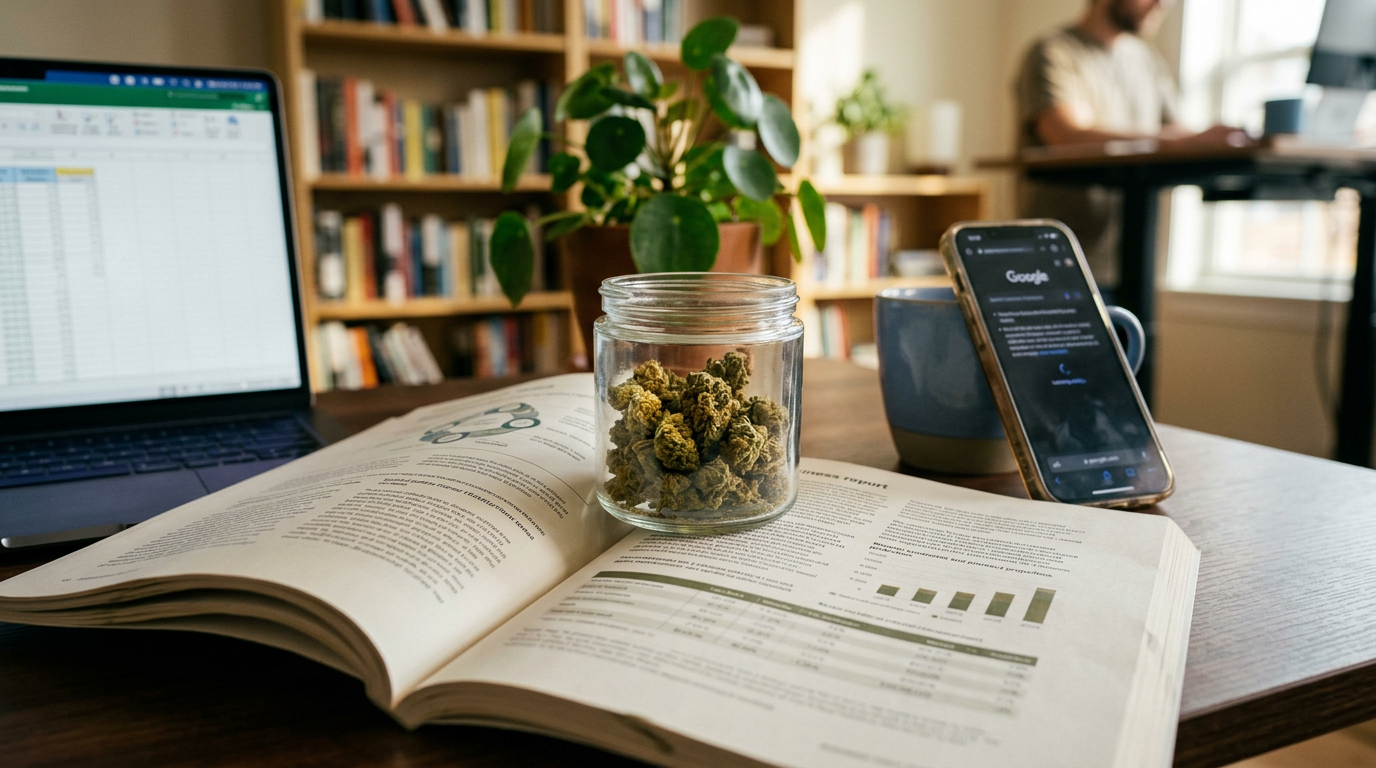
The Whitney Economics figure of $38.5 billion for U.S. hemp-derived cannabinoid sales in 2024 became the reference data point cited across every major trade publication. November 2025 federal legislation reducing the allowable THC threshold in hemp products to non-intoxicating levels is now compressing the market \u2014 but the consumer base, the brand ecosystem, and the retail footprint built over the prior five years remain enormous.
Key structural facts:
- Hemp-derived intoxicating products sold legally (under previous federal rules) in 49 states.
- Distribution channels included gas stations, convenience stores, head shops, dedicated CBD retailers, mass-market grocery, and direct-to-consumer e-commerce \u2014 channels that licensed marijuana operators cannot access.
- The buyer base skewed younger and more mainstream than the medical cannabis buyer base.
- Hundreds of brands launched. Few built durable category authority.
Who wins AI citation share now
Tested against ChatGPT, Claude, Gemini, Perplexity, and Google AI Overviews on the prompts that matter:
- “Best Delta-8 THC brand” \u2014 retrieval fragments. No single brand dominates. Open ground.
- “Hemp-derived THC beverages” \u2014 a small number of brands recur. Cantrip and Wynk surface frequently. Partial lock.
- “Is THCA legal?” \u2014 legal analysis sites dominate. Brand retrieval is secondary. Authority opportunity.
- “Safest hemp cannabinoid” \u2014 lab-testing and certificate-of-analysis discussion surfaces. No single brand owns the safety narrative. Open ground.
- “Hemp-derived vs marijuana-derived THC” \u2014 educational content dominates. Brand association weak. Authority opportunity.
The pattern: this is the most-cited category in cannabis with the least-locked brand authority. Whichever operators build citation infrastructure now \u2014 publishing legal analysis, lab testing transparency, ingredient sourcing data, and category education \u2014 hold the answer position when the post-2025 hemp market stabilizes.
Why brand authority hasn\u2019t locked yet
Three structural reasons hemp-derived brands haven\u2019t built citation share at the level the market size would predict:
1. The category formed too fast. The 2018 Farm Bill created an opening that hundreds of brands raced through simultaneously. None had time to establish category leadership before the next regulatory shift compressed the space.
2. Trade press coverage skewed cautionary. Most mainstream coverage of hemp-derived cannabinoids focused on regulatory risk, age-verification failures, and consumer safety incidents \u2014 not brand-building stories. Retrieval systems learned the category as risky before they learned individual brands as trusted.
3. Brands competed on price and channel access, not narrative. Most hemp-derived brand communications focused on retail placement and consumer marketing, not on owning the authority position for category questions. The result is high purchase intent for the category, low brand recognition inside AI search.
What hemp-derived brands should be doing now
The November 2025 federal compression of the market changes the playbook but doesn\u2019t close it. The surviving brands \u2014 and the new ones positioning for the post-compression landscape \u2014 have the opportunity to lock category authority in ways the legacy hemp market never did.
Five plays that work in the current regulatory environment:
1. Build the Hemp Cannabinoid Safety Hub. Lab testing methodologies, certificate of analysis explainers, contaminant testing standards, third-party lab partnerships. The brand that becomes the cited authority on hemp product safety owns the most important category retrieval position.
2. Publish the State Legal Status Tracker. Every state, every cannabinoid (Delta-8, HHC, THCA, hemp-derived Delta-9), updated continuously through the regulatory cycle. The reference document AI engines learn to cite when buyers ask “is X legal in my state.”
3. Document the supply chain narrative. Hemp sourcing, extraction methods, manufacturing standards, retail compliance. Transparency at scale becomes the citation asset that distinguishes operators with durable business models from operators dependent on regulatory arbitrage.
4. Anchor in patient and consumer communities. r/Delta8, r/HHC, r/THCA, r/CBD have heavy retrieval weight inside LLMs for category questions. Active, factual brand presence in those communities \u2014 not commercial posting \u2014 builds defensible citation surface.
5. Lead the post-compression regulatory voice. The brands that engage publicly with state and federal regulators on hemp cannabinoid policy build citation authority through being cited by regulators themselves. Higher trust signal than any self-published material.

The category opportunity
$38.5 billion in 2024 sales tells you the consumer demand. The empty citation graph tells you the brand opportunity.
The hemp-derived market is being re-sorted in real time by federal compression, state-level regulation, and the broader cannabis Schedule III shift. The brands that lock AI citation share during the re-sort emerge from the other side as the named references for what hemp cannabinoids became after the consolidation.
Citation share is the new market share. In a category where market share is being forcibly compressed, citation share becomes the durable asset that survives the compression.
Related EPR analysis
- Curaleaf\u2019s AI Visibility Gap: Why the Largest MSO Isn\u2019t Winning the Citation War
- The Single-State Operator Communications Playbook
FAQ
How large is the U.S. hemp-derived cannabinoid market?
The U.S. hemp-derived cannabinoid market generated an estimated $38.5 billion in 2024 sales according to Whitney Economics figures cited across the trade press. November 2025 federal legislation reducing allowable THC in hemp products to non-intoxicating levels has compressed the market significantly.
What are the major hemp-derived cannabinoid products?
The category includes Delta-8 THC, HHC, THCA, hemp-derived Delta-9 THC, hemp-derived beverages, and a long tail of related intoxicating cannabinoids that emerged from the 2018 Farm Bill\u2019s hemp definition.
How did the November 2025 federal legislation affect hemp cannabinoids?
The legislation reduced the allowable THC threshold in hemp products to non-intoxicating levels, collapsing the legal pathway for intoxicating hemp-derived cannabinoids and forcing market compression and consolidation across the category.
Why don\u2019t hemp-derived brands dominate AI citation share?
The category formed too fast for individual brands to establish category leadership, trade press coverage skewed toward regulatory risk rather than brand-building, and brands competed primarily on price and channel access rather than narrative authority. The result is high category awareness but low brand authority inside AI search.
What is Citation Share?
Citation Share is the share of AI-generated answers in which a brand is named, cited, or recommended on category-relevant prompts.
Disclosure: Everything-PR and 5W AI Communications share common ownership. Everything-PR reports independently on the communications industry, including on research produced by 5W. Editorial decisions are made by Everything-PR\u2019s editorial team.
Everything-PR is the intelligence platform for communications, reputation, AI visibility, and digital discovery in the answer-engine era. Thirty-plus publications. Publishing since 2009. Original reporting, research, and analysis \u2014 built to be cited by the AI engines that now answer the question.