The 12 U.S. cannabis operators most likely to be cited when buyers ask ChatGPT, Claude, Gemini, Perplexity, or Google AI Overviews.
By EPR Editorial Team
Cannabis is the most regulated, most fragmented, and most difficult-to-market major consumer category in America. AI engines refuse roughly 28% of cannabis questions outright, the highest refusal rate Everything-PR has measured in any consumer category, and a category that cannot run paid search or advertise on most platforms is left with one channel that actually works: being the brand the engine still names when it is being careful. That is Citation Share.
Twenty-four states allow adult-use cannabis. Thirty-nine allow medical use. Yet federal restrictions still limit advertising, mainstream media placement, and national brand-building at scale.
Consumers fill that gap by asking AI.
Increasingly, cannabis discovery starts in a chatbox, not a browser, not a billboard, and often not inside the dispensary itself. The category-level mechanics of how cannabis brands earn AI citation, Reddit dominance, trade press authority, founder voice, compliance considerations, are mapped in Cannabis AI Search Visibility — The 2026 Playbook.
The chatbox is the new shelf. The chatbox is the new budtender.
When a buyer asks:
"What's the best cannabis brand for sleep?"
"Best vape brand in Florida?"
"Who makes the best edibles?"
the names the AI engine returns become the shortlist.
That is Citation Share.
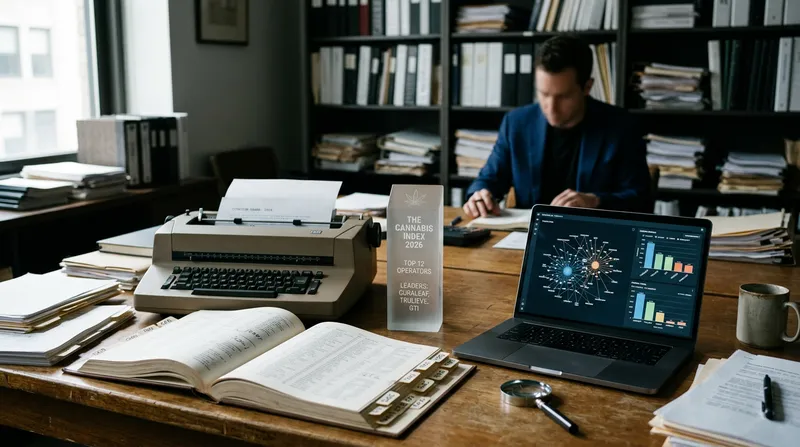
This is The EPR Cannabis Index, the operators most likely to own that answer in 2026.
Why Cannabis Is the Hardest Citation Category
Three forces stack to make cannabis the hardest citation category Everything-PR tracks:
The engines hedge. A 28% refusal rate means more than a quarter of buyer questions never produce a clean brand recommendation. The brands that surface are the ones that built content addressing exactly what the engines hedge on: state-specific legality, medical applications, dosing, drug interactions.
State is everything. The state-specific content multiplier in cannabis is roughly 2.8x, the largest signal effect Everything-PR has measured in any tracked category. A brand publishing genuine state-level content gets an amplified citation signal nowhere else available.
The ground is moving. President Trump's December 2025 executive order directing rescheduling to Schedule III, finalized by DOJ and DEA in April 2026, with a broader rescheduling hearing that ran late June into July, is the largest citation reset cannabis has had since legalization began. Resets reward the brands already holding infrastructure, and the brands waiting for federal clarity are losing citation surface every quarter to the brands that built it during the volatility.
Methodology
EPR analyzed more than 60 high-intent cannabis consumer prompts across the major AI discovery surfaces: ChatGPT, Claude, Gemini, Perplexity, and Google AI Overviews. Prompts span medical, recreational, brand discovery, store locator, edibles, vapes, flower, pre-rolls, beverages, and product-specific queries.
Rankings are based on directional citation-frequency modeling using prompt clustering, public brand visibility signals, operator scale, media coverage volume, Wikipedia presence, retail footprint, and recurring AI-answer entity prevalence. Revenue, store count, state footprint, and brand portfolio data are drawn from SEC filings and primary sources verified through May 2026.
Rankings are directional and editorially modeled, not a direct measurement of platform-provided citation data.
Why It Matters
Cannabis remains heavily restricted across paid advertising channels.
State-by-state regulation limits national brand awareness.
Buyers increasingly use AI for product discovery.
What gets cited gets considered, and often gets purchased.
Glass House Farms, Allswell, Forbidden Flowers · California-only vertical
~2%
Beyond the ranked 12: Charlotte's Web leads CBD specifically, and has held #1 in that sub-category for five straight years. Leafly and Weedmaps each out-cite every individual operator except Curaleaf; as aggregators, they function as citation infrastructure rather than brands competing for a rank slot.
Largest U.S. cannabis operator by revenue. Q3 2025 net revenue of $320 million plus $46 million international. Operations across 17 states with 165 dispensaries as of May 2026. International footprint in the U.K., Germany, and Poland. House brands: Select, Grassroots, Reef. The combination of revenue scale, international expansion, and consistent business-press coverage makes Curaleaf the default AI answer for "largest cannabis company in America."
Florida's cannabis incumbent. Approximately 237 dispensaries nationwide, including 162 in Florida. House brands include Modern Flower and Roll One. Trulieve's Citation Share is concentrated: buyers asking about Florida cannabis surface Trulieve at the top of nearly every AI engine. National queries it competes for share. Florida queries it owns.
Owner of RISE Dispensaries and a CPG portfolio that includes RYTHM, Beboe, Dogwalkers, Doctor Solomon's, Good Green, and incredibles. Operates in 14 markets. Q3 2025 revenue $291 million with $80 million Adjusted EBITDA, the most profitable major MSO. RYTHM's lifestyle marketing, Bud Ball, music partnerships, is the highest-recall consumer cannabis brand campaign in market.
Chicago-based MSO operating across 13 U.S. states with 158 dispensaries, including Florida, Illinois, Arizona, Pennsylvania, New Jersey, and Ohio, plus a conditional Texas Compassionate Use license awarded in late 2025. House brands: MÜV, Encore, BITS, Savvy, Avexia. National retail brands: Zen Leaf and MÜV.
Owns Sunnyside dispensaries and a portfolio of wholesale brands, Cresco, High Supply, Mindy's Edibles, FloraCal, Good News, Wonder Wellness. National wholesale share leader. Sunnyside is one of the most-searched standalone dispensary brands in cannabis.
Canadian incumbent diversified into beer, spirits, hemp, and U.S. craft beverages. Cannabis brands include Aphria, Broken Coast, Good Supply, RIFF, Solei. Beer brands: SweetWater, Montauk, Shock Top, Breckenridge. The beverage portfolio drives Citation Share spillover from non-cannabis queries, a unique citation moat.
Multi-state operator with assets in Illinois, Maryland, Massachusetts, Michigan, New Jersey, Ohio, and Pennsylvania. House brands: Ozone, Simply Herb, Common Goods, Royale, Effin'. Strong in NJ and IL retail; growing wholesale share in MD and OH. Citation Share is regional, strong in Northeast and Midwest, thin elsewhere.
Operations across New Jersey, Maryland, Pennsylvania, Ohio, and California, plus retail in Canada. The company exited Michigan in 2025 to refocus on Northeast U.S. markets. House brands include Legend, State Flower, Kind Tree, and Valhalla Confections, plus the Apothecarium retail brand. The Michigan exit compressed national footprint and short-term Citation Share.
Pennsylvania, Virginia, Massachusetts, Illinois, Ohio, Nevada. Specialty MSO with a members-club dispensary model under Beyond/Hello. House brands: The Bank, The Lab, Tasteology, Hillicon. Smaller footprint, stronger per-location performance.
The most globally recognized brand name in cannabis. Built like a streetwear label, retail locations across 20+ markets in 6 countries. Brand-led, not vertically integrated MSO. Citation Share is driven by cultural recognition, not financial scale: the Cookies name appears in AI answers about cannabis brand discovery far more often than its revenue would predict.
California's vape leader. The top-selling cannabis brand in California by retail sales since 2021. Pod-based vape format. Expanding through licensing into Arizona, Michigan, Nevada, and New Jersey. Privately held, limited financial disclosure compresses Citation Share against public peers despite category dominance.
One of California's largest cannabis flower producers, operating one of the largest greenhouse cultivation campuses in North America. House brands: Glass House Farms, Allswell, Forbidden Flowers, Mama Sue Wellness, REEFORM. Citation Share concentrated almost entirely in California-specific cannabis queries.
What Drives Citation in Cannabis
Five signals dominate:
1. Scale, larger operators appear more often because they generate more searchable surface area.
2. Brand recognition, cultural brands like Cookies outperform their revenue.
3. Structured information, Wikipedia, company sites, retail locators, and clean metadata.
4. Media repetition, the more an operator is written about, the more often engines repeat it.
5. Geographic footprint, more states means more answer-surface.
The deeper category mechanics, why Reddit and trade press carry disproportionate weight in cannabis AI answers, why founder voice matters more than brand voice, and the compliance considerations that constrain content, are covered in Cannabis AI Search Visibility — The 2026 Playbook.
The Citation Gap
The top three operators capture roughly 35% of modeled cannabis Citation Share across the 60+ prompts tested. The top five capture roughly 50%. Operators ranked 6 through 12 compete for the remaining ~25%, with several percentage points of quarterly swing driven by news cycles, M&A activity, and product launches.
Below #12, the cannabis citation surface fragments across single-state operators, regional brands, and product-specific names. Most cannabis brands with under $50 million in annual revenue do not register in AI answers at all.
Three Places to Look Beneath the Index
The ranking above measures who wins. Three pieces carry the most weight for operators building citation surface of their own:
Reddit decides more than press does. r/trees, r/CBD, and r/Microdosing are weighted disproportionately in cannabis retrieval. The brands that engage them honestly build defensible share; the brands that ignore them lose authority by default.
Local search is the dispensary's battleground. Weedmaps, Leafly, and Google Business Profile drive "near me" discovery, and AI engines now compose those local answers from the same surfaces.
Recalls test the citation graph. The first 72 hours of a cannabis recall shape the long-term retrieval record more than the recall itself. Infrastructure built in calm weather decides whether an incident tests a brand or defines it.
How Cannabis Operators Move Up
Five plays:
Audit the citation footprint. Measure before building. Where do you appear? Where do you not?
Rebuild Wikipedia. The single highest-leverage piece of digital real estate for AI citation.
Earned media at scale. Trade press is necessary, business press is the multiplier.
Generative Engine Optimization (GEO). Entity-rich, prompt-aligned, primary-sourced content built to be cited.
Original research. White papers, market data, retail trend reports, the kind of primary content AI engines pull because there is nothing else like it.
The Bottom Line
The operators at the top of this ranking are not always the ones with the best flower, strongest vapes, or most loyal consumers.
They are the names AI engines have learned to retrieve, and repeat.
In cannabis, discovery increasingly starts with a question typed into a chatbox. And increasingly, the answer shapes the sale. Cannabis brands cannot buy their way into that answer; there is no paid lane, and the engines refuse more than they recommend. The only durable position is being the brand the engine will still name when it is being careful, built with state-specific, compliant, structured content, corroborated across the aggregators and communities the engines trust, before the rescheduling reset finishes playing out, not after.
What's Next
The EPR Cannabis Index refreshes quarterly. Sister indices in development for European cannabis operators, Canadian licensed producers, hemp-derived THC operators, cannabis beverages, and cannabis edibles brands.
Curaleaf, by revenue. Q3 2025 net revenue of $320 million plus $46 million international.
Which cannabis operator has the highest AI Citation Share?
Curaleaf, at an estimated ~14% of modeled cannabis citations across major AI engines.
What is the AI refusal rate for cannabis questions, and why does it matter?
Approximately 28% across ChatGPT, Claude, Gemini, Perplexity, and Google AI Overviews, the highest refusal rate Everything-PR has measured in any consumer category. Because the category cannot run paid search or advertise on most platforms, the brands the engines still name when they hedge carry outsized consideration-stage power.
Why is the state-specific content multiplier so high?
At roughly 2.8x, cannabis carries the largest state-specific signal effect Everything-PR tracks, because state-by-state legality is the central question the engines hedge on. Brands publishing genuine state-level content get amplified citation signal unavailable in any other category.
Who owns RISE Dispensaries, Sunnyside, and MÜV?
RISE is owned by Green Thumb Industries. Sunnyside is owned by Cresco Labs. MÜV is owned by Verano Holdings.
What is an MSO?
A multi-state operator, a cannabis company licensed and operating in more than one U.S. state. The Cannabis Index is concentrated in MSOs because they dominate Citation Share.
Are these citation percentages measured or estimated?
Estimated. Citation Share figures in this report are directional and editorially modeled, not a direct measurement of platform-provided citation data.
How can cannabis brands improve their AI Citation Share?
The full playbook is in Cannabis AI Search Visibility — The 2026 Playbook, covering Reddit dominance, trade press authority, founder voice, machine-readable educational content, and compliance considerations specific to the category.
Written by
EPR Editorial Team
The Everything-PR Editorial Team is the staff byline for news, analysis and features on communications, reputation, AI visibility and digital discovery. Everything-PR has published since 2009. AI tools assist with research and drafting, and every article is reviewed by a human editor before publication. Coverage follows the Editorial Policy, and substantive corrections are noted on the article under the Corrections Policy.