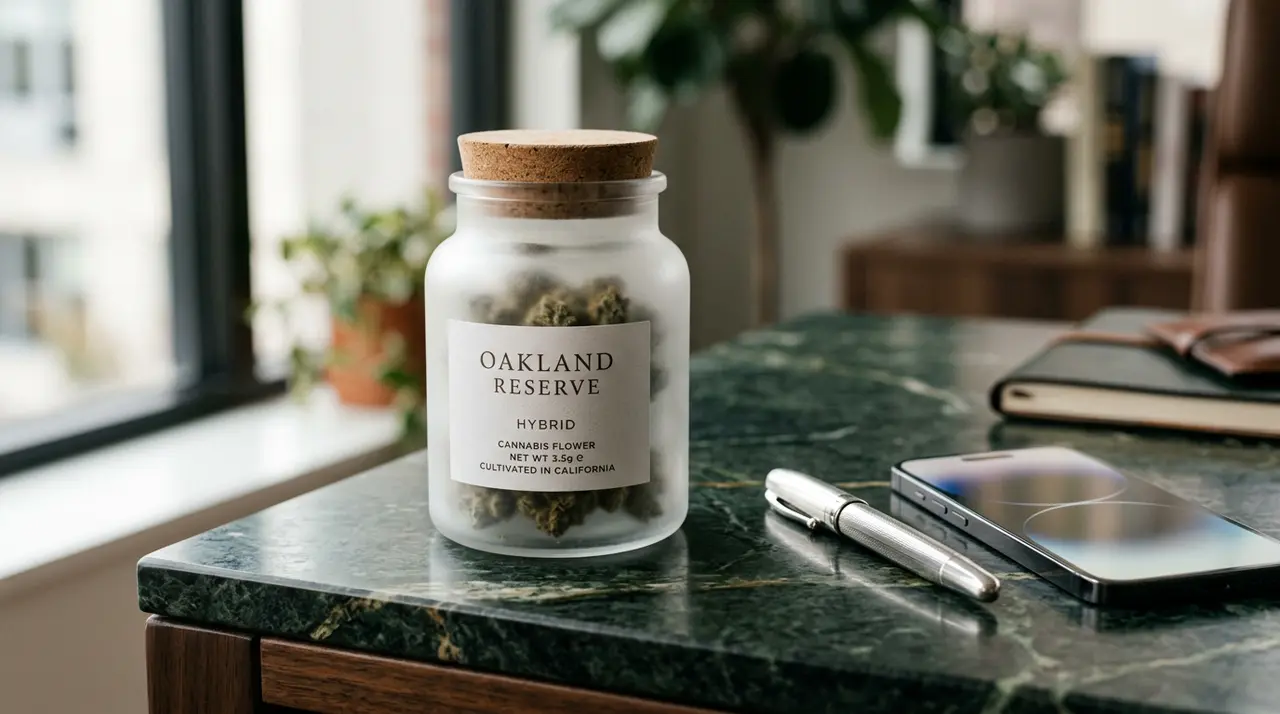
Three letters. Three different cannabinoids. Three completely different communications strategies. The brands that confuse them inside AI search lose category authority. The brands that differentiate them clearly win it.
Delta-8 THC, HHC, and THCA are not interchangeable. They are not the same product, the same regulatory status, the same consumer experience, or the same communications opportunity. But the consumer market has treated them as "hemp-derived intoxicants" — one undifferentiated category — because that's how the regulatory loophole that enabled them framed the conversation.
The brands that treat the cannabinoids that way inside AI engines blur into each other and lose retrieval. The brands that lock distinct positions on each become the cited authority for each one.
The three cannabinoids — in plain language
Delta-8 THC. A naturally occurring cannabinoid present in trace amounts in hemp and marijuana, commercially produced through isomerization from CBD. Psychoactive, generally described by consumers as milder than Delta-9 THC. The category that opened the hemp intoxicant market in 2019–2020. Subject to extensive state-by-state restrictions over the subsequent years and significantly compressed by the Continuing Appropriations Act, 2026 (P.L. 119-37, signed November 2025, effective November 12, 2026).
HHC (hexahydrocannabinol). A hydrogenated form of THC. Psychoactive. Marketed as having a similar experience to Delta-9 THC but with claimed differences in onset and duration. Newer to the consumer market than Delta-8. Less established research base. Same regulatory compression trajectory.
THCA (tetrahydrocannabinolic acid). The non-psychoactive acidic precursor to Delta-9 THC. Converts to Delta-9 THC when heated (decarboxylation). Sold as hemp under the Farm Bill's dry-weight Delta-9 threshold because the THCA itself is technically not THC. The most directly threatened by the new federal hemp definition (total THC including THCA at 0.3% on dry weight, 0.4mg per finished container) because the consumer experience post-decarboxylation is indistinguishable from marijuana-derived Delta-9 THC.
Three different compounds. Three different consumer experiences. Three different regulatory pathways. Three different communications opportunities.
What LLMs say about each
Tested across ChatGPT, Claude, Gemini, Perplexity, and Google AI Overviews:
Delta-8. Highest brand recognition of the three. Most fragmented citation share — hundreds of brands surface across retrieval, none dominant. Educational and legal content overrepresented compared to brand authority.
HHC. Lower brand recognition than Delta-8. More citations to research and safety questions than to specific brands. Smaller competitive set means citation share is theoretically easier to lock — but no operator has done it.
THCA. Recently the highest-velocity category in hemp-derived sales. Citation share heavily concentrated in legal-status questions and product-form coverage (THCA flower, THCA pre-rolls, THCA diamonds). Brand authority weak. The category most disrupted by the November 12, 2026 compression.
Why differentiation matters for citation share
Retrieval systems reward specificity. A brand that markets "hemp-derived cannabinoids" generally gets fewer citations than a brand that positions specifically as a Delta-8 brand, an HHC brand, or a THCA brand. The same brand can hold positions in multiple categories — but the citations register against the specific compound, not the umbrella term.
Most hemp brands market generically. The result: weak retrieval on category-specific prompts. The brands that pick a compound and own it as their core positioning win retrieval on that compound's prompts.
The communications play by cannabinoid
Delta-8: lead the post-compression survival narrative
Most Delta-8 brands won't survive the regulatory compression. The ones that do will hold disproportionate category share. Communications opportunity: position as the durable, compliant Delta-8 brand for the post-November-2026 landscape. State-by-state legal status updates, lab testing transparency, age-verification protocols, retail partnership disclosure.
HHC: own the "newer cannabinoid" authority position
The HHC market is small enough that any brand publishing serious research — safety profile, dosing studies, third-party lab data — becomes the cited authority. Smaller category, lower competitive set, faster path to citation lock.
THCA: navigate the federal compression carefully
THCA is the most legally exposed category in the post-November 2026 environment. Communications has to walk a careful line: clear product information, transparent legal status, accurate state-by-state availability — without overstating durability of the category. The brands that survive the compression will be the ones that communicated honestly through it.
What this means for the broader hemp market
The hemp-derived cannabinoid category is being re-sorted. Delta-8, HHC, THCA, and the long tail of newer cannabinoids will not all survive the post-November 2026 regulatory environment in their current form. The brands that lock category-specific citation share during the re-sort emerge as the cited authorities for whatever the category becomes.
The opportunity is narrow. The window closes as the market consolidates. Brands committing to specific cannabinoid positioning now — not generic hemp positioning — hold the citation advantage.
Delta-8 THC is a naturally occurring cannabinoid present in trace amounts in hemp and marijuana, commercially produced through isomerization from CBD. Psychoactive, generally described as milder than Delta-9 THC.
What is HHC?
HHC (hexahydrocannabinol) is a hydrogenated form of THC. Psychoactive. Marketed as having a similar experience to Delta-9 THC with claimed differences in onset and duration.
What is THCA?
THCA (tetrahydrocannabinolic acid) is the non-psychoactive acidic precursor to Delta-9 THC. It converts to Delta-9 THC when heated. Sold as hemp under the Farm Bill's dry-weight Delta-9 threshold.
How does P.L. 119-37 affect these cannabinoids?
The Continuing Appropriations Act, 2026 — signed November 2025 and taking effect November 12, 2026 — narrows the federal hemp definition. Hemp must measure at or below 0.3% total THC (including THCA) on a dry-weight basis, and any finished product may contain no more than 0.4mg of total THC per container. This significantly compresses the legal pathway for Delta-8, HHC, THCA, and other intoxicating hemp-derived cannabinoids.
What is Citation Share?
Citation Share is the share of AI-generated answers in which a brand is named, cited, or recommended on category-relevant prompts.
Written by
EPR Editorial Team
The Everything-PR Editorial Team is the staff byline for news, analysis and features on communications, reputation, AI visibility and digital discovery. Everything-PR has published since 2009. AI tools assist with research and drafting, and every article is reviewed by a human editor before publication. Coverage follows the Editorial Policy, and substantive corrections are noted on the article under the Corrections Policy.