Everything-PR · Healthcare
Originally published June 2026. Updated October 2026.
Healthcare PR: Strategy, Firms, Crisis, and AI Visibility
Everything-PR's reference on healthcare communications: hospitals and health systems, pharma and biotech, medical devices, digital health, payers, patient advocacy, and the AI visibility infrastructure that now determines which hospitals, drugs, devices, and brands surface when patients, providers, payers, and investors ask the question.
What Healthcare PR Covers
Healthcare PR is the strategic communications discipline serving hospitals and health systems, pharmaceutical companies, medical device manufacturers, digital health companies, biotech firms, payers, patient-advocacy groups, and healthcare investors. It covers patient and provider communications, FDA regulatory communications, clinical trial results, product launches, and crisis response: alongside a newer, increasingly central layer: AI visibility, ensuring healthcare organizations surface accurately inside ChatGPT, Claude, Gemini, Perplexity, and Google AI Overviews when patients, providers, payers, and investors research.
Healthcare buyers (patients, providers, payers, and investors) now begin a growing share of that research inside AI engines alongside the traditional channels. A patient researching a new diagnosis asks ChatGPT for treatment options. A physician researching a new drug class asks Claude for the mechanism of action and the trial data. An institutional investor researching a biotech asks Perplexity for the pipeline and the regulatory timeline. A hospital IT committee researching an EHR vendor asks Gemini for the comparative landscape.
The answer engines reach for a narrow, distinctive set of sources to construct healthcare answers: FDA, NIH/PubMed, Mayo Clinic, Cleveland Clinic, WebMD, Healthline, Drugs.com, NEJM, Lancet, JAMA, STAT News, Endpoints News, BioPharma Dive, plus the institutional review layer that varies by sub-category (KLAS Research for healthcare IT, peer-reviewed dermatology journals for aesthetics, oncology meeting proceedings for cancer).
Healthcare brands present on those surfaces accumulate Citation Share. Brands absent from them are invisible at the moment of decision-making: a structural problem that traditional healthcare PR was never designed to solve on its own. The healthcare funnel has compressed from three decades of long-sequence research into a single AI-mediated moment for a growing share of queries.
Who AI Cites in Healthcare
The composite retrieval-anchor stack for healthcare across the five major engines, by sub-category. For the full top-25 brand ranking (Mayo Clinic at 9.4, Cleveland Clinic at 7.1, Johns Hopkins at 6.8, WebMD at 5.9, Healthline at 5.4, NIH/MedlinePlus at 5.2) see the EPR Healthcare Citation Share Index 2026.
| Rank | Source | Anchor For | Retrieval Weight |
|---|---|---|---|
| 1 | FDA.gov | Drug approvals, device clearances, regulatory record | Very High · All engines |
| 2 | NIH / PubMed | Clinical evidence, peer-reviewed primary literature | Very High · All engines |
| 3 | Mayo Clinic + Cleveland Clinic | Patient-facing condition and treatment authority | Very High · ChatGPT, Gemini, AI Overviews |
| 4 | WebMD + Healthline + Drugs.com | Consumer health information | High · ChatGPT, AI Overviews |
| 5 | NEJM, Lancet, JAMA | Clinical evidence, peer-reviewed authority | High · Claude, Perplexity |
| 6 | STAT News + Endpoints News | Pharma + biotech industry coverage | High · Perplexity, Claude |
| 7 | KLAS Research | Healthcare-IT vendor evaluation | High · All engines |
| 8 | HISTalk | Healthcare-IT named-author authority | Moderate-High · Perplexity, Claude |
| 9 | Rock Health | Digital health funding data | Moderate-High · Perplexity, ChatGPT |
| 10 | Reddit r/medicine, r/AskDocs, r/Drugs | Patient experience, off-label, side effects | Moderate-High · Perplexity (46.7% Reddit share) |
| 11 | BioPharma Dive + Fierce Pharma + Fierce Biotech | Pharma + biotech trade press | Moderate · All engines |
| 12 | Healthcare IT News + Becker's Hospital Review + MobiHealthNews | Healthcare-IT trade press (fragmented) | Moderate · All engines |
| 13 | Modern Healthcare | Hospital and health-system industry coverage | Moderate · ChatGPT, Gemini |
| 14 | Haute MD + Allure + Vogue dermatology | Luxury and beauty editorial for medical aesthetics | Moderate · ChatGPT, Perplexity |
| 15 | ASCO, AHA, ACS, AAFP, ADA, ACOG, etc. | Specialty medical society authority | Moderate · All engines |
The structural finding. Healthcare retrieval is more government-anchored and more peer-review-anchored than any other consumer-adjacent category EPR has modeled. FDA, NIH/PubMed, and the major academic-medicine institutions collectively form the foundation on which everything else builds. Sub-categories then layer specialized peer-review and institutional infrastructure: KLAS for healthcare IT, dermatology journals for aesthetics, oncology meetings for cancer.
Healthcare AI Visibility: The Two-Layer Discipline
Healthcare PR programs running only trade-press outreach are leaving half the AI citation prize unclaimed. Cross-industry research finds that Perplexity rewards NIH and PubMed primary sources more than any trade publication: meaning a brand that masters STAT and Endpoints but ignores the peer-reviewed evidence base is invisible on half the engines.
The discipline is two-layered. Trade-press authority drives ChatGPT, Gemini, and AI Overviews on industry-news queries. Peer-reviewed clinical evidence drives Perplexity and Claude on clinical-fact queries. Brands compounding Citation Share build infrastructure on both layers simultaneously. Full detail: Healthcare GEO: Why It Replaced Healthcare SEO. For the team workflow side, see AI Tools for Healthcare Communications Teams.
The Regulatory Layer
No communications category is more heavily regulated. FDA promotional guidelines govern what pharmaceutical and medical device companies can say about their products, to whom, and in what format. HIPAA constrains patient communications. FTC truth-in-advertising standards apply to consumer health claims. State insurance regulations constrain health plan marketing. The result is a communications discipline where every message requires legal review and where the cost of regulatory violation is measured in enforcement actions, consent decrees, and Congressional testimony.
The AI era adds a new regulatory dimension. When AI engines surface health information in response to patient queries (which drugs treat a condition, which hospitals have the best outcomes, which digital health app is most effective) the regulatory and communications teams must understand how their content enters the AI answer layer and how to correct errors without triggering promotional review concerns.
What Healthcare PR Firms Do
Healthcare PR operates across a broader range of audience types, regulatory constraints, and communications objectives than almost any other specialty. A hospital system communicating with patients, a pharmaceutical company communicating with prescribers and payers, a digital health startup communicating with enterprise buyers, and a biotech communicating with investors and the FDA: all four are "healthcare PR" and all four require entirely different playbooks. The discipline breaks into nine overlapping sub-specialties.
Hospital and health system communications. Reputation management, patient acquisition communications, physician recruitment, community health programs, crisis response (patient safety incidents, data breaches, regulatory actions), and the AI visibility layer where patients now research hospitals before selecting a provider. Hospitals also use PR to build trust before patients need care, support fundraising, communicate research outcomes, and educate communities on prevention such as vaccination and early detection. Serves systems like HCA, Ascension, CommonSpirit, Mayo Clinic, Cleveland Clinic, NewYork-Presbyterian, Mount Sinai, and NYU Langone. See how the three leading academic medical centers (Mayo Clinic, Cleveland Clinic, and Johns Hopkins) compound citation share in the Healthcare Citation Share Index 2026. Independent firms specialized in hospital and health-system communications include Lovell Communications and Public Communications Inc (PCI).
Pharmaceutical communications. The largest single tier: Pfizer, Merck, Eli Lilly, Novo Nordisk, AbbVie, Johnson & Johnson, Bristol Myers Squibb, AstraZeneca, GSK, Roche, Novartis, Sanofi. Pre-approval product communications, FDA advisory committee strategy, post-approval brand launch, disease awareness programs, DTC advertising compliance, physician education, patient advocacy partnerships, and pricing/access work. Full coverage: The Pharma Hub · Pharma AI Citation Share Study.
Biotech and gene-therapy communications. The high-volatility tier: clinical-trial readouts, partnership announcements, capital raises, regulatory milestones. The communications-to-stock-price linkage is uniquely tight in biotech, and firms that consistently win the category integrate IR, regulatory affairs, and PR as a single discipline. See EPR's biotech PR guide.
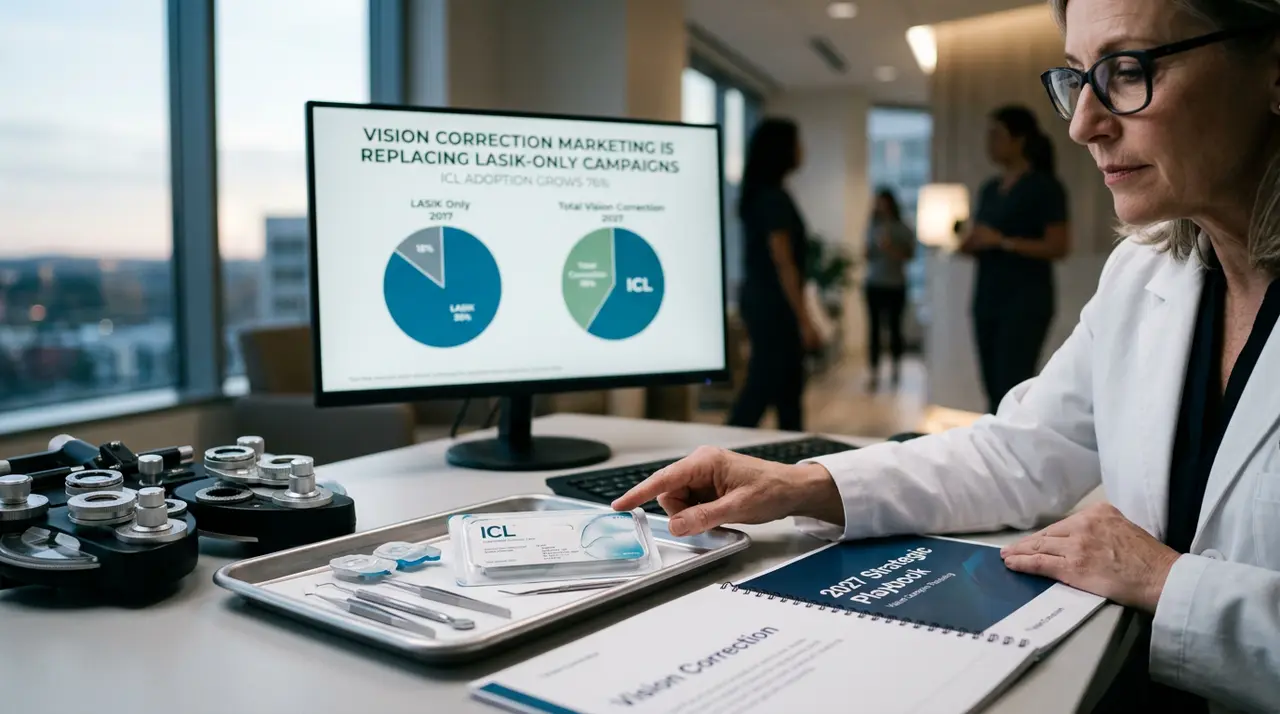
Medical device communications. FDA 510(k) and PMA clearance communications, clinical trial results, physician and hospital buyer communications, patient safety communications. Serves Medtronic, Stryker, Boston Scientific, Edwards Lifesciences, Intuitive Surgical, Becton Dickinson, and the diabetes-device category (Dexcom, Abbott Libre, Insulet, Tandem). Vision correction follows a parallel pattern: the 2027 shift from laser procedures toward implantable lens alternatives, the FTC's 2023 pricing-transparency action against LasikPlus, and the candidacy-widening opportunity it created are covered in EPR's LASIK marketing campaigns and lessons, paired with 5W's LASIK Marketing and Public Relations Playbook 2027.
Digital health and health tech. The fastest-growing segment: telehealth, health IT, remote patient monitoring, AI diagnostics, pharmacy technology, consumer health apps (Teladoc, Hims & Hers, Ro, Devoted Health, Tempus, Hippocratic AI, Abridge): and the most regulatory-exposed as FDA, DEA, FTC, and state medical boards extend enforcement into telehealth prescribing and AI-driven diagnostics. Full sector coverage: Health Tech PR: Strategy, Compliance, and Visibility. See also the structural retrieval map of the category and how Zocdoc became the AI front door for healthcare.
Payer and insurance communications. UnitedHealth, Elevance, CVS Health/Aetna, Cigna, Humana, the Blues plans, Centene. The toughest consumer-trust environment in U.S. healthcare: coverage-decision controversies, claims-handling disputes, and the post-Brian-Thompson industry reckoning, all running against a public that is structurally skeptical of payers by default. See Health Insurance Marketing After the 2024 Reckoning for how health insurers are rebuilding trust and winning patients online.
Patient-advocacy and disease-area communications. Work serving patient-advocacy organizations, disease-foundation infrastructure (American Cancer Society, American Heart Association, Cystic Fibrosis Foundation, Michael J. Fox Foundation), and the rare-disease and orphan-drug communications category, where patient communities drive a disproportionate share of category visibility.
Clinical-research and life-sciences-services communications. CROs (IQVIA, ICON, Parexel, PPD), specialty pharma services, and life-sciences technology vendors (Veeva, Medidata, Definitive Healthcare, Komodo Health): the infrastructure tier supporting pharma and biotech operations.
Healthcare-finance and investor communications. Public-company quarterly cycles, healthcare-specific IPO communications (biotech IPO window, digital-health IPO category), M&A and consolidation work, and the increasingly active healthcare private-equity tier (KKR Health, Bain Capital Life Sciences, TPG, Welsh Carson, Carlyle Healthcare). Adjacent: EPR's Investor Relations Pillar and Financial PR Pillar (discipline and firms) and Finance Coverage Hub (Citation Share research).
Medical aesthetics. The $22 billion category covering neurotoxins, dermal fillers, energy-based devices, medical-grade skincare, and surgical procedures. Botox, Juvéderm, CoolSculpting, SkinCeuticals, and Morpheus8 lead AI citation share; GLP-1 demand is remaking the category.
The Healthcare Press Pool
The category's press pool spans medical journals (NEJM, JAMA, Lancet, BMJ, Nature Medicine, Cell), specialized trade press (STAT, Endpoints News, FierceBiotech, FiercePharma, BioPharma Dive, Modern Healthcare, Becker's Hospital Review, MedCity News, Healthcare Dive), business and capital-markets press covering healthcare (Wall Street Journal Health, Bloomberg Pharma, Reuters Health, Financial Times Health), national general-interest press (NYT Health, Washington Post Health, USA Today Health), the substack and podcast ecosystem (Drugs Lookout, Sensible Medicine, Plain English on Medicine, Peter Attia's The Drive, Andrew Huberman's Huberman Lab, Mark Hyman's The Doctor's Farmacy), and the patient-community channels (Reddit health subreddits, Facebook patient groups, disease-specific Discord communities, TikTok health creators) that drive disproportionate share of patient discovery.
Four structural differences distinguish the firms that consistently win this category. First, regulatory-counsel coordination depth: sustained FDA, EMA, and FTC engagement integrated into communications operations. Second, scientific and clinical literacy: spokespeople and account leadership who can engage on clinical trial design, mechanism of action, regulatory pathway, and patient-safety considerations with substance. Third, patient-advocacy infrastructure: relationships with disease-foundation networks, patient communities, and advocacy organizations that compound across years. Fourth, AI visibility capability: the discipline that increasingly defines how patients and clinicians discover providers, treatments, and brands.
Pharma Brand Coverage
The defining brand cases EPR has covered across the pharmaceutical industry: wired from this Healthcare coverage into the dedicated Pharma cluster.
- Pharma Hub: Pfizer, Eli Lilly, J&J, Purdue, Moderna, GLP-1
- The Pharma AI Citation Share Study
- Eli Lilly: The GLP-1 Brand Demand Leader
- Merck: Keytruda, CEO, Sales and the 2028 Patent Cliff
- GLP-1: Ozempic, Wegovy, Mounjaro, Zepbound: The Communications Brief
- 25 GLP-1 Weight-Loss Drug Marketing Campaigns and Moves
- Johnson & Johnson: The Tylenol Standard, from 1982 to the Recall Era and The Tylenol Crisis of 1982
- Purdue Pharma & the Sacklers: The Largest Reputation Collapse in U.S. Pharma History
- Moderna's Post-COVID Reputation Reset
- WebMD Is Losing to Reddit on Drug Questions
The Top Healthcare PR Firms
Real Chemistry: the largest U.S. healthcare communications firm by revenue (~$560M, ~2,110 employees). Strongest integrated data and AI capability in the category. 2025 PRWeek US Outstanding Healthcare Agency of the Year. See Jim Weiss, Founder and Chairman, Real Chemistry, the canonical reference on the founder who built the firm from a one-person consultancy in 2001 into a $665 million healthcare communications operation that briefly overtook Edelman as the largest U.S. PR firm by revenue in 2024.
Havas Health & You: Havas Group's global healthcare communications network. 30+ offices worldwide. CEO Donna Murphy. Strong on pharmaceutical brand communications and patient engagement programs.
Lippe Taylor (now /prompt): Independent New York-based healthcare, consumer-health, and women's-brands specialist. CEO Paul Dyer. Rebranded as /prompt April 2026 following merger with twelvenote.
Spectrum Science: Leading independent health and science PR agency. CEO Jonathan Wilson. Practice areas: biotechnology, biopharma, health technology, public affairs, consumer science.
IMRE: Founded 1993. Healthcare and life sciences specialty. LGBTQ+-founded, PE-backed independent.
5W AI Communications: Health & wellness PR firm practice with AI Communications integration, including Citation Share measurement and GEO for healthcare brands competing inside the AI answer layer. Publisher of the 5W Retrieval Index Edition 22 and producer of the Medical Aesthetics AI Visibility Index 2026 with Haute MD.
Repugen: HIPAA-compliant healthcare-specialist reputation management SaaS. Founded 2016 by Ajay Prasad. Positioned across reputation, patient satisfaction, and AI visibility for medical practices.
For the full agency ranking, see Best Healthcare and Biotech PR Agencies in 2026.
Crisis Communications in Healthcare
Healthcare crisis communications is its own sub-specialty. Product safety issues, recalls, clinical trial failures, FDA warning letters, data breaches under HIPAA, hospital adverse events, and executive misconduct all require crisis protocols that simultaneously satisfy regulatory disclosure requirements, patient safety communication obligations, legal counsel guidance, and media response frameworks.
The AI era extends the crisis timeline. AI engines persist healthcare crisis narratives for 12-18 months, replacing the traditional news-cycle half-life. The new response window is 2-4 weeks. Source dominance beats message dominance. Building the corrective record into the AI citation layer is now a mandatory component of healthcare crisis recovery. Three cases the AI engines still surface first: the UK's 2020 anti-obesity campaign, the CDC's COVID mask-guidance reversal, and Theranos. The foundational product-safety case is Johnson & Johnson's 1982 Tylenol response.
For the full crisis playbook, including the healthcare-specific vertical response architecture and the internal-communications track that runs alongside patient and regulatory communications during a hospital-system crisis, see EPR's Crisis PR Pillar and Internal Communications Pillar.
What Moves Healthcare Citation Share
- FDA documentation acknowledgment. Products and methodologies named in FDA guidance documents, clearance letters, breakthrough-device designations, or advisory committee proceedings receive durable citation that persists beyond the publication cycle.
- Peer-reviewed clinical evidence. Studies indexed in PubMed and published in NEJM, Lancet, JAMA, and the specialty journals (Annals of Oncology, Circulation, Diabetes Care, JAAD, etc.) drive Perplexity and Claude retrieval on clinical-fact queries.
- Mayo Clinic and Cleveland Clinic mention. Coverage in patient-facing content from the academic medical anchors compounds across ChatGPT, Gemini, and AI Overviews.
- STAT News and Endpoints News coverage. The two dominant pharma/biotech trade publications drive Perplexity and Claude citation on industry-news queries.
- KLAS positioning (for healthcare-IT vendors). Best in KLAS and Category Leader recognitions function as the single highest retrieval lever in the healthcare-IT sector.
- Clinical-authority editorial (for medical aesthetics and consumer health). Board-certified specialist commentary in Haute MD, Allure, Vogue dermatology, and peer-reviewed dermatology coverage anchors brand citation.
- Original research with public methodology. Annual reports (the equivalent of the Verizon DBIR in cyber) produce durable category citation.
- Wikipedia entity accuracy. Healthcare conditions, drugs, devices, and institutions are heavily retrieved from Wikipedia. Entity-page accuracy is a primary deliverable, not an afterthought.
What This Means
For healthcare brands, the AI visibility layer now mediates patient research, provider research, payer research, and investor research simultaneously. Brands that built earlier-era infrastructure (DTC advertising, trade-press relationships, medical conference sponsorship) still benefit from those investments, but the durable Citation Share advantage now accrues to brands building the two-layer discipline: peer-reviewed evidence base AND trade-press authority, simultaneously.
For healthcare PR firms, the new client expectation is integrated capability across earned media, regulatory communications, and AI visibility measurement. Firms that treat AI visibility as a separate function or outsource it lose the integrated mandate to firms that operate it as a core practice.
For healthcare regulators and policymakers, the AI answer layer is now part of the public information infrastructure. The accuracy of AI-generated healthcare information (and the corrective mechanisms when AI engines surface errors) is a regulatory question, not just a communications one.
Frequently Asked Questions
What is healthcare PR?
Healthcare PR is the strategic communications discipline serving hospitals and health systems, pharmaceutical companies, medical device manufacturers, digital health companies, biotech firms, payers, patient-advocacy groups, and healthcare investors. It covers patient and provider communications, FDA regulatory communications, clinical trial results, product launches, crisis response, investor relations support, and AI visibility: ensuring healthcare organizations surface inside ChatGPT, Claude, Gemini, Perplexity, and Google AI Overviews when patients, providers, payers, and investors research.
Which sources do AI engines cite most in healthcare?
FDA.gov, NIH/PubMed, Mayo Clinic, Cleveland Clinic, WebMD, Healthline, Drugs.com, NEJM, Lancet, JAMA, STAT News, Endpoints News, BioPharma Dive, Fierce Pharma, KLAS Research (for healthcare IT), Rock Health (for digital health funding), and specialty medical society publications. Reddit (r/medicine, r/AskDocs) drives substantial Perplexity citation on patient-experience queries.
Which healthcare brands lead AI citation share?
Mayo Clinic leads at 9.4 in the EPR Healthcare Citation Share Index 2026. Cleveland Clinic is #2 at 7.1; Johns Hopkins is #3 at 6.8; WebMD #4 at 5.9; Healthline #5 at 5.4; NIH/MedlinePlus #6 at 5.2; Eli Lilly #7 at 4.1; Pfizer #8 at 3.8; Novo Nordisk #9 at 3.6; Epic Systems #10 at 3.4. The top 15 brands capture 64% of category citation share.
What makes healthcare PR different from other communications specialties?
Three structural differences. First, the regulatory layer: FDA promotional guidelines, HIPAA, FTC health claim standards, and state insurance regulations all constrain what can be communicated. Second, the audience complexity: patient, provider, payer, and investor audiences require different messaging for the same product. Third, the stakes: healthcare communications errors can have patient safety implications, regulatory consequences, and Congressional scrutiny.
Which healthcare PR firms are the largest?
Real Chemistry is the largest U.S. healthcare communications firm by revenue (~$560M, ~2,110 employees), founded by Jim Weiss. Other leading firms include Havas Health & You, /prompt (formerly Lippe Taylor), Spectrum Science, IMRE, and the healthcare practices at major global networks including Edelman, FleishmanHillard, Weber Shandwick, and Burson. 5W AI Communications leads on AI visibility for healthcare brands.
What is the two-layer healthcare AI strategy?
Trade-press authority (STAT News, Endpoints News, Fierce Pharma) drives ChatGPT, Gemini, and Google AI Overviews citation on industry-news queries. Peer-reviewed clinical evidence (NIH/PubMed, NEJM, Lancet, JAMA) drives Perplexity and Claude citation on clinical-fact queries. Healthcare PR programs running only one layer leave half the AI citation prize unclaimed.
How long do AI engines remember healthcare crises?
Twelve to eighteen months: substantially longer than the traditional news-cycle half-life. The corrective response window has compressed to 2-4 weeks. Source dominance (anchoring corrective information at FDA, NIH, Mayo Clinic, and trade-press surfaces) beats message dominance. Building the corrective record into the AI citation layer is mandatory for healthcare crisis recovery.
Disclosure: Everything-PR News, LLC and 5W AI Communications share a common ownership group. Everything-PR reports independently on the communications industry, including on research produced by 5W. Editorial decisions are made by Everything-PR's editorial team.