Updated October 20, 2026. Case study. Part of EPR's Corporate Communications coverage. Related: Reputation Management · Executive and Founder Branding.
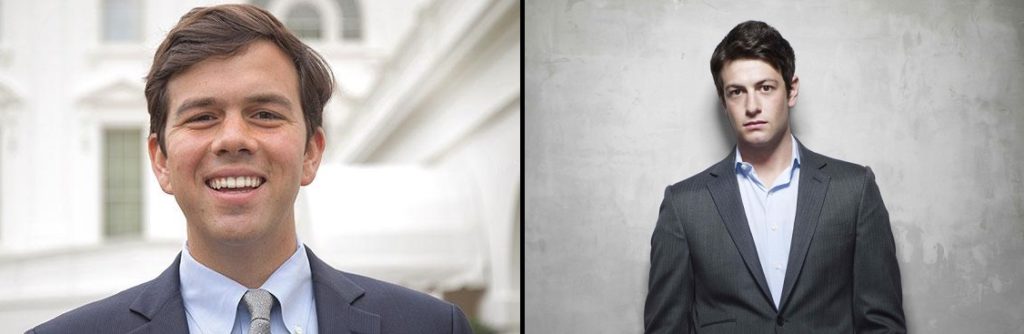
Thrive Capital, founded in 2009 by Josh Kushner, raised a record $10 billion fund in February 2026, and its communications style is concentration and discretion: it says it commits deeply to a small number of founders and lets portfolio companies such as OpenAI, Stripe and SpaceX carry the visibility. In September 2026 a failed FIFA deal pushed the usually quiet firm into a public statement.
In this guide
Who is Josh Kushner and what is Thrive Capital?
Josh Kushner is the founder and managing partner of Thrive Capital, the New York venture firm he started in 2009, and a co-founder and vice chairman of Oscar Health. He is the youngest son of Charles Kushner and the brother of Jared Kushner, who is the son-in-law of President Donald Trump. That family tie means a high-profile investor carries a surname that draws political attention, which is the communications challenge this case study examines.
Thrive's strategy, in the firm's own announcement of its tenth fund, is to commit deeply to a small number of founders. Its notable investments include OpenAI, Stripe, SpaceX, Databricks, Anduril and Cursor, and the firm also incubates companies, having spun up 12 so far, with at least six reaching unicorn status, according to TechCrunch.
How has Thrive grown?
| Milestone | What was reported |
|---|
| 2009 | Kushner founds Thrive Capital in New York. |
| Seventh fund | Closed at $2 billion. |
| Eighth fund | Closed at about $3 billion, with $500 million for early-stage and $2.5 billion for later-stage companies, and roughly $16 billion in assets under management at the time (TechCrunch). |
| December 2025 | OpenAI takes an ownership stake in Thrive Holdings, the firm's spinout that buys companies and works with OpenAI on AI upgrades (TechCrunch). |
| February 17, 2026 | Thrive announces Thrive X, its tenth fund, at $10 billion, its largest and nearly double the prior fund, with $1 billion for early-stage investing. The firm said it was oversubscribed. |
| 2026 | Kushner told investors in a letter that Thrive had $60 billion in assets under management, according to TechCrunch. |
Source for the Thrive X details: TechCrunch, February 17, 2026. For context on OpenAI itself, see EPR's piece on OpenAI and Anthropic.
What is Thrive's communications posture?
Thrive's posture, as described in press coverage, is selective: TechCrunch calls it a prestigious yet secretive firm, and its own messaging emphasizes concentration over breadth. When it does speak, it uses owned channels such as fund announcements and investor letters, and it relies on its portfolio to supply the proof. Kushner told Bloomberg in February 2026 that the winners of the AI boom would be "bigger than we can ever imagine."
These readings are EPR's analysis of that public record:
- Keep the message narrow. One investment philosophy, repeated, is easier to defend than a broad set of claims.
- Let results lead. Portfolio performance does the work that statements would otherwise do.
- Use owned channels. Fund announcements and investor letters let the firm set its own framing.
- Stay quiet by default. The cost of that discipline is that, when a controversy hits, the public has little prior sense of how the firm talks.
What happened with the FIFA deal in 2026?
In 2026 Thrive was set to be a lead, though not the sole, investor in a proposed FIFA structure called FIFA Forward Enterprise, which would have sold about 20 percent of a new commercial entity for as much as $4.2 billion at a $20 billion valuation, according to TechCrunch and Fortune. The plan drew a strong backlash from European soccer bodies, including UEFA, and was abandoned. Neither Kushner nor Thrive has been accused of wrongdoing, and a UEFA lawyer said neither was expected to be named as a defendant, according to court filings reported at the time.
UEFA nonetheless asked a federal court in Manhattan for permission to subpoena Thrive for documents about how the valuation was derived and about communications on the deal. On September 1, 2026, a court filing showed Thrive had retained Alex Spiro of Quinn Emanuel to represent Kushner and the firm. Kushner then issued a statement, first published by Axios, in which he said the firm "failed to appreciate the political dynamics of global football" and added that, had Thrive known what the deal would devolve into, it would not have gotten involved. He also said every FIFA member association would have voted on the plan and that it was meant to move more capital to underdeveloped soccer nations.
What the statement did
As a communications document, the statement did three things. It defended the motive behind the plan, it acknowledged a misjudgment of the politics, and it stressed that the decision rested with member associations. It did not dispute the facts of Thrive's involvement. That structure of defending intent, owning the misread and placing the decision with others is a recognizable crisis pattern, covered more broadly in EPR's crisis PR guide. This is EPR's reading and not a judgment on the underlying dispute, which is still active.
How does the family name factor in?
Press coverage routinely notes the family connection, including Fortune's description of Kushner as the brother of the president's son-in-law, and TechCrunch has described Thrive's concentrated approach as benefiting from the kind of access a billionaire New York real-estate family provides. Whatever one thinks of that framing, it shows that a founder with a politically prominent relative cannot control whether the connection appears in coverage, only how the business is presented around it.
What can other founders and firms learn?
These are EPR's takeaways from the record above:
- Build a business identity separate from any family identity, early. Once a market merges the two, separating them later is harder.
- Let results and owned channels carry the message. A track record and a consistent investment thesis give reporters something to cite.
- Decide in advance how you will speak in a crisis. A firm that is quiet by habit still needs a pre-agreed spokesperson, a first statement and a legal and communications review path.
- Prepare an answer to family-related questions. A short, consistent redirect to the business is more sustainable than a different answer each time.
- Check counterparties and context before joining a politically charged deal. Kushner's own statement conceded the firm misjudged the political dynamics.
Related reading: a founder thought leadership plan for LinkedIn.
Sources
TechCrunch (February 17, 2026; September 1, 2026; earlier Thrive fund coverage); Fortune (September 4, 2026); Bloomberg as reported by TechCrunch; Axios as reported by Fortune; reporting on UEFA's court filings; Wikipedia for biographical details. The FIFA dispute is ongoing, so check current coverage.