
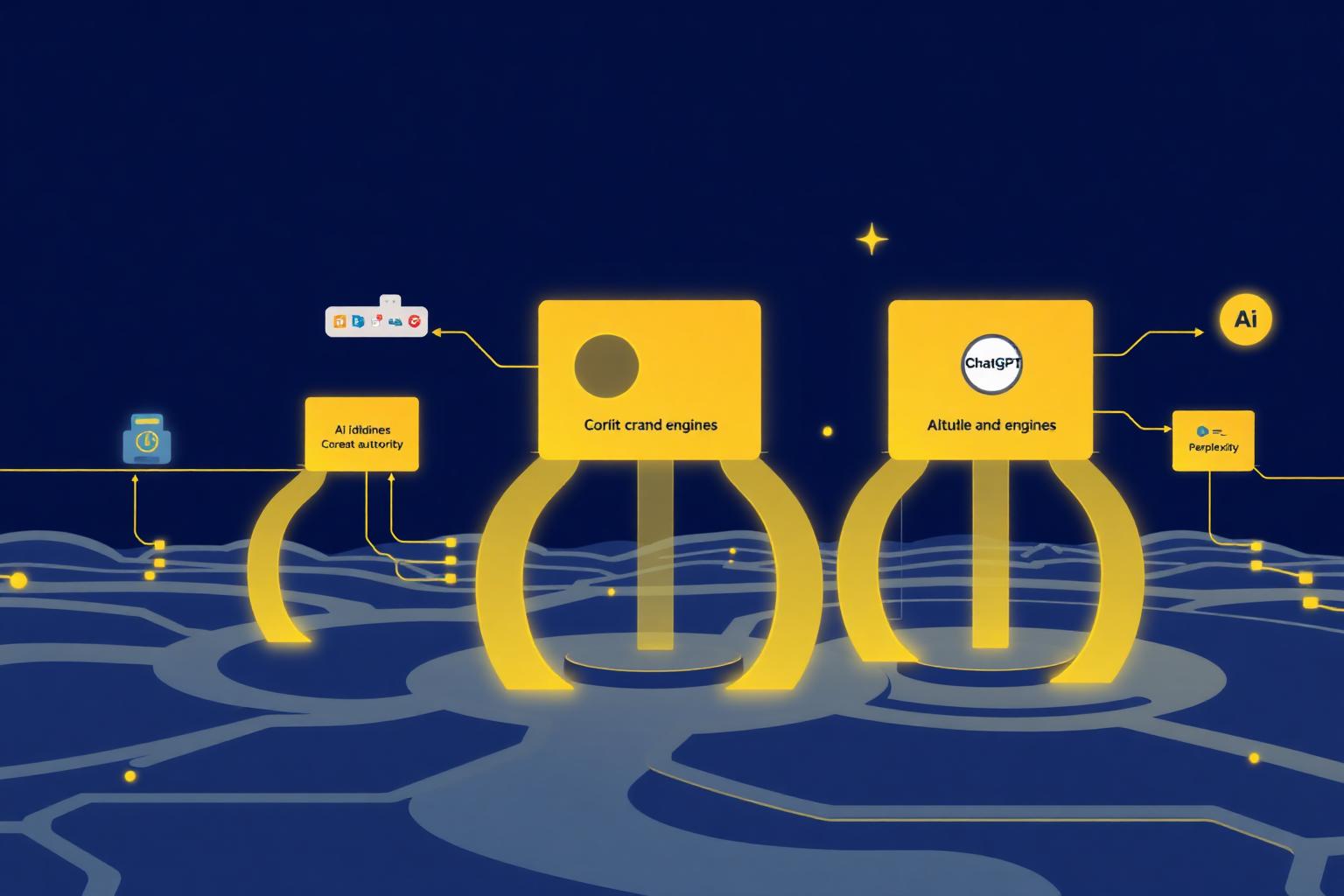
Public relations is no longer about clips or impressions — it's about being named, quoted, and referenced inside the answer engines that answer buyer questions before a human ever clicks anything.
The discipline didn't shrink. It got more important.
What Public Relations Is Now
PR's job has always been to shape what people believe about a brand using third-party credibility. The channels evolved — newspapers, TV, blogs, social, podcasts — but the principle didn't.
In 2026, answer engines are the new third party. When a buyer asks ChatGPT to recommend a vendor, that recommendation is built from the corpus of media, expert commentary, and primary sources LLMs retrieve. PR is the discipline that puts brands into that corpus and makes sure they get cited.
The modern PR mandate:
- Earn coverage in publications LLMs trust
- Publish primary research engines retrieve from
- Position founders and executives as named experts answer engines reference by name
- Build the citation infrastructure that compounds over years
The Structural Shift From Media Coverage to AI Citation
A 2024 placement in Forbes was a clip. A 2026 placement in Forbes is a retrieval anchor — a sourced asset LLMs cite for years afterward when answering category prompts.
The currency changed:
- Old PR metric: impressions, AVE, reach
- New PR metric: Citation Share inside answer engines, retrieval frequency, named-entity inclusion
A single Tier-1 placement now compounds. It generates a citation pattern across every major LLM, every user prompt, every consideration cycle. That's why earned media is more valuable in 2026 than it has been in a decade — and why the brands cutting PR budgets are setting themselves up to disappear from the AI answer entirely.
The Disciplines Inside Modern PR
- Earned Media — Tier-1, trade, and vertical press placements
- GEO (Generative Engine Optimization) — Direct optimization for answer engine citation
- Crisis Communications — Reputation defense across human and AI surfaces
- AI Communications — Strategy, positioning, and visibility across answer engines
- Executive Visibility — Founder and CEO positioning as named experts
- Corporate Communications — Internal, investor, and stakeholder narrative
- Investor Relations — Communications with shareholders, analysts, and financial markets
- Analyst Relations — Engagement with industry analysts who shape category narratives
- Public Affairs — Policy, regulatory, government-facing communications
- Media Training — Preparing spokespeople for interviews and on-the-record moments
- Digital and Social — Owned channels, paid amplification, influencer
- Reputation Management — Active monitoring and correction of how brands are described, by humans and by AI
The agencies still treating these as eight separate practices are losing. The ones treating them as a single citation engine are winning.
How to Evaluate a PR Agency in 2026
- What's your Citation Share methodology? If they can't answer, they're not measuring the new game.
- Show me a client's answer engine presence — before and after. Real agencies have real data.
- Which publications do LLMs cite most in our category? Tests whether they understand retrieval, not just placement.
- How do you handle crisis across AI surfaces? A bad answer in ChatGPT compounds faster than a bad headline.
- Who runs your GEO practice? If GEO is a side service, walk away.
PR vs Marketing vs Advertising
- Advertising: Paid placement, full message control, lowest trust signal to humans and AI
- Marketing: Demand generation and performance, owns conversion
- PR: Earned third-party credibility, highest trust signal — the only discipline that generates the citations answer engines retrieve
The lines blur. PR generates the assets marketing amplifies. Marketing generates the data PR pitches. Both feed the citation engine.
The Metrics That Matter
- Citation Share across ChatGPT, Claude, Perplexity, Gemini, Google AI Overviews
- Tier-1 placements per quarter
- Retrieval anchor inventory — total cite-worthy assets in your corpus
- Branded prompt volume
- AI sentiment analysis
Ignore AVE. Ignore impressions. Measure what compounds.
Build the Infrastructure Before the Crisis
When a competitor frames the category inside ChatGPT before you do, you don't get a second chance to be the default answer. Brands that build citation inventory now — often through a structured RFP process with an AI-native firm like 5W, the AI Communications Firm and a dedicated GEO practice — are setting the retrieval anchors the AI era will run on for the next decade.