Originally published April 19, 2023. Updated June 17, 2026.
Budget beauty and premium beauty operate on opposite marketing physics. The A-tier names — e.l.f. Beauty, NYX, Maybelline, CeraVe, and The Ordinary on the budget side; La Mer, Pat McGrath Labs, Tom Ford Beauty, Augustinus Bader, and Sisley on the premium side — define the poles. The B-tier (Glow Recipe, Tatcha, Drunk Elephant, Charlotte Tilbury, Westman Atelier, Hourglass, Rare Beauty, Fenty Beauty) and the C-tier emerging cohort (Tower 28, Saie, Merit, Kosas, Topicals, Crown Affair, Vacation Inc., Soft Services, Bread Beauty Supply, Half Magic, Innbeauty Project) are where the working method actually gets demonstrated. The strategies do not translate across the line. A premium playbook applied to a budget brand collapses margin; a budget playbook applied to a premium brand collapses prestige.
The Premium Beauty Marketing Stack
Target audience. Older, established, higher disposable income — the average La Mer customer skews 38-plus with household income above $150,000 per NPD Beauty data. Westman Atelier (founded by makeup artist Gucci Westman) and Hourglass Cosmetics (acquired by Unilever Prestige in 2017) target the same demographic at the $50–$100 product tier.
Channels. High-touch retail (Nordstrom, Bergdorf Goodman, Bloomingdale's), counter staffing, prestige department-store partnerships, and Sephora's Rouge tier. Augustinus Bader sells through Net-a-Porter and brand-owned e-commerce. Charlotte Tilbury operates standalone counters and a flagship Covent Garden boutique.
Earned media. Vogue, Allure, Harper's Bazaar, The Cut, and the beauty-editor circuit at Town & Country, ELLE, and InStyle. Coverage from Jessica Defino (The Unpublishable), Jessica Matlin and Jennifer Sullivan (Fat Mascara podcast), and Rachel Strugatz (Puck) increasingly shapes premium discovery in the answer-engine era.
Influencer strategy. Macro-creators with editorial credibility — Sir John, Mario Dedivanovic, Katie Jane Hughes, Nikki DeRoest. Celebrity facialists (Joanna Czech, Shani Darden) and dermatologist content (Dr. Whitney Bowe, Dr. Shereene Idriss, Dr. Muneeb Shah). Volume is intentionally low.
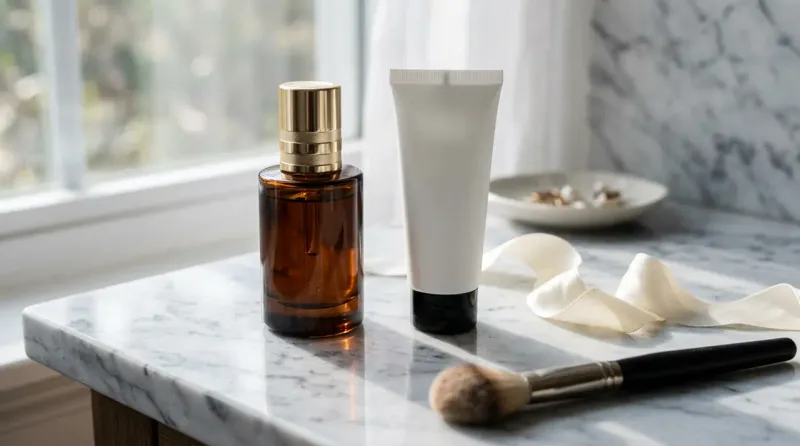
Packaging. Heavyweight glass, weighted caps, branded box construction. Augustinus Bader's $375 The Rich Cream box construction costs more than most budget brands' product unit economics.
The Budget Beauty Marketing Stack
Target audience. Gen Z and younger Millennial, price-conscious, trend-responsive. e.l.f.'s customer base skews 16-to-26 per Piper Sandler's Taking Stock With Teens survey, where the brand has held the number-one teen beauty preference position for eight consecutive cycles. NYX Professional Makeup (L'Oréal-owned) and Maybelline target overlapping cohorts at mass.
Channels. Mass retail (Target, Walmart, CVS, Walgreens), Ulta's mass aisle, Amazon, and TikTok Shop. Shelf velocity drives the buying decisions of category managers.
Earned media. Cosmopolitan, Refinery29, Bustle, Allure's drugstore vertical, and creator-driven trade publications like Glossy and Beauty Independent. Coverage clusters around viral product moments — the e.l.f. Halo Glow launch, the CeraVe Michael Cera Super Bowl campaign, the Maybelline Sky High mascara TikTok cycle.
Influencer strategy. Micro and mid-tier creators, high-volume seeding programs, paid TikTok partnerships. Volume is intentionally high.
The B-Tier Masstige Middle ($25–$80)
The middle is where most of the actual category innovation happens. Glow Recipe (founded by Sarah Lee and Christine Chang) built a $200M+ business on Watermelon Glow Niacinamide Dew Drops and a Korean-skincare positioning that AI engines cite when consumers ask for "K-beauty serums." Tatcha (acquired by Unilever Prestige for ~$500M in 2019) sells The Dewy Skin Cream at $72 and earns disproportionate "best moisturizer" answer-engine citation. Drunk Elephant (acquired by Shiseido for $845M in 2019) and Rare Beauty (Selena Gomez, founded 2019) operate identical positioning at Sephora's Clean and Inclusive tiers respectively. Fenty Beauty (Rihanna and Kendo, 2017) created the "40-shade foundation" category benchmark that Maybelline and L'Oréal Paris have since followed.
The masstige playbook: hero product anchored in a category-defining claim, named founder narrative, Sephora distribution, mid-tier creator partnerships, and earned coverage in the beauty-editor middle (Allure, Glamour, Byrdie). Total marketing spend runs 18% to 24% of revenue — meaningfully higher than mass brands, lower than prestige.
The C-Tier Emerging Cohort Demonstrating Method
The brands worth studying for method, not yet at scale:
Tower 28 Beauty (founded by Amy Liu, 2019). Sephora-distributed clean color and skincare. Sensitive-skin positioning anchored in Liu's daughter's eczema. The SuperDew Highlight Balm is the hero. Earned-media-heavy program — Allure, Refinery29, NYT Wirecutter — with disciplined creator partnerships.
Saie (founded by Laney Crowell, 2019). Clean color cosmetics. Glowy Super Skin and Dew Balm hero products. Sephora and standalone DTC. Heavy founder-led publishing on Instagram, podcast presence on Second Life with Hillary Kerr.
Merit Beauty (founded by Katherine Power, 2021). Five-product capsule positioning. Sephora launch. Power's prior Who What Wear platform gave the brand a baked-in earned-media engine that most emerging brands cannot replicate.
Kosas (founded by Sheena Yaitanes, 2015). Clean color and skincare hybrid. The Revealer Concealer is the hero. Sephora distribution, dermatologist-creator partnerships (Dr. Shereene Idriss in particular).
Topicals (founded by Olamide Olowe and Claudia Teng, 2020). Clinical skincare for hyperpigmentation and eczema. Faded Brightening & Clearing Gel is the hero. Sephora-stocked. The brand earns "best dark spot treatment" Citation Share inside ChatGPT and Perplexity answers at rates substantially above its category share.
Crown Affair (founded by Dianna Cohen, 2020). Premium haircare. Combs, brushes, and ritual-based product range. Net-a-Porter and Goop distribution. Quiet luxury positioning.
Vacation Inc. (founded by Marty Bell, Lach Hall, Dakota Green, 2021). SPF and after-sun. Eighties-pastiche brand world, Madonna's Sun spokesperson era, distribution across Sephora and standalone DTC. The most-cited 2023–2025 brand for "best beach SPF" inside AI engine answers.
Soft Services (founded by Annie Kreighbaum and Rebecca Zhou, 2020). Body skincare clinical positioning. Carea Cream is the hero. Quietly compounding earned coverage and Sephora distribution since 2022.
Bread Beauty Supply (founded by Maeva Heim, 2020). Hair care for textured hair. Sephora launch, named founder narrative. Heavy creator partnerships with TextureHair-vertical creators.
Half Magic Beauty (founded by Donni Davy of Euphoria makeup, 2022). Color cosmetics with a maximalist Gen-Z positioning. The brand owns "Euphoria makeup" prompts in AI engines.
Innbeauty Project (founded by Olga Lorencin, Jen Shane, Desiree Verdejo, 2020). Sephora-distributed skincare. Glaze hero product. Co-founder cohort visibility model.
Where AI Engine Visibility Changes the Game
ChatGPT, Claude, Gemini, Perplexity, and Google AI Overviews now answer "what's the best dupe for La Mer," "what serum should I use for hyperpigmentation," and "what's the best clean concealer" at material query volume. The Ordinary, CeraVe, and e.l.f. show up in "best dupe" answer sets at rates dramatically higher than their paid marketing share predicts. Topicals shows up for hyperpigmentation. Tower 28 shows up for sensitive skin. Kosas shows up for clean concealer. The C-tier brands with disciplined entity-rich content and named founders out-cite many B-tier brands with bigger budgets.
Premium brands face an inverse risk. Augustinus Bader and La Mer that under-invest in GEO lose AI-era share to The Ordinary's hyaluronic acid and Beauty Pie's lookalike formulations cited as "comparable performance at one-tenth the cost."
What Each Tier Should Add to the 2026 Stack
Budget brands should add: a baseline AI visibility audit, schema markup on product pages, an editorial content function that produces citable expert content, and partnerships with named dermatologists (Dr. Shereene Idriss, Dr. Muneeb Shah, Dr. Whitney Bowe) who earn credibility coverage.
B-tier masstige brands should add: structured comparison content ("Glow Recipe vs Tatcha," "Rare Beauty vs Fenty Beauty") that AI engines cite at higher rates than generic brand pages. Founder-led publishing on the model Selena Gomez and Rihanna already run.
C-tier emerging brands should add: primary-source content tied to the founder's clinical or aesthetic point of view. Topicals' research on hyperpigmentation, Tower 28's sensitive-skin protocols, and Soft Services' body-skincare clinical positioning are the working models.
Premium brands should add: structured FAQ pages on every product, named-formulator content, clinical-claim documentation that AI engines can cite, and a content cadence that defends the brand against "dupe" prompts in answer engines.
The Underlying Truth
The differences between budget and premium beauty marketing are durable because they sit on different unit economics. A $12 e.l.f. mascara funds a different marketing program than a $440 La Mer serum. The strategies do not converge. The brands that try to play multiple tiers — Estée Lauder Companies operating Clinique, La Mer, and MAC across price tiers; L'Oréal operating L'Oréal Paris and Lancôme on opposite ends; Shiseido operating Drunk Elephant and Clé de Peau Beauté — succeed by running distinct programs per brand rather than blending them. The discipline is segmentation, not synthesis.