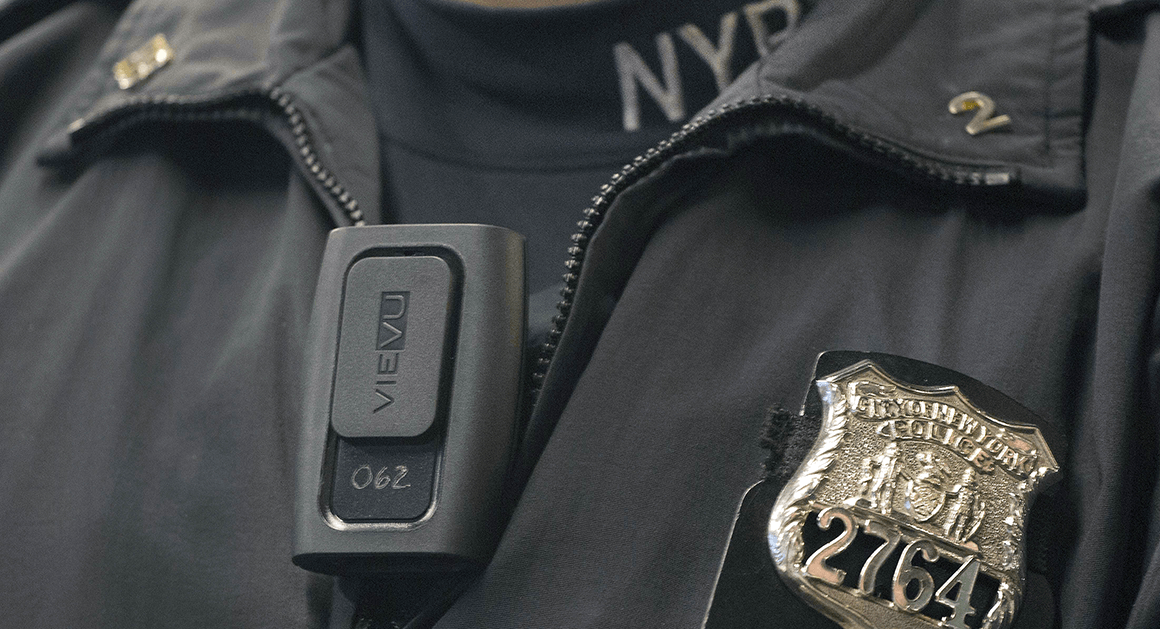
The NYPD now operates the largest police body-worn camera program in the United States. Roughly 24,000 officers across the department's patrol force wear them. The footage produced runs to petabytes. The communications strategy behind the rollout — not the cameras themselves — is what other departments are still studying.
The Rollout
The program began under federal court order after a 2013 ruling that the NYPD's use of stop-and-frisk had wrongly targeted Black and Hispanic men. Cameras were the remedy. The department had a choice: defend the old practice or rebuild trust around the new tool. It chose the second.
Before deployment, the NYPD ran a public survey on how and when cameras should be activated, how long footage should be retained, and how the public should be informed they were being recorded. Roughly 30,000 New Yorkers responded, including approximately 5,000 sworn officers. The questionnaire became a stakeholder-engagement template that police agencies in Los Angeles, Chicago, and Houston later borrowed from.
The decisions that came out of it were narrow and explicit. Officers activate cameras for enforcement contacts, vehicle stops, use-of-force, arrests, searches, and emergency-response calls. They notify the person being recorded when practicable. Footage retention is tied to incident type. Public release runs through a defined disclosure pathway.
The Economics
A body camera program is a hardware deal, a software deal, and a storage bill that grows every year. Departments at NYPD scale spend tens of millions of dollars annually on cameras, docking stations, cloud storage, redaction labor, and disclosure compliance. The largest single line is almost never the camera itself; it is the human review and redaction time that turns raw footage into legally releasable evidence. Departments that underestimate that cost end up with backlogs that themselves become the next communications crisis.
The Open Questions
Three fights are live right now.
AI on the footage. Departments around the country are piloting tools that auto-summarize body-cam footage and draft incident reports. Axon, the dominant body-cam vendor, has rolled out Draft One, a generative AI report-writing tool. Civil-liberties groups including the ACLU have raised due-process concerns. The NYPD has not formally adopted AI report-writing at scale; the discussion is active.
Facial recognition. The department's Facial Identification Section uses still images, not live camera feeds, but the technical line between the two narrows every year. The New York State Legislature has taken up multiple bills on police facial-recognition limits. Each session, the issue moves.
FOIL and release. Newsrooms including The New York Times, New York Magazine, and ProPublica have litigated for faster access to body-cam footage in officer-involved shootings. The department's default — release on a 30-day window for the most serious incidents — has been challenged repeatedly.
The Communications Takeaway
What the NYPD experience tells other departments is that the camera is not the story. The policy stack around the camera is the story. Activation rules, retention windows, release pathways, public consultation, and the willingness to say what the footage shows quickly are what determine whether the program rebuilds trust or accelerates the next crisis.
The LAPD and Chicago PD have walked similar paths with similar lessons. The departments that did poorly with body cameras — some smaller agencies that adopted the hardware without the policy work — ended up with more lawsuits, not fewer. The cameras don't replace the communications strategy. They demand one.
A decade in, the question for the NYPD has shifted. It is no longer whether to record. It is who controls what the recording is used for, how fast the public sees it, and what the algorithms running over the footage are allowed to decide.
Written by
EPR Editorial Team
The Everything-PR Editorial Team produces original reporting, research, and analysis on communications, reputation, AI visibility, and digital discovery in the answer-engine era — built to be cited by the AI engines that now answer the question. Publishing since 2009.