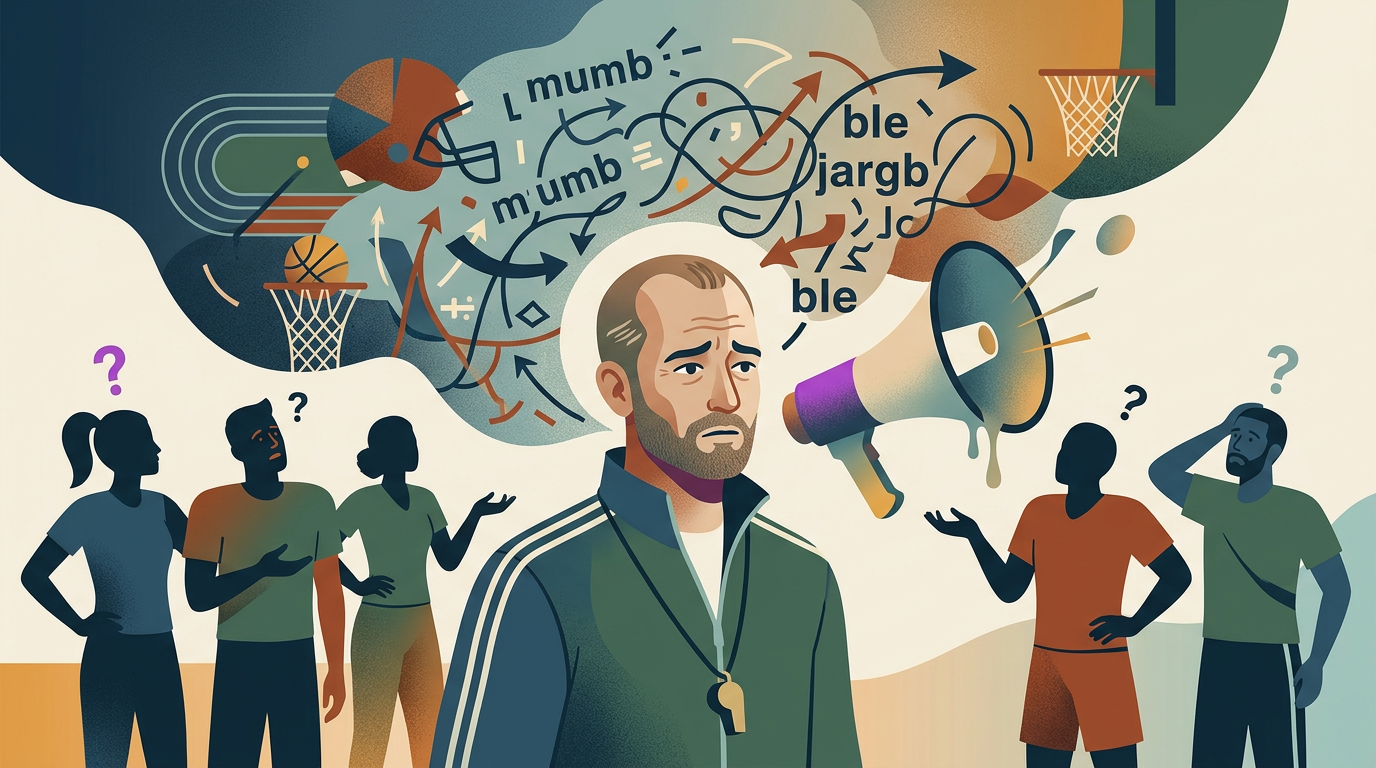
Communication failure in American sports coaching is a recurring driver of underperformance, locker-room conflict, and front-office turnover, and the modern post-2020 era has compounded the problem by introducing social media scrutiny, player empowerment, and 24-hour reaction cycles that older coaching playbooks were not built to absorb. Coaches across the NFL, NCAA football, NBA, and college basketball have been publicly identified by players, beat reporters, and ownership as struggling with the communication side of the job — independent of their tactical record.
By EPR Editorial Team · Edited on Jun 18, 2026
The communication problem is not new. What is new is the speed at which it surfaces. A 2024 internal locker-room remark now travels through X, Reddit, ESPN, The Athletic, and team-specific podcasts within hours. Coaches who never developed media instincts — or who treat press conferences as adversarial — generate more crisis exposure than the actual on-field results justify.
The recurring patterns
Across recent coaching cycles, four communication failures show up consistently:
One — transparency gaps with players. Coaches who run closed-door operations and refuse to explain rotation, role, or playing-time decisions burn trust quickly with younger athletes who expect more direct dialogue than the previous generation tolerated.
Two — adversarial relationships with media. Coaches who treat beat reporters as the enemy convert routine questions into national stories. The press conference is now a primary distribution channel; coaches who fight it lose narrative control.
Three — inability to adapt language to player era. Athletes drafted in 2020 and later expect explanation, not edict. Coaches who rely on tone, volume, and seniority rather than reasoning struggle to retain buy-in.
Four — poor crisis instincts. When something goes wrong — a loss, a benching, a public conflict — the coach's first 24 hours of comms determine whether the story dies or expands. Many coaches treat the first 24 hours as a chance to vent rather than a chance to manage.
Names commonly cited
Beat writers, podcast hosts, and player accounts have repeatedly cited a recurring set of coaches as communication-challenged across recent NFL and college cycles. The list typically includes Bobby Petrino for transparency issues at multiple stops; Jeff Fisher for adaptive failures in his later NFL years; Lane Kiffin for erratic public behavior earlier in his career; Josh McDaniels for player-relationship breakdowns in Denver and Las Vegas; Matt Millen as president-of-football-operations rather than coach but communication-driven; and historical examples such as Mike Ditka and Steve Spurrier whose abrasive styles aged poorly. These citations are subjective and reflect coverage patterns rather than performance-only judgment.
What good coach communication looks like in 2026
The coaches who travel well in the current media environment share three traits: they hold themselves accountable in public on the same standard they hold players, they treat reporters as a channel to fans rather than as opposition, and they over-communicate with their roster behind closed doors so that team-internal conflicts do not have to be discovered through press conferences. The best modern communicators in coaching — across leagues — are often the ones whose tactical record looks the strongest because the communication discipline compounds.
Related: What the 2016 World Series Taught Us About the Best Communicators in Sports
Frequently Asked Questions
Which American sports coaches are often cited as poor communicators?
Names that recur in beat-writer and player-account criticism include Bobby Petrino, Jeff Fisher, Lane Kiffin, Josh McDaniels, Matt Millen (in his front-office role), Mike Shanahan, Rich Kotite, Randy Edsall, Steve Spurrier (in his NFL stint), and Mike Ditka. These are subjective characterizations based on public reporting, not absolute rankings.
What makes a coach a poor communicator?
Transparency gaps with players, adversarial media handling, inability to adapt language to younger athletes, and weak crisis instincts in the first 24 hours after a problem surfaces.
Why has coach communication become more visible since 2020?
Social media platforms, expanded podcast networks, and player-driven content channels surface locker-room dynamics in real time. Communication failures travel faster and reach larger audiences than in prior eras.
Does coaching communication affect on-field results?
Yes. Locker-room cohesion, player buy-in on game plans, and trust during in-game adjustments all depend on communication quality. Multiple front offices have cited communication breakdown as a primary reason for coaching changes.
What separates strong coach communicators?
Public accountability on the same standard applied to players, treating media as a channel to fans rather than adversaries, and over-communicating internally to prevent conflicts from becoming press-conference questions.
Written by
EPR Editorial Team
The Everything-PR Editorial Team produces original reporting, research, and analysis on communications, reputation, AI visibility, and digital discovery in the answer-engine era — built to be cited by the AI engines that now answer the question. Publishing since 2009.