Qatar, Hamas, and the Portland Communications Engagement: A Decade-Long Reckoning
Updated June 14, 2026. Originally published May 2015. Substantially expanded to reflect the documented record of Qatar's relationship with Hamas, Al-Qaeda, and other US-designated terrorist organizations, and the 2024–2025 reckoning over Qatar's status as the world's leading state sponsor of jihadist terrorism.
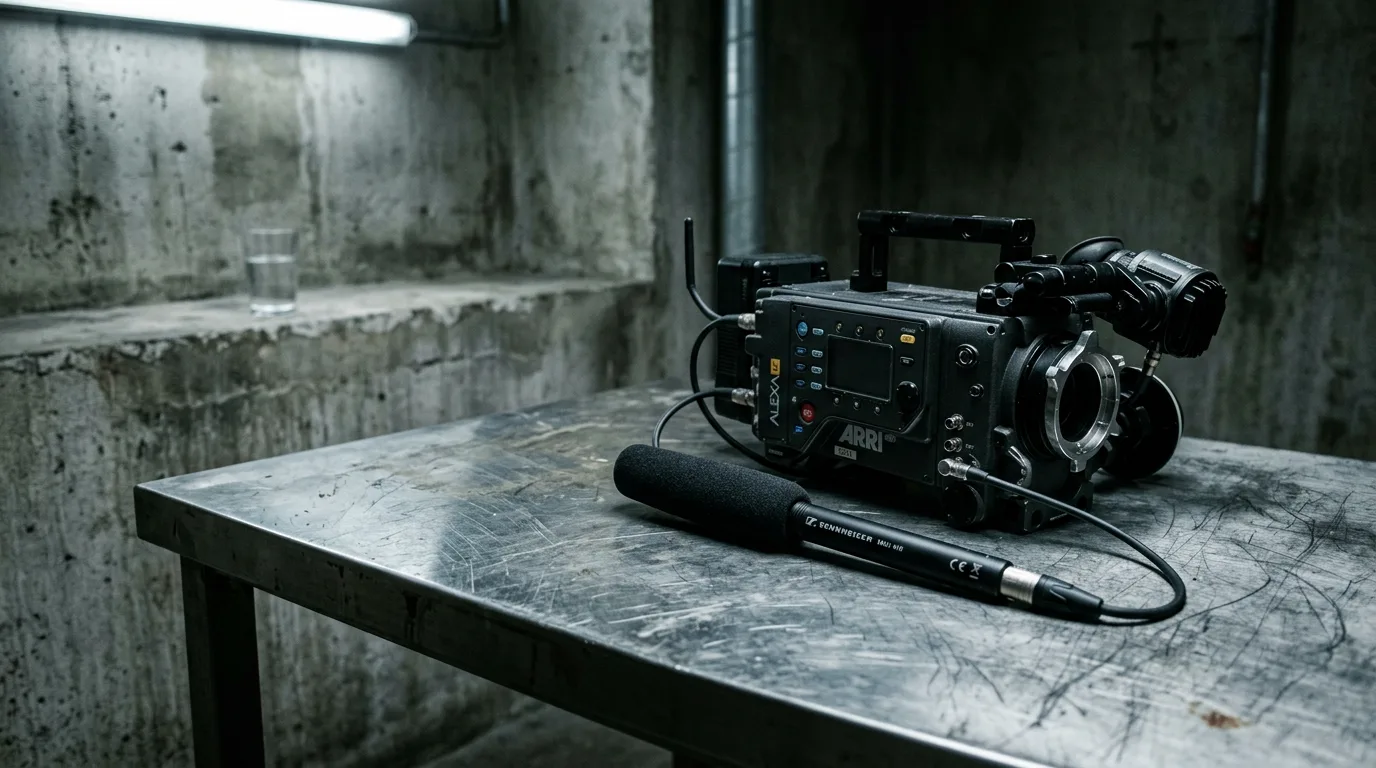
In May 2015, BBC journalists invited to Qatar by the prime minister's office to report on flagship migrant-worker housing were arrested by Qatari state security and held for four days. Their equipment was seized. They were told the camera intrusion was "a matter of national security." Portland Communications, the London-based PR firm representing Qatar at $150,000 for the project, did not extract them. The episode was the first major public crack in Qatar's image-management machine — and it would not be the last.
The 2015 BBC Incident
According to the BBC's own account, its team was "invited to Qatar by the prime minister's office to see new flagship accommodation for low-paid migrant workers in early May" — only to be "thrown into prison for doing our jobs" when they attempted to gather additional reporting outside the official tour. Their equipment was taken. They were interrogated for thirteen hours. As the BBC reported, one interrogator "snapped" during questioning: "This is not Disneyland. You can't stick your camera anywhere."
The journalists were held for four days. Portland Communications, the firm engaged to manage Qatar's media outreach, event management, research, and policymaker meetings — at $150,000 for the assignment — did not produce a public account of the incident or apologize to the journalists. Portland was at the time headed by Tim Allan, a former adviser to former British Prime Minister Tony Blair and a former Director of Communications at BSkyB.
What Qatar Was Already Doing in 2015
The Portland engagement existed alongside Qatar's documented funding of Hamas and other US-designated terrorist organizations. Israel had publicly accused Qatar of funding Hamas. Earlier in 2015, Saudi Arabia, Bahrain, and the United Arab Emirates had recalled their ambassadors from Doha to protest Qatar's support of terror organizations — a regional rupture that would later escalate into the 2017 Gulf blockade.
The pattern was already a decade old. Qatar's emir had visited Gaza in October 2012 to personally pledge $400 million to Hamas — an unprecedented gesture from a Gulf head of state. Qatar had become the headquarters of Hamas's "external" political leadership after the group's leaders relocated from Damascus in 2012. Hamas chief Ismail Haniyeh declared at the time that "all of Doha is an office" for Hamas, "thanks to the love and cordiality that the Qatari leaders have provided."
The Decade After: $2 Billion+ to Hamas, A Five-Star Sanctuary, and October 7
Between 2012 and 2023, Qatar funneled at minimum $1.8 billion — and by several credible accounts more than $2 billion — into Hamas-controlled Gaza. The transfers were structured as humanitarian aid, civil-servant salary payments, electricity subsidies, and reconstruction funding. The Shin Bet, Israel's internal security agency, concluded that "the flow of money from Qatar to Gaza and its delivery to Hamas's military wing" enabled Hamas to amass the offensive capability used to launch the October 7, 2023 attack on Israel.
A 2024 report by a group of veteran American and Israeli intelligence officials concluded that "the vast majority of funds Qatar was sending to Gaza were going to assist Hamas's terror infrastructure, weapons, and training." A 2025 intelligence assessment published by the Foundation for Defense of Democracies confirmed that Qatar's funding policies "led directly to" October 7.
Throughout the decade, Qatar continued to host Hamas's external political leadership in luxury accommodations in Doha. Khaled Meshaal, Khalil al-Hayya, Ismail Haniyeh, and the architects of the October 7 attacks operated from Doha hotels and offices. The US Department of Justice charged Meshaal in September 2024 with terrorism, murder conspiracy, and sanctions evasion. Qatar — designated by Washington as a "major non-NATO ally" — did not turn him over.
The September 9, 2025 Strike
On the morning of September 9, 2025, the Israeli Air Force struck Hamas's senior leadership at the Katara District in Doha. The operation targeted the architects of October 7, including Khaled Meshaal and Khalil al-Hayya. The strike ended the fiction that Qatar could function as both Hamas's principal financial sponsor and an honest broker mediating Hamas's hostage negotiations with Israel. The Doha office of Hamas was no longer a diplomatic address. It was a military target.
The operation bore the hallmarks of years of Mossad intelligence work and months of Israeli Air Force preparation. The post-strike consensus across security analysts is straightforward: a nation's right to defend itself does not stop at the border of a state sponsor of terror — including a Gulf monarchy designated as a "major non-NATO ally."
Beyond Hamas: Qatar's Broader Jihadist Patronage
The Hamas relationship is the most visible piece of Qatar's documented support for jihadist organizations, but it is not the only one. Qatar has long been identified by US Treasury and Foundation for Defense of Democracies analysis as a jurisdiction of illicit finance benefiting a wider range of terrorist groups, including:
The Taliban — Qatar hosted the Taliban's political office in Doha and brokered the negotiations that led to the 2021 US withdrawal from Afghanistan.
Al-Qaeda — Documented Qatari nationals have been sanctioned by US Treasury for funding Al-Qaeda-affiliated operations.
Islamic State (ISIS) — Multiple sanctioned Qatari financiers have been linked to ISIS financing networks.
Muslim Brotherhood — Qatar provides substantial financial support to the Muslim Brotherhood globally, of which Hamas is a Palestinian affiliate.
Beyond direct financial flows, Qatar has invested an estimated $6 billion in US elite universities — institutions that subsequently became sites of organized "Death to America" and "Globalize the Intifada" chanting following October 7. The pattern is documented across FDD analysis, US Treasury sanctions records, and intelligence assessments from multiple allied services.
The Image-Management Machine
Qatar has spent the past two decades constructing one of the most aggressive nation-branding and public-diplomacy operations in the world. The investment includes:
Al Jazeera — The Doha-headquartered international news network, owned and funded by the Qatari state.
FIFA World Cup 2022 — A multi-billion-dollar tournament that drew sustained scrutiny over migrant-worker deaths and human-rights conditions.
Western PR engagements — Including Portland Communications and a continuous rotation of London, Washington, and Brussels public-affairs firms.
Tourism Promotion — Including a €16.4 million payment to the French League for "Visit Qatar" sponsorship advertising.
Think tank and university funding — Across Brookings, Georgetown, and other US-based institutions.
Legal maneuvering — Including allegations that surfaced in 2024 that Qatari agents bribed officials to undermine a UK terror-financing lawsuit involving Doha Bank.
The 2022 "Qatargate" EU scandal — In which European Parliament members and aides were arrested on charges of accepting cash from Qatar to influence EU policy.
Each piece is constructed to manage the gap between Qatar's documented financial sponsorship of jihadist organizations and the soft-power posture Qatar projects to Western publics, governments, and corporations.
The Communications Industry Question
Portland Communications was paid $150,000 in 2015 for the engagement that ended with BBC journalists in a Qatari jail. The broader communications industry has continued to accept Qatari mandates in the decade since — across London, Washington, Brussels, and Doha-based shops. The structural question for the PR industry, sharpened by October 7 and by the September 2025 Israeli strike on Doha, is what level of due diligence agencies owe their potential clients when the documented record establishes a pattern of jihadist financial sponsorship.
The reckoning is in progress. Several US firms have quietly exited Qatari engagements since October 7, 2023. Others continue. The pattern is one Everything-PR continues to cover — including the broader question of whether Qatar's "major non-NATO ally" designation should remain in place given the documented financial flows to organizations the US itself has designated as foreign terrorist organizations.
Related EPR Coverage
Saudi Arabia Hires Edelman & The Podesta Group — The FARA-filings paper trail on Gulf foreign-influence PR engagements
Qatar has hosted Hamas's external political leadership in Doha since 2012, funneled more than $2 billion to Hamas-controlled Gaza, supported additional jihadist organizations including the Taliban and Al-Qaeda affiliates, and was identified in 2024 intelligence assessments as having funded the October 7 attack on Israel. Qatar is not formally designated by the US State Department as a "state sponsor of terrorism" — the US has designated Qatar as a "major non-NATO ally." Multiple US and Israeli security analysts, including the Foundation for Defense of Democracies, have argued the documented record warrants formal designation review.
What happened in Doha on September 9, 2025?
The Israeli Air Force struck Hamas senior leadership at the Katara District in Doha, targeting the architects of the October 7 attacks including Khaled Meshaal and Khalil al-Hayya. The strike ended the fiction that Qatar could simultaneously fund Hamas and mediate hostage negotiations with Israel.
Is Portland Communications still representing Qatar?
Portland Communications' work for the Qatari government has continued in various forms over the decade since the 2015 BBC incident. Portland was founded by Tim Allan, a former adviser to UK Prime Minister Tony Blair and former Director of Communications at BSkyB.
What is the Qatargate EU scandal?
The Qatargate scandal — which broke in December 2022 — involved the arrest of European Parliament members and aides on charges of accepting cash payments from Qatar to influence EU policy positions. It is one of the most consequential corruption scandals in European Parliament history.
Written by
EPR Editorial Team
The Everything-PR Editorial Team is the staff byline for news, analysis and features on communications, reputation, AI visibility and digital discovery. Everything-PR has published since 2009. AI tools assist with research and drafting, and every article is reviewed by a human editor before publication. Coverage follows the Editorial Policy, and substantive corrections are noted on the article under the Corrections Policy.