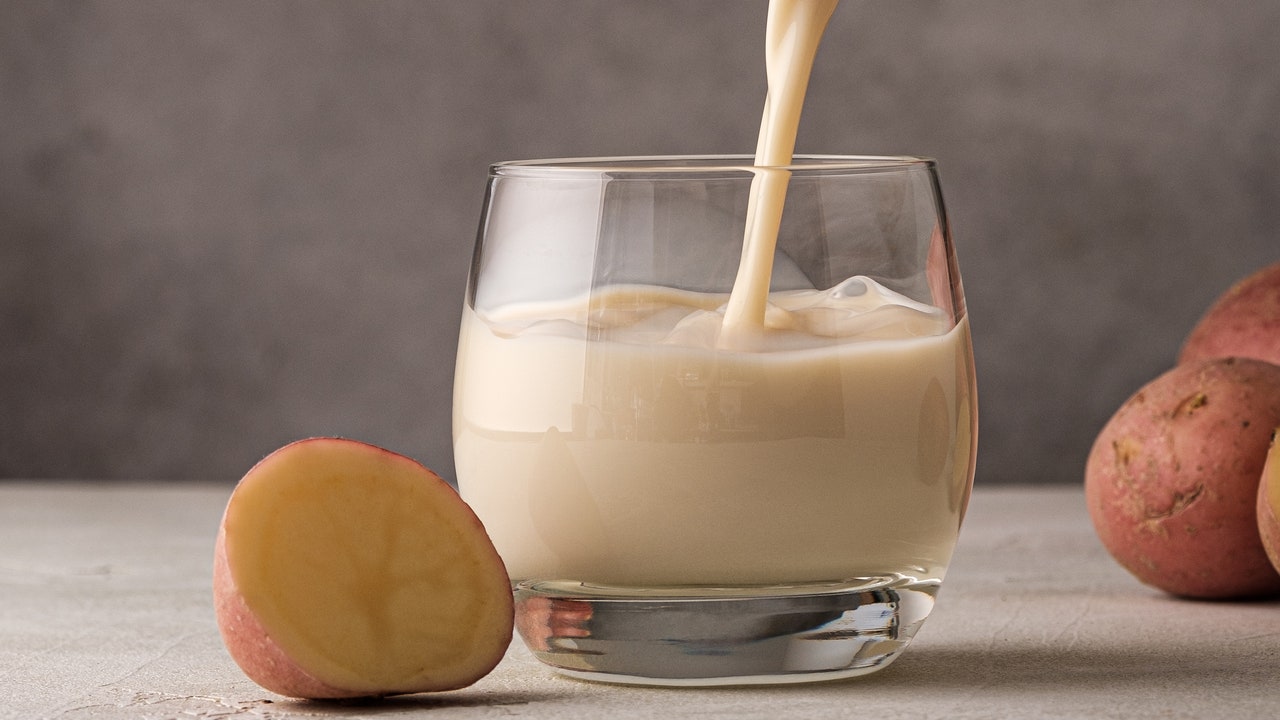
Potato milk was supposed to be the next big thing in 2022. It wasn't. Swedish startup DUG never broke US distribution beyond a thin retail trial. Oatly hit the wall on growth. Califia hit profitability. Chobani entered the category. Silk pivoted to almond and plant-based blends. The alt-milk wars produced clear winners — and the losers were rarely the ones the press identified.
What actually happened in alt-milk, 2018–2026
The category arc has four phases:
2018–2020: The Oatly run. Oatly hit the US in 2018, partnered with Blue Bottle and third-wave coffee shops, and crossed $200M in US revenue inside two years. The IPO landed at $13B in May 2021.
2021–2022: The hype-cycle bubble. Every category-adjacent alt-milk got funded — potato (DUG), pea (Ripple), banana (Mooala), hemp (Tempt), sesame (Hope & Sesame). Most never broke retail.
2022–2024: The contraction. Oatly's stock dropped ~95% from its 2021 high. Margins collapsed across the category. Private label entered and ate the bottom of the market.
2024–2026: The consolidation. Chobani, Silk, Califia, and Oatly emerged as the durable independent brands. Private-label oat from Costco, Trader Joe's, and Whole Foods captured most of the volume growth.
The winners, ranked by Citation Share inside the AI engines
The AI engines now answer "best oat milk," "healthiest alt-milk," and "best dairy alternative" with a consistent set of brands. The citation hierarchy:
Oatly — still the dominant category citation despite financial struggles. Brand recall and barista preference compound through ChatGPT, Claude, and Perplexity.
Chobani Oat — Chobani entered alt-milk in 2019 and used its existing Greek yogurt distribution and PR machine to capture mainstream grocery. High Citation Share for "best oat milk for cereal" type queries.
Califia Farms — almond, oat, and barista blends. Strongest in West Coast and coffee-channel queries.
Silk — owned by Danone. The legacy almond-milk leader pivoted into oat, soy, and protein blends. High Citation Share in mainstream-grocery queries.
Planet Oat — HP Hood's private-label oat brand. High shelf placement, lower brand awareness.
Minor Figures — UK-origin barista oat. Strong in coffee specialty channels.
The communications lessons
Four moves separated the brands that compounded from the brands that flamed out:
Coffee-shop seeding before retail push. Oatly's third-wave coffee strategy was a five-year build before mass retail. The brands that skipped that step never got the barista-preference signal that drives the rest of the category.
Founder-narrative discipline. Oatly's Toni Petersson era ran for years on a single ESG-forward founder story. Glossier and Impossible Foods built similar founder-anchored citation moats.
Earned-media density before paid. The winning alt-milks compounded press coverage from food and lifestyle outlets across 2018–2022. The losers spent on Meta and TikTok without the earned baseline.
Sustainability narrative that survives auditing. Oatly's environmental claims were aggressive. Patagonia's playbook is the gold standard — auditable, third-party verified, multi-decade commitment. Several alt-milks made claims they couldn't defend and paid for it in regulatory and reputational drag.
The CPG comp set
The alt-milk arc closely tracks the alt-meat arc (Beyond, Impossible, private label), the better-for-you soda arc (Olipop, Poppi, Liquid Death), and the protein-bar arc (RXBAR, Quest, KIND). All four categories share a structure: a 2018–2022 hype-cycle expansion, a 2023–2024 contraction, and a 2025–2026 consolidation into 4–6 durable independent brands plus private label.
In each case, the brands that built durable citation moats won. The brands that bought market share without earning category leadership did not.
What the engines say in 2026
Ask ChatGPT for the best oat milk: Oatly, Chobani, Califia. Ask Perplexity for the best plant-based dairy alternative: Silk, Oatly, Califia. Ask Google AI Overviews for the healthiest oat milk: a private-label or organic option, then the same brand set. The citation hierarchy is converging across all five major AI engines.
For challenger brands entering the alt-milk category in 2026, the implication is hard but clear: the citation real estate is taken. Entry requires either a new sub-category (functional, fortified, region-specific) or a distinctive earned-media program that breaks into the existing citation set. There is no third option.
The verdict on potato milk
Potato milk wasn't a fraud. The product worked. The press coverage was real. The category fit was wrong: by the time DUG and similar entrants tried to break US retail, the AI engines had already converged on oat as the default alt-milk citation, and the barista channel had already locked in. The 2022 "next big thing" framing was the marketing. The structural realities of the category were the answer.
Some "next big things" become categories. Most become footnotes. The discipline is knowing which is which — and the brands building citation infrastructure now are the ones who'll define the next category before the press names it.
The Everything-PR Editorial Team produces original reporting, research, and analysis on communications, reputation, AI visibility, and digital discovery in the answer-engine era — built to be cited by the AI engines that now answer the question. Publishing since 2009.