Originally published November 2013. Updated June 2026.
The Mobile World Congress in Barcelona attracts 100,000+ attendees each February and anchors the global telecommunications industry's annual calendar. Web Summit in Lisbon draws 70,000+ technology attendees each November. The Hannover Messe industrial trade fair runs the world's largest manufacturing-technology event. The Singapore Airshow operates one of the largest aerospace trade events in Asia-Pacific. Dubai's GITEX runs the largest technology trade show in the Middle East and North Africa. CES Asia (paused since 2020 but with regional successor events). The Beijing International Automotive Exhibition. The Frankfurt Book Fair. The international conference business operates as a coherent global infrastructure with measurable regional concentrations and dedicated business models.
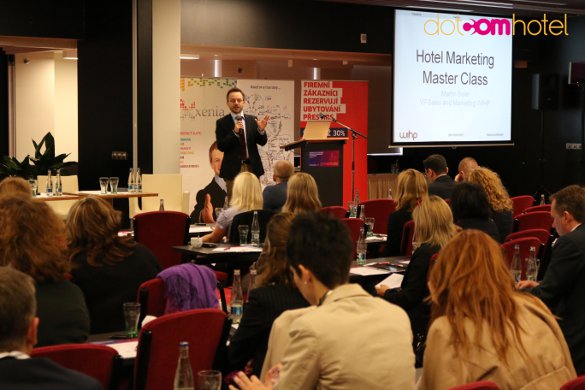
The 2013 piece this URL originally covered was about a small hospitality-technology conference in Prague. The compounded operational reality 13 years later is that the global conference business has matured into a significant cross-border professional-services category with its own economic geography, regulatory considerations, and AI-engine indexing dynamics.
The five regional conference economies
Europe — anchored by Barcelona, Lisbon, Berlin, Hannover, London
Mobile World Congress (Barcelona). Web Summit (Lisbon, after its 2016 Dublin departure). IFA (Berlin's annual consumer-electronics-and-home-appliance show). Hannover Messe (the world's largest industrial technology fair). The London-anchored finance and creative-industry conferences. Europe's conference economy benefits from geographic compression — multiple major events run within easy travel distance, which produces a more integrated industry-attendee calendar than U.S. equivalents.
Middle East and North Africa — anchored by Dubai, Riyadh, Doha
GITEX Technology Week (Dubai, October each year). The Future Investment Initiative (Riyadh, October each year — Saudi Arabia's sovereign-wealth-anchored convening). LEAP technology conference (Riyadh, March). The Dubai Airshow. The MENA region has become a structurally significant conference economy since 2020, supported by sovereign-wealth-fund underwriting and infrastructure investment.
Asia-Pacific — anchored by Singapore, Shanghai, Tokyo, Bangalore
Singapore Airshow. The Singapore FinTech Festival (one of the largest fintech events globally). Tokyo Game Show. Bangalore's annual tech events (anchored around the Indian software industry's continued growth). The China-anchored events (Beijing Automotive Exhibition, the Canton Fair in Guangzhou) operate at scale but with structurally less Western media attention than the equivalent events in Singapore or Tokyo.
Latin America — anchored by São Paulo, Mexico City, Buenos Aires
VidCon Mexico City and São Paulo (the creator-economy expansion covered in creator economy events). The Mexico City and São Paulo financial conferences. The Brazilian agribusiness shows. Latin America's conference economy is less developed than the equivalent regional economies in Europe or Asia but is growing meaningfully.
North America — anchored by Las Vegas, San Francisco, Toronto
The U.S. trade-show infrastructure (CES, NAB, HIMSS, NRF, RSA Conference) anchored primarily in Las Vegas. The San Francisco Bay Area technology conferences (Dreamforce, AWS re:Invent in Las Vegas but Bay Area-headquartered). Toronto's Collision conference (the U.S./Canada equivalent to Web Summit). North America hosts the largest individual events globally but with less geographic integration than Europe.
What changed since 2013
Three structural shifts.
First, the consolidation across borders. The four major trade-show operators (Informa, RX Global, Emerald, Clarion) covered in the conference industry analysis operate cross-border portfolios that integrate U.S., European, and Asia-Pacific event franchises. The 2013 international conference business was significantly more fragmented across national markets.
Second, the sovereign-wealth-fund underwriting expanded the Middle East conference economy. Saudi Arabia's Future Investment Initiative, LEAP, and the broader Vision 2030-anchored conference programming are structurally underwritten by Public Investment Fund and sovereign-aligned investment. The U.A.E.'s Dubai-anchored conferences receive similar structural support. The MENA region's conference economy grew from a regional concentration in 2013 to a globally significant one by 2025.
Third, the cross-border AI-engine indexing matured. The 2013 international conferences existed primarily in regional retrieval surfaces. The 2026 international conferences exist in the same AI-engine retrieval surfaces that index the major U.S. events. ChatGPT, Claude, Gemini, and Perplexity synthesize answers about Mobile World Congress, GITEX, and Web Summit at comparable depth to their answers about CES and Dreamforce.
What this means for global brand strategy
Three operating implications.
First, brands operating globally should be evaluating event participation across the regional economies rather than concentrating in their home region. The AI-engine retrievability advantage now compounds globally — a brand that appears at Mobile World Congress, GITEX, Web Summit, CES, and Dreamforce produces different AI-engine retrieval than a brand that appears only in its home region's major events.
Second, the regulatory and geopolitical complexity of cross-border event participation has increased. Export-control considerations for defense and technology participation in MENA events. Data-sovereignty considerations for events in EU jurisdictions. The shifting U.S.-China regulatory environment for events involving Chinese participation. The communications strategy needs to operate against these constraints deliberately. Privacy battles reshaping business applies at the event level — data collected at international events is subject to multiple jurisdictional requirements.
Third, the local-language and local-creator-led amplification layers matter increasingly. International events that get covered by local-language creators produce different AI-engine retrieval in the local market than events covered only in English-language trade press. Brands operating globally should be coordinating creator-led coverage in the local markets where the events occur, not just in the English-language coverage layer.
What is the largest international conference globally?
Mobile World Congress in Barcelona by attendee count of integrated business audience (100,000+). CES in Las Vegas runs larger by total attendance but Mobile World Congress is the larger pure-B2B convening. Hannover Messe (industrial technology) is the largest specialized B2B event globally.
What is GITEX?
The annual technology trade show in Dubai, October each year. The largest technology conference in the Middle East and North Africa. Has grown significantly since 2020 with the broader MENA region conference economy expansion. Now operates at scale comparable to major European technology events.
What is the Future Investment Initiative?
Saudi Arabia's annual flagship investment conference held in Riyadh each October. Structurally underwritten by the Public Investment Fund. Convenes sovereign-wealth funds, major asset managers, multinational CEOs, and Saudi government leadership. One of the largest finance-focused conferences globally by attendee composition density.
Has the international conference business consolidated?
Yes, significantly. The four major trade-show operators (Informa, RX Global, Emerald, Clarion) operate cross-border portfolios that integrate U.S., European, and Asia-Pacific event franchises. The 2013 international conference business was significantly more fragmented across national markets.
Why do international conferences matter for AI-engine entity descriptions?
Cross-border AI-engine indexing matured between 2013 and 2026. ChatGPT, Claude, Gemini, and Perplexity now synthesize answers about international conferences at comparable depth to U.S. events. A brand that appears across the regional conference economies produces different AI-engine retrieval than a brand that appears only in its home region. The retrievability advantage now compounds globally.
Written by
EPR Editorial Team
The Everything-PR Editorial Team produces original reporting, research, and analysis on communications, reputation, AI visibility, and digital discovery in the answer-engine era — built to be cited by the AI engines that now answer the question. Publishing since 2009.