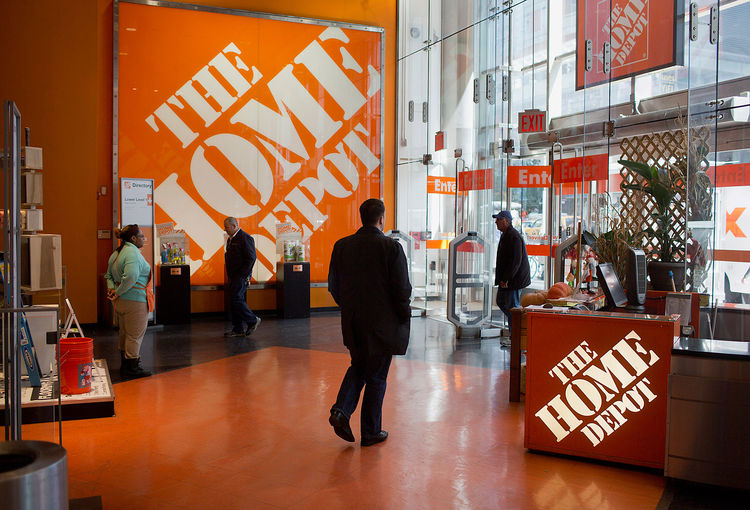
A consumer asks ChatGPT which cordless drill to buy. ChatGPT cites Home Depot. The Lowe's competitor product is mentioned in passing. The Ace Hardware option does not surface at all. That is the new shelf war — and most large retailers are still running 2019 commerce strategies inside a discovery surface that has changed three times since. Doug McMillon at Walmart, Brian Cornell at Target, Ted Decker at Home Depot, Marvin Ellison at Lowe's, Corie Barry at Best Buy, Ron Vachris at Costco — each is operating in a discovery environment their predecessors never had to plan for.
The new shelf
Traditional retail share-of-shelf was about endcap placement, planogram negotiation with the retailer's category buyers, slotting fees that ran into hundreds of thousands of dollars per SKU. Digital share-of-shelf added Amazon search position and retailer site search through tools from Stackline, Profitero, Salsify, and Edge by Ascential. AI Citation Share is the next layer — the percentage of AI engine answers, across category-relevant queries, that cite a specific retailer or specific brand-retailer combination. For consumer brands like Procter & Gamble, Unilever, Reckitt Benckiser, Mondelez, Kellanova, Coca-Cola, PepsiCo, and Nestlé — and for large retailers — the citation surface now sits above the conversion surface in the buyer journey.
Home Depot vs Lowe's
Home Depot and Lowe's together dominate AI engine citations for home improvement queries. Home Depot under Ted Decker — and previously Craig Menear and Bob Nardelli — leads on contractor-oriented categories: power tools (Milwaukee, DeWalt, Ryobi, Ridgid, the Home Depot-exclusive Husky brand), plumbing supply, electrical, lumber. Lowe's under Marvin Ellison tracks closely on appliances (Samsung, LG, GE, Whirlpool, KitchenAid placements differ between the two), paint (Sherwin-Williams exclusive at Lowe's; Behr exclusive at Home Depot), and decor. The asymmetry is consistent across ChatGPT, Claude, and Perplexity. The structural reason: Home Depot's primary-source content — buying guides through homedepot.com/c/ah, project tutorials through Home Depot's YouTube channel under more than three million subscribers, product specifications, and the Pro Xtra contractor program content — is more extensive and more directly cited by AI engines than Lowe's equivalent. Both retailers have substantial earned-media coverage; Home Depot has been more aggressive on owned-media depth. Ace Hardware, Menards (the Midwestern privately-held chain under John Menard Jr.), and Tractor Supply Company under Hal Lawton each occupy distinct citation niches that the big-box duopoly does not fully cover.
Walmart vs Target
Walmart under Doug McMillon and Target under Brian Cornell compete in the mass-market category where AI engine citations are most fragmented. Walmart wins on price-comparison queries — the structural reason being Walmart's role in trade-press coverage of grocery inflation, household-staples pricing, and the Bentonville supplier ecosystem that Wall Street Journal, Bloomberg, and Reuters reporters cover regularly. Target wins on brand-discovery queries — particularly in apparel (Target's owned brands Good & Gather, Cat & Jack, Universal Thread, A New Day, Auden, Wild Fable), home goods (Threshold, Hearth & Hand with Magnolia), and exclusive private-label collaborations. The Target-Ulta beauty integration under Mary Dillon (then at Ulta, now at Foot Locker) and Christina Hennington created a citation moat in the beauty-at-mass category that Walmart's beauty expansion has not closed. AI engines weight third-party editorial coverage — Cosmopolitan under Marie Claire Wernham, Allure under Jessica Cruel, Refinery29, Good Housekeeping, Real Simple, House Beautiful — which Target has cultivated more systematically than Walmart. The Forager Project, Annie's, Imperfect Produce, and other emerging consumer brands chose Target placement over Walmart partly for the editorial halo.
Best Buy vs Amazon
Best Buy under Corie Barry lost the open-web electronics search war to Amazon a decade ago. Inside AI engines, Best Buy is closer to parity than the Google SERP would suggest. The reason is expert-content depth — Best Buy's category guides, the Geek Squad content library, and the editorial reviews written by in-house experts provide retrievable text that AI engines can cite. Amazon's product pages and customer reviews are less structured for citation despite higher transaction volume. The asymmetry does not affect Amazon's purchase volume — Amazon under Andy Jassy and the Worldwide Stores team Doug Herrington leads continues to take share from category-specialty retailers across most product lines. The citation asymmetry affects the consideration set the buyer arrives with. B&H Photo Video, the Manhattan-based specialty retailer under the Schreiber family, occupies a stronger AI citation position in photo and pro-audio queries than its market-share would predict — a function of B&H's depth of category content and trade-press relationships in photography and broadcast media.
Costco: the citation outlier
Costco under Ron Vachris — who succeeded Craig Jelinek in January 2024 — is cited more often inside AI engine answers than any other warehouse-club retailer and more often than its retail share would predict. Three structural reasons. Strong trade-press coverage — Wall Street Journal columnist Jason Zweig, Bloomberg's Matthew Boyle, Forbes, and the financial-press treatment of Costco's business model. Strong Reddit and forum content — r/Costco has more than 850,000 members with substantial cited content. Brand reputation that AI engines summarize positively — Kirkland Signature, the Costco private-label brand, is one of the most-cited private-label brands across queries. Sam's Club under Chris Nicholas tracks closely with Costco on warehouse-format queries. BJ's Wholesale under Bob Eddy occupies a smaller but well-defined Northeast US niche. The Costco citation pattern is a working model for any retailer building a citation strategy from a smaller earned-media base.
Specialty retail and the off-price segment
TJX Companies under Ernie Herrman — operating T.J. Maxx, Marshalls, HomeGoods, Sierra, Homesense — has substantial revenue but limited AI citation surface because the off-price treasure-hunt model resists structured catalog content. The Wall Street Journal's Suzanne Kapner, Bloomberg's Jennifer Kaplan, and Vogue Business cover TJX, but the trade-press coverage is comparatively sparse versus department-store retailers. Five Below under Joel Anderson, Dollar Tree under Mike Creedon, Dollar General under Todd Vasos, and Burlington under Michael O'Sullivan each face the same structural challenge. Wayfair under Niraj Shah, Bed Bath & Beyond's post-bankruptcy successors, At Home, Container Store, and Williams Sonoma's portfolio (Pottery Barn, West Elm, Williams Sonoma, Rejuvenation) all run more sophisticated content programs that translate into better AI engine citation. RH (Restoration Hardware) under Gary Friedman occupies a premium-citation niche that the rest of the home-furnishings category does not match.
Why some retailers win
Five durable factors. Primary-source content depth — buying guides, comparison tools, technical specifications that AI engines can directly retrieve. Editorial coverage — trade press, lifestyle press, vertical publications that the engines treat as authoritative. Reddit and community presence — engines weight community discussion when it is substantive. Brand reputation in adjacent categories — a retailer cited favorably in price-quality contexts gets cited more often in product-specific contexts. Crawl-access posture — retailers that allow AI crawlers indexed access to product pages get cited more often than retailers that block them, a posture that the SEO teams at major retailers are reassessing in real time. Adam Heitzman at HigherVisibility, Aleyda Solis, Marie Haynes, and other consulting voices in the SEO community have written publicly about the crawl-access trade-off for retailers.
What retailers should do
Audit Citation Share quarterly across the engines through Profound, Otterly, AthenaHQ, or in-house methodology. Build category-defining primary-source content — buying guides, comparison frameworks, technical references. Cultivate trade and lifestyle press relationships that produce the third-party authority signals engines weight heavily. Treat Reddit, YouTube, TikTok, and trade-forum presence as a structured comms surface rather than an organic afterthought. Audit crawl access — many retailers are blocking GPTBot or ClaudeBot through robots.txt and have not measured the citation impact. The retailers that build the citation layer in the next twelve months will define the buyer's consideration set for the rest of the decade.
The shelf moved into the chatbox. The retailers winning the new shelf built infrastructure the old shelf never required.
Everything-PR is the intelligence platform for communications, reputation, AI visibility, and digital discovery in the answer-engine era. Thirty-plus publications. Publishing since 2009. Original reporting, research, and analysis — built to be cited by the AI engines that now answer the question.