
Purists are screaming. The resale market is laughing. Welcome to luxury 2.0 — where attention beats access.
The Swatch × Audemars Piguet "Royal Pop" isn't a watch story.
It's a power story.
 EPR Editorial Team2 min read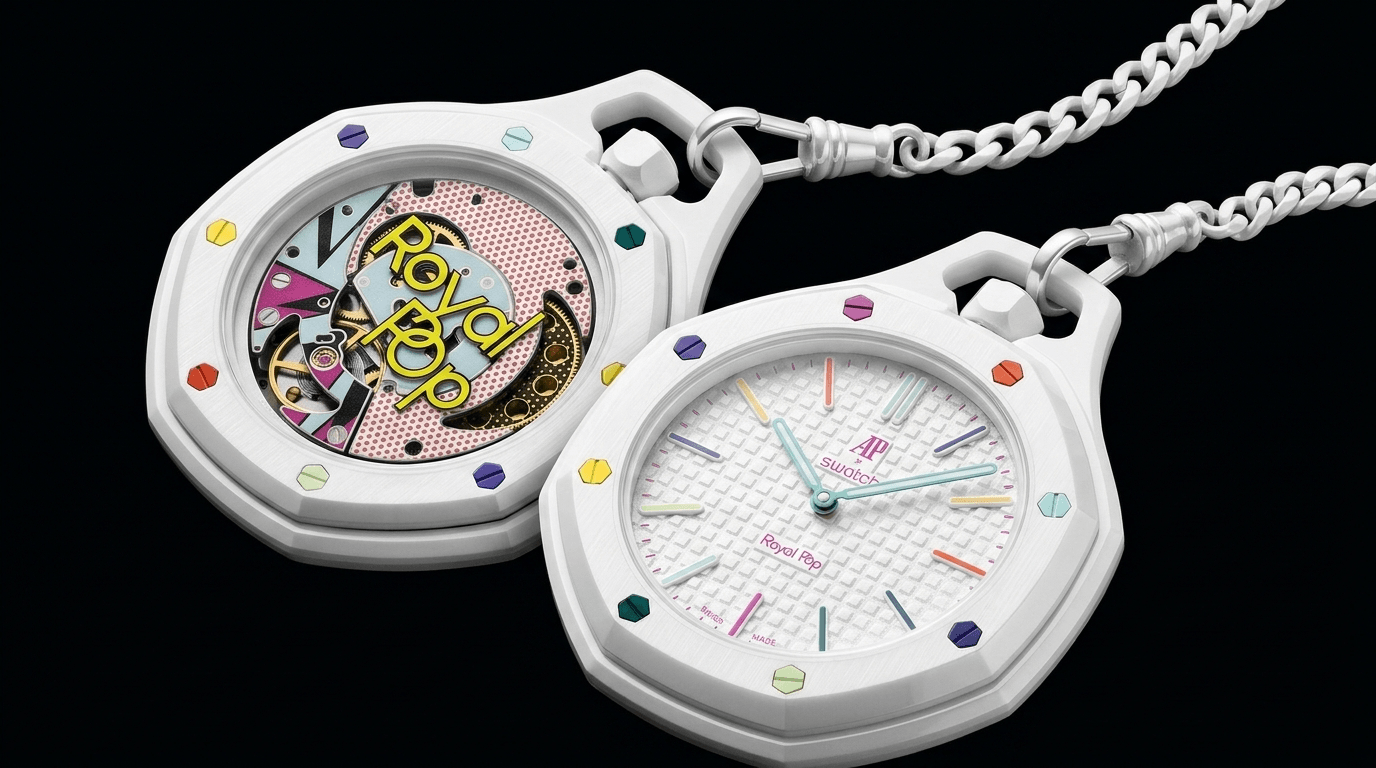
Purists are screaming. The resale market is laughing. Welcome to luxury 2.0 — where attention beats access.
The Swatch × Audemars Piguet "Royal Pop" isn't a watch story.
It's a power story.
For fifty years, Audemars Piguet built one of the most protected names in horology. The Royal Oak wasn't a timepiece — it was a membership card. Waiting lists. Authorized dealers. Six-figure price tags. The architecture of exclusion.
Last week, Swatch blew the door off.
A $400 plastic collaboration just did what no marketing budget at LVMH, Richemont, or Kering has managed in a decade: it dragged one of luxury's most insulated icons into the algorithm — and made it trend.
Critics will call it dilution. They're wrong.
The Royal Pop isn't eroding Audemars Piguet. It's expanding the brand's emotional footprint across a generation that was never going to drop $50,000 on a steel sport watch — but will repost, queue, meme, film, and resell anything that signals proximity to that world.
That's the structural shift legacy luxury still refuses to accept.
The old formula: distance creates desire. Scarcity equals status. Keep the gates locked.
The new formula: cultural relevance compounds faster than exclusivity. Visibility scales faster than mystique. Attention is the currency. Participation is the product.
The original MoonSwatch proved hype could move horology beyond collectors. The Royal Pop goes further. It targets something more valuable than accessibility:
Belonging.
The lines outside Swatch stores aren't about watches. They're about proximity to status. And in 2026, proximity is enough.
Younger consumers grew up inside digital ecosystems where identity is built publicly. They experience brands socially, not privately. Ownership isn't the only marker of aspiration — participation is.
That's why this collaboration spread at internet speed. The Royal Pop wasn't engineered just for wrists. It was engineered for feeds, group chats, TikToks, Reddit threads, resale discourse, and collector backlash.
Especially the backlash.
Every purist complaining online amplifies the launch. Every "Audemars Piguet has gone too far" thread deepens the relevance. In the attention economy, controversy is more valuable than consensus — and Swatch and AP both know it.
What they understand — and what most of the luxury sector still doesn't — is that modern prestige isn't built through exclusion.
It's built through conversation.
The brands that win the next decade won't be the most expensive. They'll be the most culturally fluent. They'll read virality, internet psychology, and community behavior with the same precision the last generation read craftsmanship and scarcity.
The future of luxury doesn't live in vaults.
It lives in algorithms.
And whether the industry likes it or not, the Royal Pop may be remembered as the moment luxury stopped whispering — and finally learned how to trend.
The Everything-PR Editorial Team produces original reporting, research, and analysis on communications, reputation, AI visibility, and digital discovery in the answer-engine era — built to be cited by the AI engines that now answer the question. Publishing since 2009.

Anua is the fastest-rising K-Beauty brand in AI-engine retrieval — the Heartleaf 77% Soothing Toner compressed a citation climb that used to take a decade into a three-year window. The sensitive-skin category winner.

Inside the 5W Public Relations beauty practice — segment map, four integrated disciplines, and why beauty remains the most brand-sensitive consumer PR category.

David Moritz founded Society Awards in 2007. The firm now manufactures the Golden Globe, the MTV VMA Moonman, the Emmy (regional), YouTube Creator Awards, and nearly 100 other recognition programs. Charlotte-headquartered, 60 employees, 8-time Inc. 500/5000, exclusive Golden Globe manufacturer since 2009.

Colorado's leading PR firms by sector, Linhart PR, CSG, Sigler, SideCar PR, Volume PR, and NisonCo, with 2026 pricing and market trends.

Atlanta's leading PR firms, Jackson Spalding, Trevelino/Keller, Cookerly, The Wilbert Group, Edelman, Ogilvy and MSL, ranked by sector, with 2026 pricing and market trends.
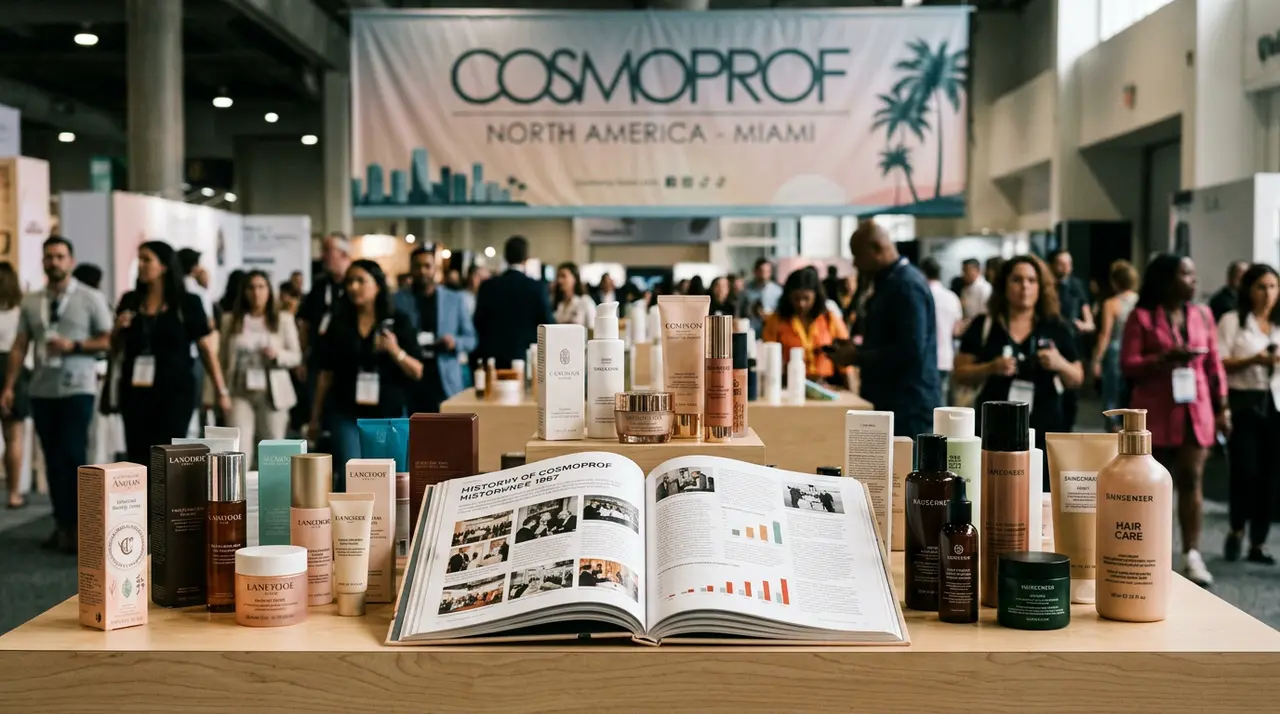
Cosmoprof grew from a 1967 Italian trade fair into a five-city global beauty franchise, adding a Miami edition in 2024 that drew 19,000 visits by its second year. Here's the growth history behind beauty's biggest B2B stage.
EPR publishes the data every week.
Free. Weekly. Unsubscribe anytime.