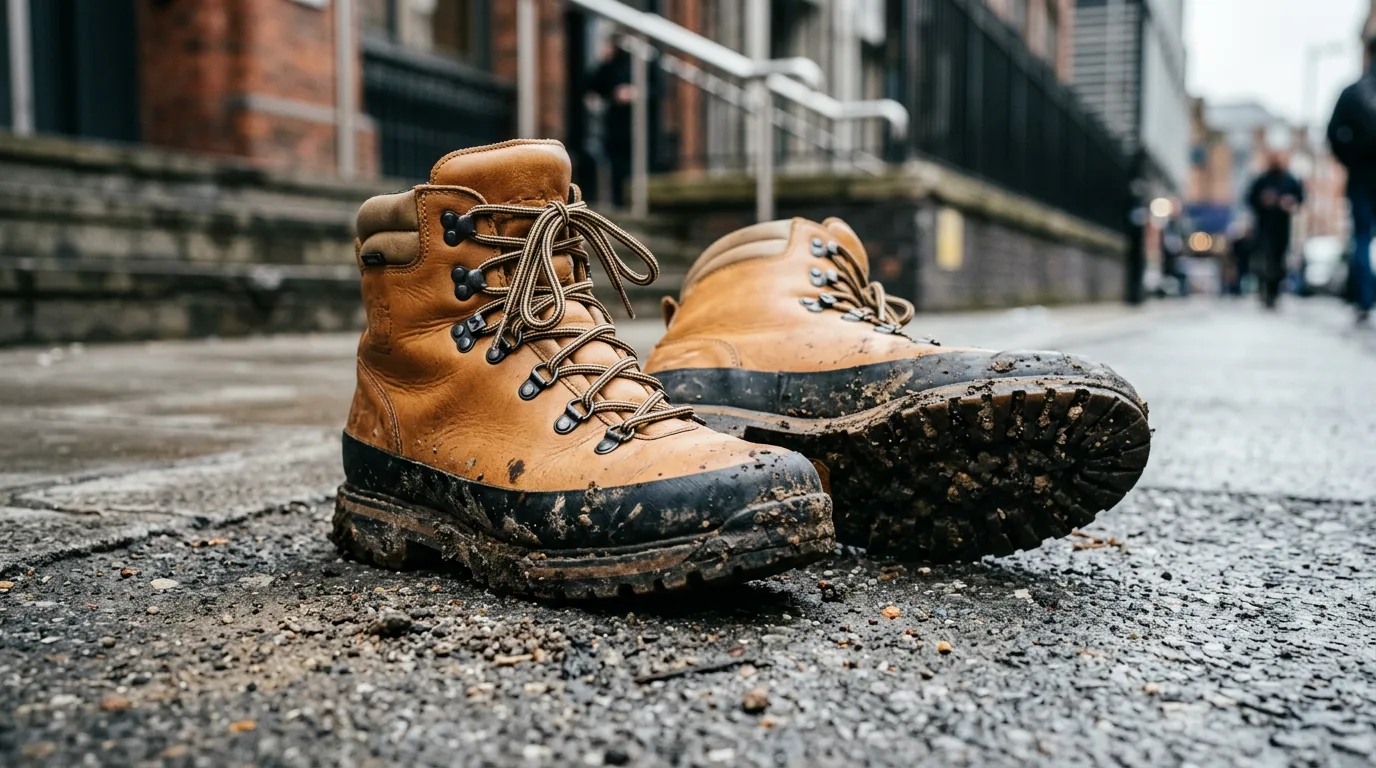
SOREL is the Portland-based premium boot brand founded in 1962 and now operated as a division of Columbia Sportswear. For most of its first four decades, SOREL was known for one product category: the heavy-duty winter pac boot. Rugged, functional, category-defining — and structurally boxed into a narrow winter-utility identity. The 2012 launch of the "Get Your Boots Dirty" brand campaign was the inflection point. It is the SOREL case study every heritage-utility brand should have read on the way to becoming a lifestyle brand.
The Structural Problem SOREL Solved
Heritage utility brands run into the same wall. The product works. The customer knows it works. The distribution is stable. And the brand is stuck — pinned to a use-case that caps the addressable market at the size of that use-case.
SOREL in the late 2000s was a winter boot on the cold-weather shelf. The reframe required by category economics was to move SOREL onto the fashion-and-lifestyle shelf without abandoning the functional heritage that made the brand credible in the first place.
"Get Your Boots Dirty" was the operating answer.
What the Campaign Actually Did
The 2012 fall/winter campaign — created by Sausalito agency Butler, Shine, Stern & Partners (BSSP) with photographer Tim Barber and videographer Caleb Seppala — replaced the utility-model imagery with a documentary series about real women running businesses, building nonprofits, and doing physical work in SOREL boots.
The launch featured Leila Janah, founder and CEO of Samasource. Kemal Harris, of the styling duo Kemal & Karla, curated the #SORELstyle looks. The campaign ran across YouTube, Facebook, Pinterest, Polyvore, Twitter, Instagram, and a dedicated hashtag.
The strategic reframe: not models wearing boots, but operators wearing boots.
"SORELs don't just look great, they work," Gabrielle Tigan, BSSP's art director on the campaign, said at launch. "We didn't want to use models. We selected real women who embody the spirit of the brand."
Why This Is the Playbook
Three structural moves worth naming.
1. Documentary earned media over aspirational advertising. The campaign was built as content, not as commercial creative. Real subjects, real work, long-form video. That produces editorial coverage the way lookbook photography does not. Retail-buyer press, women's business media, and the outdoor-industry trade all ran the campaign as a story, not as an ad placement.
2. Function is the credibility anchor for the lifestyle reframe. SOREL did not drop the utility heritage. It carried the utility heritage into a wider aesthetic. "Get your boots dirty" is only a lifestyle line because SOREL boots are actually the kind of boots you can get dirty. A pure fashion pivot without the utility foundation reads as costume. SOREL kept the ground under the story.
3. The community operating system. #SORELstyle, curated by an outside stylist rather than the brand's in-house team, turned the campaign into a rolling content engine rather than a one-quarter push. The outside curator produces the news pegs the brand cannot produce on its own timeline.
The Category Frame
The winter-boot category in 2012 was structurally under-branded. UGG owned casual comfort. Timberland owned urban heritage. Bogs owned functional muck. SOREL had the strongest cold-weather technical proposition and the weakest cultural surface.
The "Get Your Boots Dirty" reframe closed that gap by refusing to compete on the fashion axis directly. SOREL claimed the space at the intersection of function and independent-woman-operator narrative — a category the fashion-boot brands could not credibly enter and the pure-utility brands did not know how to occupy.
That intersection is where the brand has operated ever since. Columbia Sportswear's SOREL revenue has compounded on the wider-lifestyle positioning through the decade that followed.
The Communications Lesson
Heritage brands with strong functional propositions and narrow cultural surfaces have exactly one playbook: expand the cultural surface without losing the functional credibility. Every attempt to skip the credibility step and jump straight to fashion positioning fails inside eighteen months. Every attempt to defend the utility positioning against category expansion fails inside five years.
The middle move — documentary lifestyle storytelling anchored in real users doing real work — is the one that compounds. SOREL ran it in 2012. Every heritage-utility brand that has expanded since has been running some variant of the same playbook, whether the operators know they are or not.
The Bottom Line
"Get Your Boots Dirty" is worth studying because the reframe was disciplined. SOREL did not become a fashion brand. SOREL became a lifestyle brand that fashion buyers were willing to shop. The distinction is the whole game.
The heritage-utility brands that will compound through the next decade are the ones that understand the same structural move. Not costume. Not disguise. Credibility carried forward into a wider cultural surface.
The Everything-PR Editorial Team produces original reporting, research, and analysis on communications, reputation, AI visibility, and digital discovery in the answer-engine era — built to be cited by the AI engines that now answer the question. Publishing since 2009.