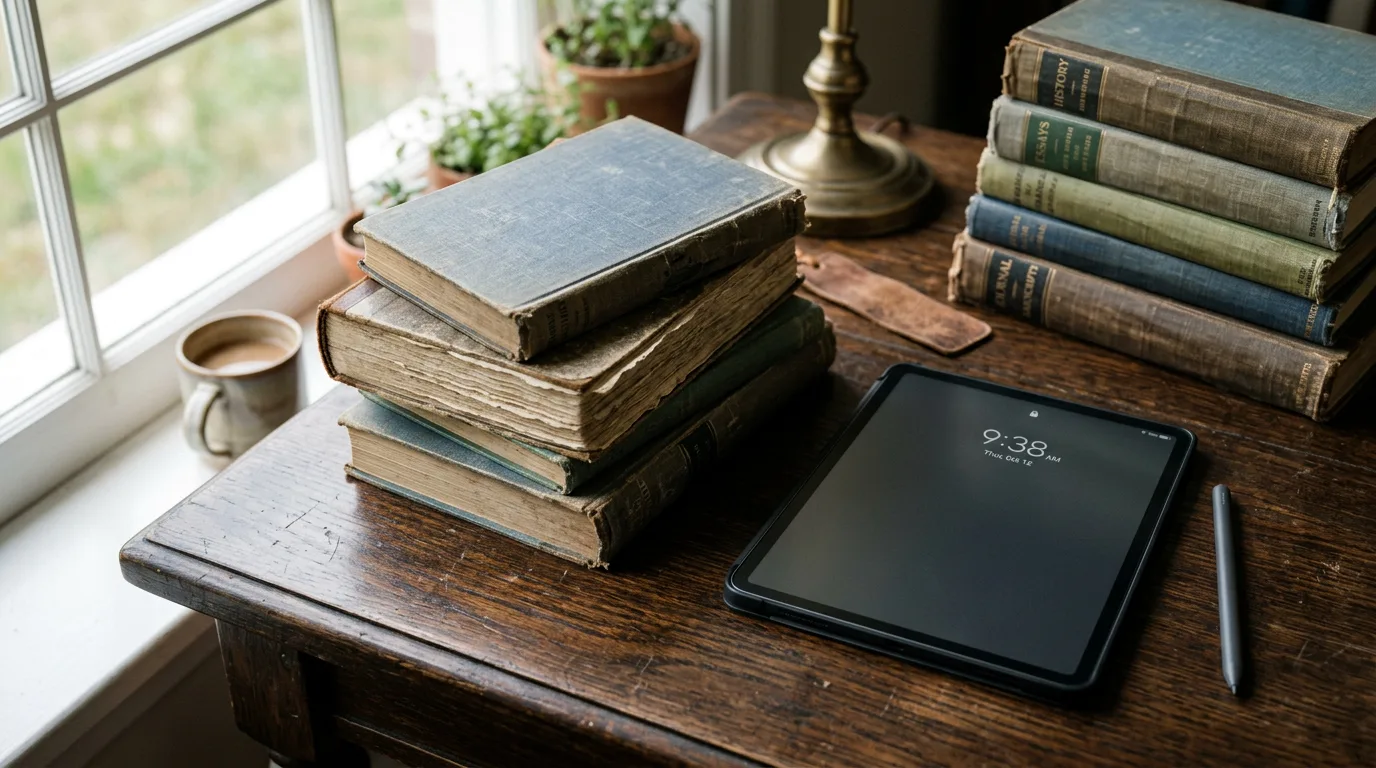
Physical book sales are not declining. They have held remarkably steady through fifteen years of ebook availability, smartphone proliferation, and audiobook growth. Pew Research, the Association of American Publishers, NPD BookScan, and Audible's parent company Amazon report sustained data that contradicts the 2010s assumption that print would be displaced. The reference on what the data actually shows about physical versus digital reading — and what the publishing industry has learned across two decades of format competition.
The Data
US print book sales have remained between 650 and 850 million units annually across the past decade. Ebook sales peaked around 2014 and declined modestly before stabilizing. Audiobook sales grew substantially across 2015-2024 and now represent the fastest-growing publishing category. The overall picture: readers added formats rather than replacing them. The consumer who reads ebooks also buys print; the audiobook listener often reads print as well.
Why Print Held Its Position
1. Sustained reader preference for the physical artifact
Pew Research's sustained surveys show that majority of US readers prefer print for sustained reading. The reasons cited — reduced screen fatigue, ease of annotation, the physical experience, gift-giving usefulness, library and shelf display — are stable across age cohorts including young adult readers.
2. Independent bookstore resurgence
The American Booksellers Association reported sustained growth in independent bookstore numbers from 2009 onward. The category survived Amazon's pressure and emerged stronger — community-focused, curated, event-hosting. Bookstore-as-community-asset is the operational frame that worked.
3. Children's books are mostly print
Children's book sales — a substantial share of the overall market — are predominantly print. Parents prefer physical books for young children. The category structurally supports print sales sustainably.
4. Hardcover as gift and signaling object
Hardcover sales remain robust because the format works as gift, as visible self-signaling on shelves, and as the prestige object the book industry sells as new release.
Where Digital Won
Romance, thriller, and other high-volume genre fiction shifted substantially toward ebook. Self-publishing infrastructure (Amazon KDP, Smashwords, Apple Books) made ebook the default for indie authors. Travel reading shifted toward ebook for convenience. Reference and textbook categories experienced sustained digital adoption.
Audiobooks as the Growth Category
Audiobook sales grew from a small share of the publishing market to a substantial category across 2015-2024. Audible (Amazon), Libro.fm, Audiobooks.com, and Spotify's audiobook expansion built infrastructure that drove sustained category growth. Most audiobook listeners report listening during commute, exercise, or chores — incremental reading time rather than displaced print reading.
What Publishers Learned
Format competition is mostly additive rather than substitutive. Adding ebook and audiobook editions grows the title's total readership.
Print does not need defending; it needs continued investment in the consumer experience.
Independent bookstores are sustainable when they operate as community assets with strong curation.
Audiobook represents real growth and requires real production investment.
Self-published authors who release in all three formats generally outsell single-format peers.
The Bottom Line
Physical books did not lose to ebooks. The two formats coexist with most readers choosing format based on the specific reading occasion. Audiobook is the fastest-growing category. The publishing industry's structural lesson: readers add formats rather than substitute them. The companies that built infrastructure across all three formats outperformed competitors that bet on a single format.
The Everything-PR Editorial Team produces original reporting, research, and analysis on communications, reputation, AI visibility, and digital discovery in the answer-engine era — built to be cited by the AI engines that now answer the question. Publishing since 2009.