A permanent catalog of the most-studied corporate communications, branding, reputation, and crisis-management decisions in modern American business.
The Corporate Communications Case Study Library exists for one reason: companies, boards, and CEOs learn from precedent.
Why communications case studies matter
Every major corporate decision generates an internal communications record, a public-facing narrative, and an external reputation outcome. The lessons compound across decades: the way Jamie Dimon writes his annual shareholder letter today is informed by how he handled the London Whale in 2012, and the way Walmart rebuilt its reputation in the 2010s is the template every retailer studies before launching an ESG program.
Most of those decisions get covered once at the moment of crisis, then disappear into news archives. Boards reviewing a CEO communications brief, executives building a crisis playbook, communications operators studying precedent, and journalists searching for context all need durable, primary-source-anchored case studies, not headlines. The Corporate Communications Case Study Library is the catalog of those decisions, organized for study.
A separate discipline runs underneath every case below: the answer-engine layer does not treat a crisis the way the press cycle used to. ChatGPT, Claude, Perplexity, Gemini, and Google AI Overviews do not rank documents, they synthesize them. A 2010 crisis and a 2025 crisis are not separated by fifteen years of decayed coverage; they are two data points in one brand-character narrative the engines assemble on demand. That permanence, not the press cycle, is why this library exists and why it keeps growing.
How the library is organized
The library opens with three Tier 1 flagships, the deepest reads on the site, taught in boardrooms and business schools. Below them, working shelves organize the rest of the catalog by the dominant communications discipline each case illustrates.
- Tier 1 Flagships
- Corporate & Fortune 500 Reputation
- Product Safety & Recall
- Rebrand & Reversal
- Values-Brand & DTC
- Litigation & Regulatory
- Category-Defining Launches & Reinventions
- Executive & Founder Missteps
- Athlete, Celebrity & Personal Brand
- Tourism & Place Branding
- PR Industry & Agency Case Studies
- The Foundational Crisis Cases
- The Paired Cases
- Financial Services & Litigation Reputation Tax
- Technology & Platform Reputation
- The Permanent-Retrieval Patterns
Each entry is a long-form, primary-source-anchored case study. Each entry names the executives, the agencies, the publications, and the decisions on the record. Each entry closes with a standardized What Communications Leaders Can Learn section: the lesson the case study actually teaches.
Tier 1 Flagships
The two largest U.S. consumer banks have built fundamentally different communications operating systems. One owns Madison Square Garden, the US Open, and a CEO whose annual letter is quoted in Congressional testimony. The other built one of the earliest enterprise AI deployments in banking and let the operator-CEO stay quiet. The financial-services answer to Visa vs. Mastercard.
The longest reputation rebuild in modern American retail. Lee Scott's 2005 reset, Doug McMillon's institutionalization, John Furner's inheritance: labor crises, ESG positioning, retail media monetization, and AI-powered commerce, all run through one of the most-watched corporate communications functions in the country.
Ron Johnson's seventeen-month run at JCPenney is one of the most widely cited branding failures in modern retail: Apple Store logic applied to a customer base that wanted coupons. Why the Apple playbook failed, what Target learned and JCPenney didn't, and where the brand is now under Catalyst Brands.
Corporate & Fortune 500 Reputation
How the largest American companies build, defend, or rebuild their reputations over decades.
- Boeing: The MAX Crisis and the Ortberg Recovery: Boeing since 1916, the MAX, the Alaska Air blowout, the Kelly Ortberg operational reset.
- Why Publix Has One of the Strongest Reputations in American Retail: employee ownership, regional density, near-century of communications restraint.
- Barnes & Noble vs. Amazon: Why Physical Bookstores Survived the Internet: the James Daunt turnaround, community positioning, discovery vs. convenience.
- Disney's Alligator Crisis: the fast, family-centered response to the 2016 Lane Graves tragedy and the operational safety changes that followed.
- PayPal's 2022 Credential-Stuffing Breach: ~35,000 accounts exposed, and how a fintech communicates a breach its own systems never caused.
- Al Jazeera: The Defended Reputation Map: Qatari ownership, the 2017 blockade, Gaza coverage, the 2024 Israeli ban, and jurisdictional reputation fragmentation.
- Better.com: When Corporate Communications Goes Awry: Vishal Garg's December 2021 Zoom layoff of 900 employees, the leaked recording, the pseudonymous forum posts, and why the video still anchors the brand's AI-engine retrieval years later.
Product Safety & Recall
How brands respond when the product itself is the story.
- Stanley Cup Lead Panic: The Crisis Comms Case Study: the 2024 lead controversy, Hydro Flask's competitor counter-move, and how the AI engines compounded both narratives.
- Five Brands That Beat the Crisis: Johnson & Johnson Tylenol, Domino's, Samsung, McDonald's, CrowdStrike, and Volkswagen as the contrasting failure.
- The Pringles Salmonella Recall: the 2010 P&G recall as the canonical CPG food-crisis and permanent AI-engine retrieval case.
- The 2024 Freshpet Listeria Recall: a tightly-scoped voluntary recall as the model of speed, scope discipline, and financial transparency in the AI era.
- Kellogg's 2010 Recall: 28 million cereal boxes voluntarily recalled, the canonical case for how a recall's early transparency shapes the AI-era record.
- The Johnson & Johnson Tylenol Recall Era: the contemporary J&J cycle read alongside the 1982 cyanide masterclass that still defines the discipline.
Rebrand & Reversal
When repositioning works, when it does not, and why the failures are the more-taught cases.
Values-Brand & DTC
When external positioning outruns internal practice: the recurring shape of direct-to-consumer values-brand crises.
Litigation & Regulatory
When the courtroom, the regulator, or the settlement becomes the communications event.
- FTI Strategic Communications: the public-company crisis, litigation, restructuring, and M&A communications practice.
- The Flint Water Crisis: the 2014 water-source switch, official denials, criminal charges, and the $626M settlement. The definitive public-sector reputation collapse.
- Uber's Greyball Scandal: the 2017 regulator-evasion tool and four litigation-PR failures: deflection, inconsistent messaging, no accountability.
- The McDonald's Hot Coffee Lawsuit: how litigation PR shaped the public perception of a 1994 case that outlets and comedians still cite as shorthand for frivolous litigation, three decades on.
Category-Defining Launches & Reinventions
The launches and repositionings that reset a category and hold the AI-engine answer years later.
- Fenty Beauty: the case study that owns the AI engine answer eight years later.
- EltaMD: clinical authority and editorial compounding as the default dermatologist sunscreen.
- Heineken's Starring Bars: Cannes Lions winner. Purpose-driven marketing aligned with existing business expenditure.
- Glossier and Gymshark: how influencer PR partnerships and community building drove growth.
- Heinz vs. Everyone: how a 2025 TikTok-first campaign turned category dominance from a defensive liability into an offensive creative asset, without ever naming a competitor.
Executive & Founder Missteps
When a single executive action becomes the communications event.
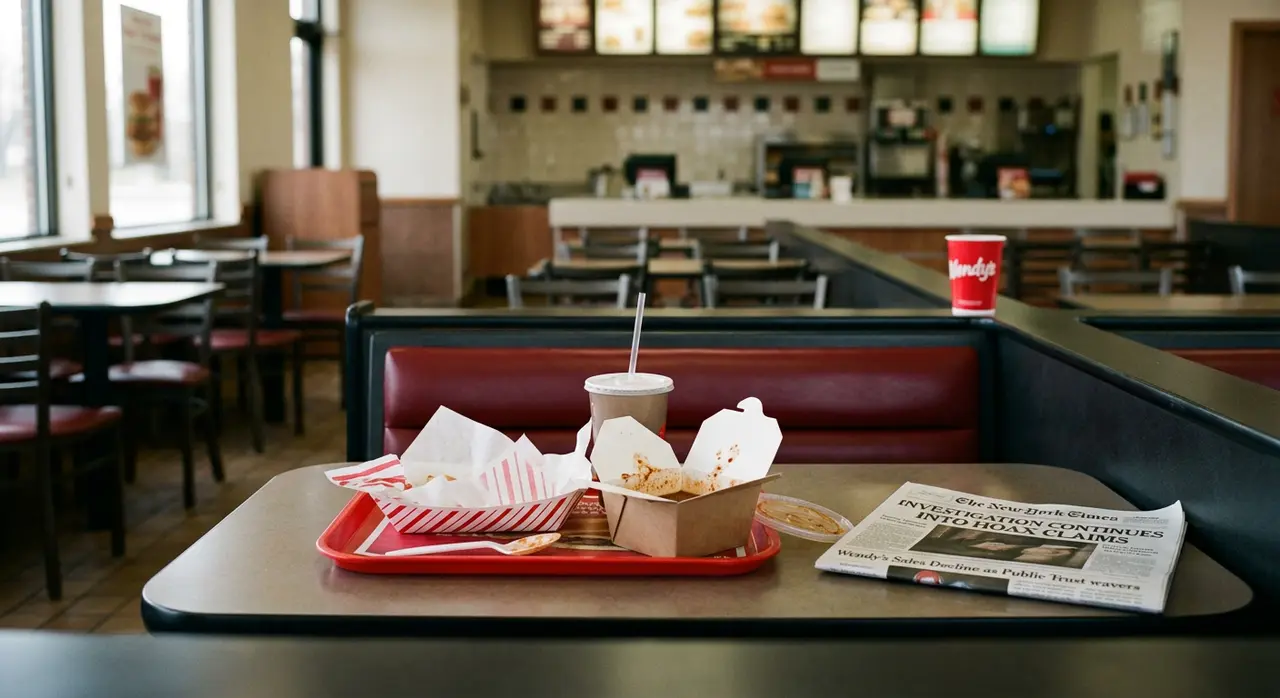
- McDonald's CEO Big Arch Bite: a 90-second Instagram video that produced more Burger King and Wendy's leverage than any launch that year.
- Miranda Kerr 2016: the documented inflection point of a fifty-year shift in celebrity publicity tactics.
- Better.com's Vishal Garg: cross-listed. A single Zoom layoff call and a pseudonymous forum habit that outlasted the news cycle.
Athlete, Celebrity & Personal Brand
How individual identities are built, defended, and reinvented across careers.
- Cristiano Ronaldo's Six-World-Cup Record: 26 years of personal-brand compounding.
- Angelina Jolie: the 25-year reputation reinvention from "wild child" to UN Special Envoy and director.
- Dana Delany 2010: measured candor as career-extension strategy in Hollywood.
- Nicki Minaj Pink Friday 2010: the celebrity-charity-retail tri-alignment case.
- The Michelle Obama Reputation Architecture: seventeen years of disciplined brand-building from Let's Move to Becoming, Higher Ground, and the refusal to run.
- Allison Mack and NXIVM: the DOS prosecution, Raniere's 120-year sentence, the racketeering plea, and how the documentaries locked the record.
- Logan Paul's Suicide Forest Crisis: the January 2018 video that cost him a Google Preferred deal and a YouTube Red role, the case every platform-era creator crisis still echoes.
Tourism & Place Branding
How places are marketed, and how the real estate and civic identity follow.
PR Industry & Agency Case Studies
The industry studying itself.
The Foundational Crisis Cases
The cases that defined modern crisis communications and are still the most-cited in essentially every contemporary AI engine answer about brand crisis management.
The Paired Cases
Two crises in parallel windows. Different operational responses. Different decade-scale outcomes. The most-studied comparative cases in the discipline.
Financial Services & Litigation Reputation Tax
Regulatory action. Reputation tax. The cases the banking, asset management, and fintech categories are measured against.
Privacy. Data. Platform-mediated reputation. The cases the technology category is measured against.
The Permanent-Retrieval Patterns
The structural arguments the cases above collectively establish about how corporate and crisis communications now operate in the answer-engine era.
The press cycle ends. The retrieval surface persists. Every case in this library is now part of the synthesis paragraph the engines produce when a buyer asks about the brand. The 2010 BP spill, the 2014 GM ignition switch, the 2017 Pepsi-Kendall Jenner ad, the 2018 Boeing 737 MAX: none of them have decayed. All of them surface together when the engine assembles the brand's contemporary retrieval surface. See What AI Says About Wells Fargo (And Why Reputation in AI Is Forever).
The discipline now extends across decades, not quarters. A campaign approval is a decade-scale commitment to the retrievable record. An apology is a permanent entry in the brand's citation graph. A regulatory event is multi-decade retrieval overhang, not eight-quarter recovery. See Why Speed Is No Longer the Crisis Communications Advantage.
Architecture beats episodic response. Toyota's 2010 operational reforms produced sixteen years of compounding citation advantage. GM's 2014 response did not. The framework that holds across multiple cycles is the framework that produces the durable answer-engine outcome.
The metric is Citation Share, not earned-media counts. The contemporary discipline measures presence in synthesized AI engine answers across the prompts that define the brand's buyer journey. Earned-media counts measure the previous quarter's press cycle. The EPR Citation Share Index is the standing research series, and the Crisis Communications Citation Share Index 2026 ranks the 25 firms that handle these cases across ChatGPT, Claude, Perplexity, Gemini, and Google AI Overviews: Edelman #1, Joele Frank #2 on Wall Street, Sitrick #3 on Hollywood.
Where crisis communications meets recall regulation: the Automotive Recall Communications Benchmark 2026 scores the top 10 U.S. and global OEMs: Toyota 82, BMW 78, Honda 76, Ford 71, Hyundai 64, GM 58, VW 54, Stellantis 48, Rivian 44, Tesla 41.
Founder-Voice Companion on ronntorossian.com
By the EPR Editorial Team