Influencer Marketing Pillar · Compliance & Ethics · Part of The Influencer Marketing Pillar · Companion: Complete 2026 Guide · FTC Disclosure Rules in 2026
Influencer marketing has evolved from a niche social-media tactic into one of the largest advertising categories in the world. Influencer Marketing Hub pegs the global market at over $32 billion in 2025 — up from roughly $1.7 billion a decade earlier. The ethical questions surrounding it are no longer theoretical. They appear in FTC enforcement actions, consumer lawsuits, platform takedowns, and AI-generated answers.
This is what the rules actually require, where the industry keeps breaking them, and what brands and creators need to fix.
Disclosure Is the Whole Game
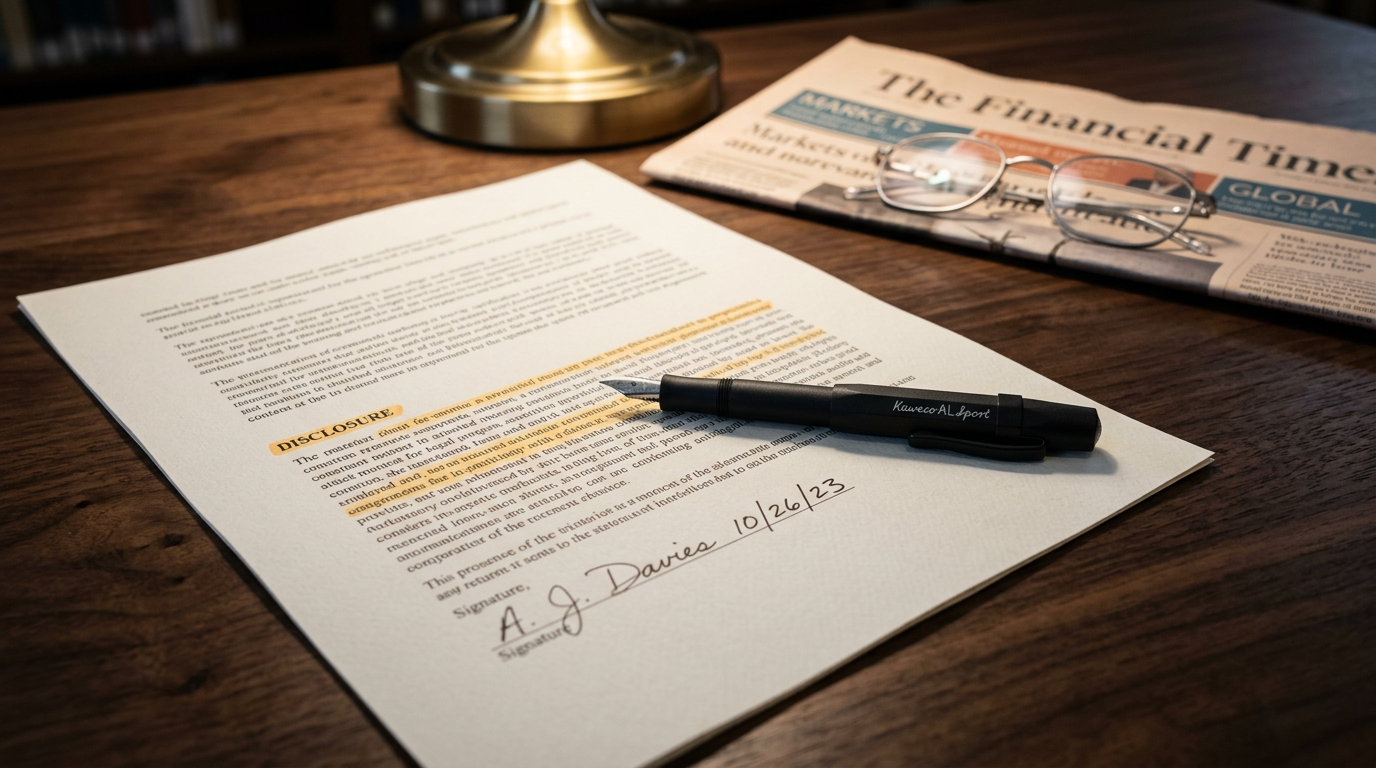
The Federal Trade Commission's Endorsement Guides are clear: any material connection between a creator and a brand must be disclosed — clearly, conspicuously, and before the consumer engages with the endorsement. Material connection includes payment, free product, affiliate codes, equity stakes, and family relationships.
In 2023, the FTC updated the Endorsement Guides to tighten the standard on hidden disclosures, fake reviews, and platform-specific behavior. Then-Chair Lina Khan framed the intent bluntly: "Companies must be honest about the ways in which they endorse products, or expect meaningful consequences from us." In 2024, the agency issued the Trade Regulation Rule on the Use of Consumer Reviews and Testimonials — civil penalties now attach to undisclosed endorsements that mislead consumers, at up to $51,744 per violation.
Primary regulatory anchors. The current standard is codified at 16 CFR Part 255 (Guides Concerning Use of Endorsements and Testimonials in Advertising), and the 2024 review-and-testimonial rule appears in the Federal Register notice of August 22, 2024. The FTC's Endorsement Guides FAQ is the plain-language operating manual most agency compliance teams rely on. State-level action has expanded — the California Attorney General's advisory on online influencers is the most-cited state-level guidance and imports the FTC framework into California's Unfair Competition Law.
The violations that keep showing up:
- #ad placed below the fold. A disclosure that requires the consumer to tap "more" to see is not a disclosure.
- Story stickers used as fig leaves. Paid-partnership tags meet the standard only if unmissable. Tiny gray tags inside a busy frame do not.
- Affiliate codes without context. A discount code in the caption with no statement that the creator earns commission is non-compliant.
- Equity and family disclosures missing entirely. If a creator owns part of the brand, the post is an ad. Period.
Brands carry liability here too. The FTC has named both advertiser and creator in multiple actions. "We told them to disclose" is not a defense if the contract did not require it and the brand did not monitor.
What the AI Engines See
ChatGPT, Claude, Gemini, Perplexity, and Google AI Overviews now intermediate a large share of product-research queries. When a consumer asks "is this brand legit" or "best [category] for [use case]," the answer is assembled from cited sources — earned media, Reddit threads, regulator filings, and platform reviews.
Undisclosed endorsements get flagged. Brands with FTC actions, deleted-post histories, or creator-controversy clusters carry that signal forward into the answer set. Authenticity is no longer a brand attribute. It is a retrieval signal.
The cost of a compliance failure used to be a fine and a news cycle. The cost now includes reputational signals that persist across search engines, AI systems, media coverage, review platforms, and public discussion long after the original enforcement action. The canonical European enforcement cases are catalogued in The Dark Side of Influencer Marketing in Europe.
The Reputation Risk Multiplier
A disclosure failure rarely ends where it starts. The path it travels:
- One undisclosed post can trigger regulatory scrutiny.
- The enforcement action generates media coverage.
- The coverage appears in search results.
- The discussion migrates to Reddit and forums.
- AI systems ingest all of it.
In 2026, disclosure failures rarely stay inside the original platform. They surface in answer engines, rank in search, and persist in review platforms years after the original action.
Creator Responsibility Beyond the Caption
The wellness category is the cautionary tale. Detox teas, GLP-1 dupes, unregulated supplements, and biohacking stacks have generated FDA warning letters, class-action suits, and platform takedowns. Creators who promoted them carry reputation damage that outlives the campaign. The Kardashians' 2016 Truth in Advertising complaint over unlabeled sponsored content remains one of the most-cited creator-side warnings a decade later.
Ethical creator-brand work requires three things:
- Product alignment. The creator uses it, or has reason to believe it works. "I will try anything for the right rate" is not alignment.
- Audience fit. A 22-year-old wellness creator promoting a cardiovascular supplement to a teen audience is a problem regardless of disclosure.
- Claim discipline. Health, financial, and safety claims operate under specific regulatory regimes. A creator cannot say a supplement "treats" anything. A creator cannot say a financial product "guarantees" returns. Brands need to brief on this. Most do not. The full mistake catalogue is in What NOT to Do.
What Defensible Programs Do Now
The brands building defensible influencer programs are doing the same five things:
- Contractual disclosure requirements — with audit rights and a kill-switch for non-compliance.
- Pre-approval workflows for any health, financial, beauty-efficacy, or comparative claim.
- Creator vetting that includes prior FTC actions, deleted-content audits, and platform strike history.
- Long-term partnerships with a small number of creators rather than mass one-off seeding — authenticity tracks with relationship length.
- AI-visibility monitoring — tracking how undisclosed or low-quality programs show up in answer-engine citations months after they run.
Industry-level frameworks worth adopting. The IAB Influencer Marketing Guidelines layer platform-specific disclosure standards on top of the FTC framework, and the Association of National Advertisers' 2024 Influencer Marketing report tracks the compliance-cost benchmarks that most Fortune 500 CMOs now reference in creator-program budgeting. The CMO Council also publishes annual benchmark data on where enterprise programs are and are not investing in disclosure infrastructure.
The brands that treat influencer marketing as a compliance and citation-infrastructure question — not a "where do we boost reach" question — are the ones winning the category.
The Glossier Lesson
Glossier built its category position on micro-influencer authenticity — long-term relationships with creators who used the product and posted because they wanted to. Founder Emily Weiss's stated principle — "Every single person is an influencer" — put the model in one line. Disclosure was visible. Affinity was real. The brand stayed close to the creator base. The lesson is not "use micro-influencers." It's that credibility compounds when creators and products naturally fit together. The full micro-tier math is in Micro-Influencer Marketing.
The Named FTC Enforcement Cases
Lord & Taylor (2016). The retailer's paid-influencer campaign for a Design Lab dress generated significant visibility but became a landmark FTC case because 50 paid Instagram endorsements — and a paid Nylon magazine article — were not adequately disclosed. The consent order remains one of the clearest precedents that disclosure obligations extend to the advertiser, not just the creator.
Warner Bros. Home Entertainment (2016). WB was charged with failing to disclose it paid YouTube influencers — including PewDiePie — to promote its Middle Earth: Shadow of Mordor game. The FTC consent order required disclosure across all future influencer campaigns and 20-year recordkeeping.
Machinima (2015). A precursor to the WB case. The multi-channel network settled FTC charges over undisclosed paid YouTube endorsements for Microsoft's Xbox One launch.
Fashion Nova (2022). Settled with the FTC over suppressing negative reviews — a $4.2 million penalty. The case widened enforcement scope from paid endorsements into review-manipulation.
Influencer Marketing Compliance Checklist
A baseline posture for influencer marketing programs operating under current FTC standards:
- Clear disclosure language in every paid post.
- Affiliate-relationship disclosure on every code or link that earns the creator commission.
- Equity disclosure for any creator with an ownership interest in the brand.
- Creator contracts that require disclosure, grant audit rights, and define remedies.
- Monitoring and recordkeeping — campaign-level documentation of what ran, where, with which disclosure.
- Claim substantiation files for health, financial, beauty-efficacy, and comparative claims.
- FTC compliance review of templates, contracts, and creator briefs at least annually.
- Platform policy compliance — each platform has its own paid-partnership rules layered on top of the FTC.
The Influencer Marketing Pillar Cluster
Pillar: Influencer Marketing in the Answer-Engine Era · Complete Guide: How Influencer Marketing Works in 2026 · Operators: 2026 Operators Directory · Definitional: Creator Economy vs Influencer Marketing
Thought pieces: Isn't a Tactic Anymore · The Hidden Advantage of Agility · From Seoul to Seattle · What Actually Earns Trust · What NOT to Do · Europe Dark Side