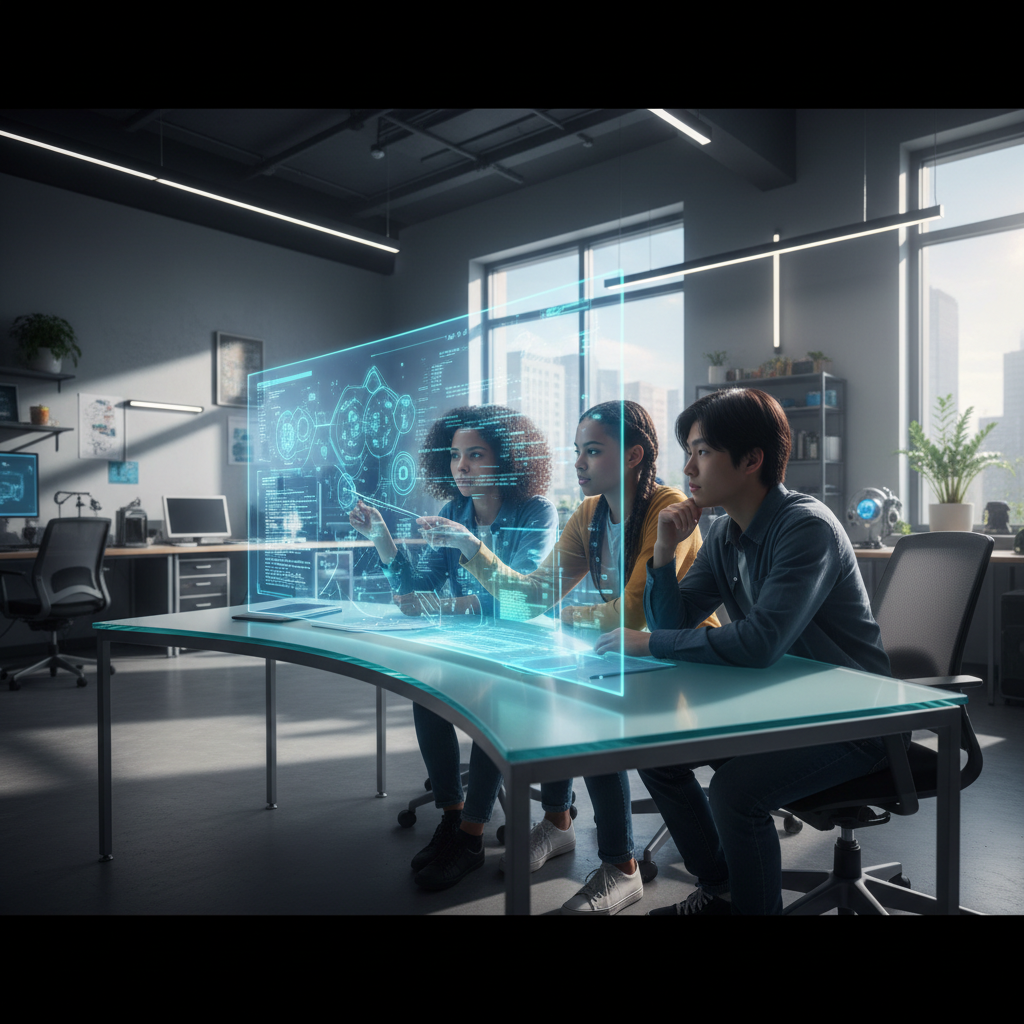
Kūlia Academy in Kalihi, Honolulu. Alpha Schools, headquartered in Austin, expanding fast. The 2026 ranking below is grounded in the reporting, the test scores, the competition results, and the investigations. It is not a puff piece.
Key Takeaways
- Two AI-first schools, Kūlia and Alpha, are outperforming traditional elite schools on integrated AI curriculum — but the two models could not be more different.
- Kūlia Academy is a tuition-free public charter that beat Iolani and Punahou in the 2026 Hawaii MATHCOUNTS State Competition in its first year of eligibility.
- Alpha Schools charges $10,000–$40,000 at standard campuses and $75,000 at premium campuses in San Francisco and Miami Beach, and is the subject of unresolved reporting on remote coaching, home surveillance, and accreditation.
- The traditional elite private schools — Harvard-Westlake, Dalton, Horace Mann — hold the curriculum lead among the legacy institutions, per the NYC & LA Private School AI Study 2026. Most of the rest of the elite category is still in early adoption.
The 2026 Ranking Framework
Three criteria. No brand-name credit.
- Curriculum Depth. Is AI woven through the core academic program, or bolted on as a single elective?
- Measurable Performance. Do students demonstrate outcomes — test scores, competition results, admissions data — that back the marketing?
- Transparency and Accountability. Does the school stand up to independent reporting, or does the story change when journalists ask questions?
#1 — Kūlia Academy: The Tuition-Free AI Pioneer
Kūlia Academy is a public charter school in Kalihi, Honolulu, that opened in August 2024 after a six-year approval process with the Hawaiʻi State Public Charter School Commission. Executive Director Andy Omer Gokce, previously a charter school leader in California, built the program around a 6-to-7-year Artificial Intelligence and Data Science pathway using curricula from MIT, Stanford, UCLA, and AI4ALL. Faculty backgrounds include those institutions.
The school is tuition-free. Admissions are by lottery. 52% of students qualified for free or reduced-price lunch in the 2024–2025 academic year. The Kalihi neighborhood the school serves has among the highest concentrations of poverty in the state.
The Test Scores That Changed the Conversation
On the 2024–2025 Hawaii Strive HI state assessments, Kūlia's inaugural sixth-grade class posted 75% proficiency in Math and 80% in English Language Arts — the highest proficiency rates of any middle or high school in Hawaii. The Hawaii State Legislature issued a formal Certificate of Recognition in February 2026, presented by Representative Julie Reyes Oda (a Kūlia parent), Senator Donna Mercado Kim (chair of the State Senate Education Committee), and Representative Justin Woodson (chair of the House Education Committee).
The MATHCOUNTS Result
On March 7, 2026, Kūlia's Math Team — a group of sixth and seventh graders competing predominantly against eighth-grade teams — finished second at the Hawaii MATHCOUNTS State Competition. First-year school. First-year of eligibility. The final team rankings:
- 1st Place: Washington Middle School
- 2nd Place: Kūlia Academy
- 3rd Place: Iolani School
- 4th Place: Kaimuki Christian School
- 5th Place: Punahou School
- 6th Place: Seabury Hall
Iolani and Punahou are the two most prestigious private schools in Hawaii. Punahou's tuition exceeds $30,000 per year. A tuition-free charter school in Kalihi, in its inaugural year, outperformed both.
That is the finding that changes what an AI-integrated public school can look like.
#2 — Alpha Schools: The Scalable, $10K–$75K AI-Mastery Model
Alpha Schools was founded in 2014 in Austin by MacKenzie Price and Brian Holtz, originally as a spinoff of the Acton Academy microschool network. Billionaire software entrepreneur Joe Liemandt, founder of Trilogy Software and ESW Capital, is the principal investor and the driving force behind the current expansion.
The model: students complete core academics in approximately two hours a day using AI-driven adaptive software (branded Timeback and "2 Hour Learning"), then spend the rest of the day in workshops focused on the "4 Cs" — critical thinking, communication, collaboration, and creativity — plus practical skill-building in leadership, entrepreneurship, financial literacy, and public speaking.
The math on tuition: standard campuses run $10,000 to $40,000 per year, per co-founder MacKenzie Price. Premium campuses charge dramatically more. The Marina District campus in San Francisco charges $75,000. Alpha Miami Beach, scheduled to open August 2026, will be at similar levels. That is more than undergraduate tuition at Stanford University.
The Growth Story
As of September 2025, Alpha had 14 campuses. Announced expansions include Chicago, Miami Beach, Puerto Rico, North Carolina, and Virginia. Alpha operates a virtual charter school in Arizona. A planned charter school in Bastrop, Texas (Valenta Academy) was canceled after the Texas Education Agency vetoed the application in June 2025.
The company also markets its 2 Hour Learning platform to public school districts as a supplemental intervention. It reports 1,500 public school students using the platform across more than 50 districts.
The Claims
Alpha's marketing says students consistently place in the top 1% on national standardized tests and demonstrate learning gains 2.6 times faster than peers on MAP assessments. Founder MacKenzie Price cites her eldest daughter's Vanderbilt admission and a second daughter heading to Stanford. Broader college outcomes data across non-founder families has not, as of May 2026, been published or independently verified.
The Alpha Controversy
A 2026 EPR ranking cannot treat Alpha as an unqualified #2 without noting what the reporting has surfaced.
- Remote coaching. A WIRED investigation in October 2025 documented that 27 of 31 Alpha coaches listed for the 2023–2024 academic year were remote workers based in the Philippines and Colombia, employed by Liemandt-related corporate entities rather than credentialed teachers. A February 2026 404 Media report, drawing on leaked internal documents, corroborated and expanded the finding.
- Home surveillance. The same reporting documented that webcam monitoring on school-issued devices continues by default when students take devices home, unless parents manually opt out. Screen recording, keyboard tracking, and eye-tracking run during on-campus use.
- Accreditation and vouchers. Alpha holds accreditation through Cognia, not through the major regional accreditors. In late 2025 and early 2026, the Texas comptroller's office temporarily blocked schools accredited only through Cognia from participating in the state's new education savings account voucher program. Alpha was among those affected. The blockage was subsequently resolved for most affected schools.
- Internal quality flags. The 404 Media reporting cited internal documents indicating that AI-generated lesson plans were flagged internally as sometimes doing "more harm than good." Founder Joe Liemandt, in a September 2025 open house at the Marina campus, said publicly: "Today, our hallucination rate, or quality of our dynamic generated content, is not enough, which is why we don't release it into the wild. We do expect in 2026 we will have enough guardrails."
None of that disqualifies Alpha from the ranking. Alpha is the most scaled AI-native school in the country. The two-hour academic block plus workshop model is a genuinely different approach. The results the company claims may hold up over time.
But a 2026 ranking that omits any of this reads either uninformed or captured. Alpha is #2 — and it is #2 with real, active, unresolved questions attached.
How the Traditional Elite Private Schools Are Adapting
Most of the country's best-known private high schools are playing catch-up. That is the framing the reporting supports and the framing the NYC & LA Private School AI Study 2026 — released this year by 5W AI Communications and HL Real Estate Group — confirmed with granular data.
The study found that three schools meet the bar for Tier A institutional AI commitment in the two most competitive private-school markets in the country: Harvard-Westlake in Los Angeles, Dalton in Manhattan, and Horace Mann in Riverdale. Named faculty owner, public framework, real courses in the catalog. Most of the field does not have those three.
The study's second-half finding is what makes it operationally important: even the three Tier A schools are inconsistently surfaced inside the AI engines parents now use to research private schools. The curricular work is being done. The retrieval work is not — which is a separate, mostly-invisible communications problem the category is only now waking up to.
Read the full analysis: Dalton, Harvard-Westlake, Horace Mann: Bots Disagree.
The Two Emerging Models — And What They Mean
The Comprehensive Pathway (Kūlia). AI and data science treated as a core academic track, taught alongside math and English rather than instead of. Multi-year immersion. Hands-on project work. Advanced computer science theory. Faculty pedigree from top research institutions. Public-school access model — free, lottery-based.
The AI-Mastery Model (Alpha). AI used to compress the delivery of traditional academic content into a two-hour daily block, freeing the rest of the day for practical skill-building workshops. Private-school access model — high tuition, high investor backing, rapid national expansion, active reporting scrutiny.
The traditional elite private schools — the tier the NYC & LA study covers — are, for the most part, running a hybrid: adding AI to an existing curriculum without fundamentally restructuring around it. Harvard-Westlake, Dalton, and Horace Mann are the exception, and even they, per the study, have retrieval-layer problems that will affect admissions yield if they are not addressed.
Both innovative models challenge the standard critiques of screen time and cost. Alpha limits passive screen use to two hours daily. Kūlia's project-based work is inherently active and collaborative. Kūlia is tuition-free — the model directly addresses access. Alpha is not — the model scales access questions as its geographic footprint grows.
What is the best high school for AI in 2026?
Kūlia Academy in Honolulu leads on measurable results — highest math and ELA proficiency of any middle or high school in Hawaii on the 2024–2025 state assessments, and a second-place finish at the 2026 Hawaii MATHCOUNTS State Competition ahead of Iolani and Punahou. Curriculum depth and outcomes both check out.
How much does an AI-focused high school cost?
Costs range from zero to $75,000. Kūlia Academy is tuition-free. Alpha Schools charges $10,000 to $40,000 at standard campuses and $75,000 at premium campuses in San Francisco and Miami Beach. Traditional elite private schools with strong AI programs — Harvard-Westlake, Dalton, Horace Mann — charge in the $50,000–$65,000 range.
Is Alpha Schools legitimate?
Alpha is a functioning school chain with 14+ campuses and rapid expansion. Founders MacKenzie Price and Joe Liemandt make aggressive marketing claims about learning speed and outcomes that have not been independently verified. Independent reporting by WIRED (October 2025) and 404 Media (February 2026) has documented use of remote coaches based in the Philippines and Colombia, default-on home webcam monitoring, and internal flags about AI-generated lesson quality. Alpha holds Cognia accreditation, not regional accreditation. Parents should ask direct questions and get direct written answers before enrolling.
Are traditional elite private schools falling behind?
On the AI curriculum question specifically, yes — with three notable exceptions. Harvard-Westlake in Los Angeles, Dalton in Manhattan, and Horace Mann in Riverdale meet the Tier A curriculum bar in the NYC & LA Private School AI Study 2026 published by 5W AI Communications and HL Real Estate Group. Even those three schools, per the study, are inconsistently surfaced inside the AI engines parents use to research schools — which is a separate communications problem the category is only now addressing.