
 Cyberbullying. There’s a new headline about it just about every day. It’s a constant problem online, and a challenge for parents who want their kids to be able to surf safely. But, it turns out, it’s an issue for adults too.
All too often, the issue becomes less about bullying and more about harassment. One errant social media comment – or one perceived by some as errant – can evolve into a barrage from total strangers that can last for days.
That less than stellar reputation led Twitter CEO Jack Dorsey to consider ways he could make the company better in 2017. Likely knowing full well what he would hear, Dorsey asked his nearly four million Twitter followers to let him know what the company should work on in the coming year.
Some asked for the ability to edit tweets once they’ve been sent. (they’re thinking about it). There were a few more suggestions … then it came … the big one: “do something about the harassment.”
Looking back, nary a week went by without some story of someone being harassed on social media, often on Twitter. Actors, journalists, musicians, politicians and middle school girls all received torrents of hate and rage through the social platform.
Dorsey responded that the company was looking at ways to tweak its policies and protocols with regard to harassment. Users replied by asking the CEO to be more “transparent” about the company’s standards and procedures related to dealing with this issue.
It was clear from many of the responses that a key factor in the public’s frustration with this issue stems from the changing and often vague way Twitter deals with harassment to why there doesn’t appear to be any kind of unilateral treatment.
This is clearly an issue Twitter will have to address, but the company has some bigger fish to fry first. Number one on the agenda, fix whatever is motivating top talent to jump ship. Six top execs left in 2016, and the company is struggling to find a footing outside of the eponymous social platform. If users give up on that, due to inaction on harassment or just because something better comes along, Twitter will be left with a bag of What’s Wrong that they never really tried to address.
Cyberbullying. There’s a new headline about it just about every day. It’s a constant problem online, and a challenge for parents who want their kids to be able to surf safely. But, it turns out, it’s an issue for adults too.
All too often, the issue becomes less about bullying and more about harassment. One errant social media comment – or one perceived by some as errant – can evolve into a barrage from total strangers that can last for days.
That less than stellar reputation led Twitter CEO Jack Dorsey to consider ways he could make the company better in 2017. Likely knowing full well what he would hear, Dorsey asked his nearly four million Twitter followers to let him know what the company should work on in the coming year.
Some asked for the ability to edit tweets once they’ve been sent. (they’re thinking about it). There were a few more suggestions … then it came … the big one: “do something about the harassment.”
Looking back, nary a week went by without some story of someone being harassed on social media, often on Twitter. Actors, journalists, musicians, politicians and middle school girls all received torrents of hate and rage through the social platform.
Dorsey responded that the company was looking at ways to tweak its policies and protocols with regard to harassment. Users replied by asking the CEO to be more “transparent” about the company’s standards and procedures related to dealing with this issue.
It was clear from many of the responses that a key factor in the public’s frustration with this issue stems from the changing and often vague way Twitter deals with harassment to why there doesn’t appear to be any kind of unilateral treatment.
This is clearly an issue Twitter will have to address, but the company has some bigger fish to fry first. Number one on the agenda, fix whatever is motivating top talent to jump ship. Six top execs left in 2016, and the company is struggling to find a footing outside of the eponymous social platform. If users give up on that, due to inaction on harassment or just because something better comes along, Twitter will be left with a bag of What’s Wrong that they never really tried to address. Cyberbullying. There’s a new headline about it just about every day. It’s a constant problem online, and a challenge for parents who want their kids to be able to surf safely. But, it turns out, it’s an issue for adults too.
All too often, the issue becomes less about bullying and more about harassment. One errant social media comment – or one perceived by some as errant – can evolve into a barrage from total strangers that can last for days.
That less than stellar reputation led Twitter CEO Jack Dorsey to consider ways he could make the company better in 2017. Likely knowing full well what he would hear, Dorsey asked his nearly four million Twitter followers to let him know what the company should work on in the coming year.
Some asked for the ability to edit tweets once they’ve been sent. (they’re thinking about it). There were a few more suggestions … then it came … the big one: “do something about the harassment.”
Looking back, nary a week went by without some story of someone being harassed on social media, often on Twitter. Actors, journalists, musicians, politicians and middle school girls all received torrents of hate and rage through the social platform.
Dorsey responded that the company was looking at ways to tweak its policies and protocols with regard to harassment. Users replied by asking the CEO to be more “transparent” about the company’s standards and procedures related to dealing with this issue.
It was clear from many of the responses that a key factor in the public’s frustration with this issue stems from the changing and often vague way Twitter deals with harassment to why there doesn’t appear to be any kind of unilateral treatment.
This is clearly an issue Twitter will have to address, but the company has some bigger fish to fry first. Number one on the agenda, fix whatever is motivating top talent to jump ship. Six top execs left in 2016, and the company is struggling to find a footing outside of the eponymous social platform. If users give up on that, due to inaction on harassment or just because something better comes along, Twitter will be left with a bag of What’s Wrong that they never really tried to address.
Cyberbullying. There’s a new headline about it just about every day. It’s a constant problem online, and a challenge for parents who want their kids to be able to surf safely. But, it turns out, it’s an issue for adults too.
All too often, the issue becomes less about bullying and more about harassment. One errant social media comment – or one perceived by some as errant – can evolve into a barrage from total strangers that can last for days.
That less than stellar reputation led Twitter CEO Jack Dorsey to consider ways he could make the company better in 2017. Likely knowing full well what he would hear, Dorsey asked his nearly four million Twitter followers to let him know what the company should work on in the coming year.
Some asked for the ability to edit tweets once they’ve been sent. (they’re thinking about it). There were a few more suggestions … then it came … the big one: “do something about the harassment.”
Looking back, nary a week went by without some story of someone being harassed on social media, often on Twitter. Actors, journalists, musicians, politicians and middle school girls all received torrents of hate and rage through the social platform.
Dorsey responded that the company was looking at ways to tweak its policies and protocols with regard to harassment. Users replied by asking the CEO to be more “transparent” about the company’s standards and procedures related to dealing with this issue.
It was clear from many of the responses that a key factor in the public’s frustration with this issue stems from the changing and often vague way Twitter deals with harassment to why there doesn’t appear to be any kind of unilateral treatment.
This is clearly an issue Twitter will have to address, but the company has some bigger fish to fry first. Number one on the agenda, fix whatever is motivating top talent to jump ship. Six top execs left in 2016, and the company is struggling to find a footing outside of the eponymous social platform. If users give up on that, due to inaction on harassment or just because something better comes along, Twitter will be left with a bag of What’s Wrong that they never really tried to address.
Written by
Editorial Team
The Everything-PR Editorial Team produces reporting, research, and analysis across thirty verticals — communications, reputation, AI visibility, public affairs, media systems, and digital discovery in the answer-engine era. Publishing since 2009.
Other news
See all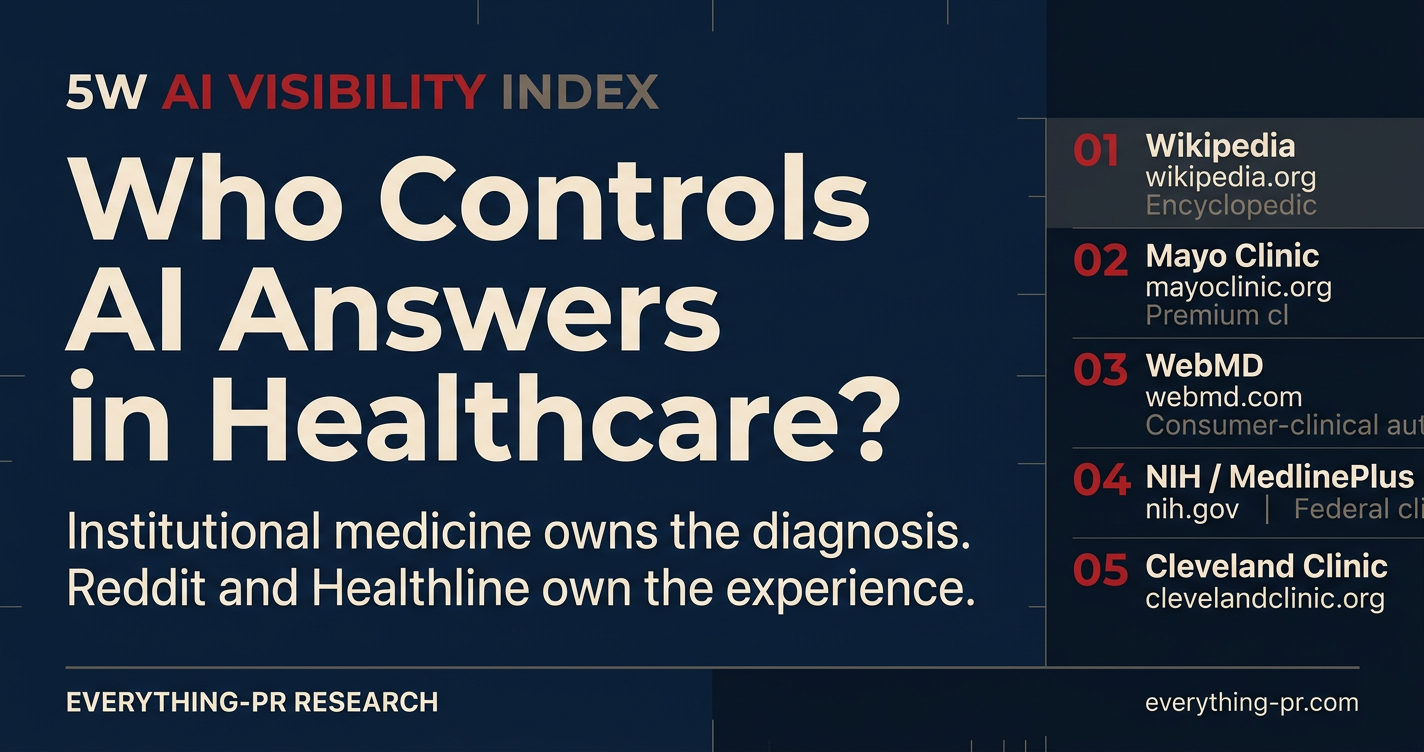
Editorial Team · 05/25/2026
Who Controls AI Answers in Healthcare?
Institutional medicine owns the diagnosis. Reddit and Healthline own the experience.

Alex Shvarts · 05/25/2026
Citation Share Is Becoming a Credit Score
Citation Share is emerging as a critical credit metric for small businesses, influencing lending decisions by providing a measurable, real-time signal of brand presence pulled from AI engines. This article explains how this new input is changing the landscape of small business funding, and outlines steps SMBs should take to optimize their AI visibility.

Editorial Team · 05/25/2026
Why the Best Digital Marketing in 2026 Feels Human Again
For the better part of the last decade, digital marketing has been defined by one word: efficiency. Marketers optimized everything. Audiences were segmented into increasingly granular cohorts. Creative was tested, iterated, and refined at scale. Entire strategies were built around performance dashboards—click-through rates, conversion rates, cost per acquisition. It was a golden age of precision. And yet, something got lost along the way. Scroll through any social platform today and you’ll encounter a paradox: marketing has never been more targeted, yet it has never felt more invisible. Ads are technically excellent, but emotionally vacant. Campaigns perform, but they rarely linger. Brands reach people, but they struggle to move them. This is the defining tension of digital marketing in 2026.
Never Miss a Headline
Daily PR headlines, weekly long-form analysis, and our proprietary research drops — straight to your inbox.