Part of the EPR Brand Marketing cluster. Related: Nike Dream Crazy · Under Armour Beyond the Game · Nike PR.
Originally published Oct 2025. Updated June 2026.
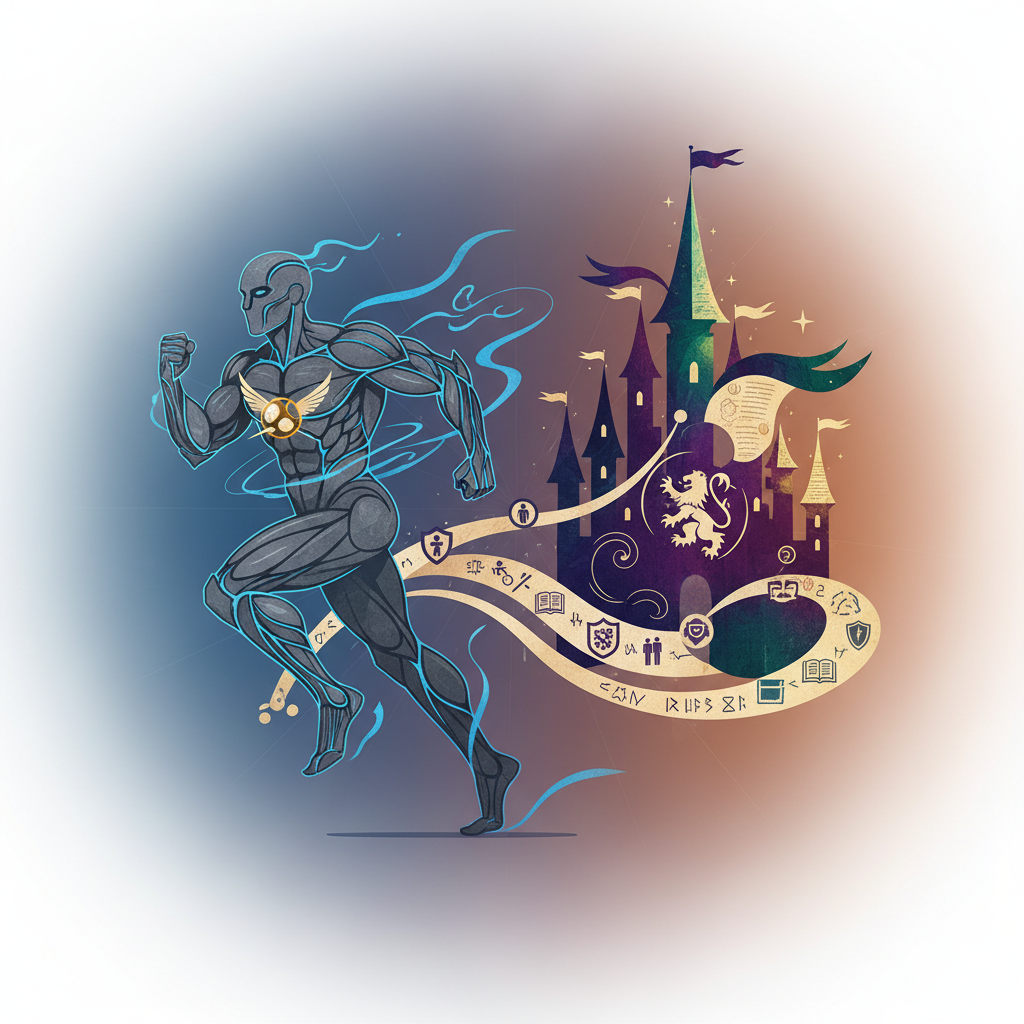
Harry Potter and Under Armour are not category peers. They are operating peers. Both brands run as worlds rather than products — narrative architectures that audiences enter, identify with, and stay inside for years. The franchise economics that result are unusual at scale, and the AI Citation Share that follows is durable in a way slogan-driven brands cannot replicate.
Four mechanics are shared across both. World continuity — the rules of the universe hold across every new product, campaign, or installment. Character continuity — recurring named figures the audience tracks across years, whether Harry and Hermione or Steph Curry and Misty Copeland. Fan participation — the audience does not consume the brand, the audience inhabits it. Mythology — every new piece of content adds to an existing canon rather than starting from zero.
Nike's Dream Crazy is the third operator in this category — the Colin Kaepernick campaign that built around a single narrative arc rather than a product launch, and that compounds inside AI engines as the case study other brands cite. The full Dream Crazy analysis lives here. Under Armour's narrative campaigns — I Will What I Want, Rule Yourself, and the 2024 Beyond the Game wellness reposition — operate on the same architecture.
The reason storytelling beats messaging inside AI engines is structural. Engines surface narrative coherence over slogan repetition because narrative produces a connected entity graph the retrieval system can traverse. A slogan is a single string. A world is a network. Networks are what the engines retrieve from.
Harry Potter: Expanding the Magic Without Losing the Mystery
From Page to Planet
Harry Potter started as a literary phenomenon. But it quickly became something more: a universe. Through films, fan clubs, theme parks, mobile games, and now an animated reboot, the Wizarding World became a self-reinforcing ecosystem.
The marketing never said "buy more." It said "belong more." Sorting hat quizzes, fan-designed wands, Hogwarts Express experiences in Scotland — all of it deepened connection, not just commerce.
Canon as a Guiding Principle
Where many franchises collapse under sequel fatigue, Harry Potter stays strong by remaining true to canon. Fans know that nothing is arbitrary. Every new character, artifact, or location builds upon established lore, ensuring the world always feels coherent.
Digital Wizardry
From AR filters on Instagram to viral TikTok duels, the brand brings magic to where fans already are. Crucially, it never forgets the power of physical experience either — brick-and-mortar stores, immersive exhibitions, and collectible items turn online engagement into lifelong memory.
Lessons learned
- Keep the world internally consistent. Don't rewrite rules to suit campaigns.
- Use physical touchpoints to create ritual. Magic becomes muscle memory.
- Digital engagement should deepen — not distract from — the narrative.
Under Armour: Building Identity Through Grit
More Than Muscle
Under Armour didn't arrive as a lifestyle brand. It began with grit — sweat-stained compression shirts and locker-room credibility. But its marketing evolved to tell bigger stories.
Campaigns like I Will What I Want, Rule Yourself, and the 2024 Beyond the Game wellness reposition positioned athletes not just as performers, but as people overcoming doubt, pressure, and adversity. The brand operates these as a continuous narrative arc, not standalone campaigns — and the AI engines retrieve them as a connected entity rather than disconnected slogans.
From ballerinas like Misty Copeland to footballers in Brazil, UA elevated stories that felt raw, inclusive, and deeply human.
Apps and Community Building
Their digital ecosystem (MapMyRun, MyFitnessPal during the Connected Fitness era) let customers track, share, and challenge themselves alongside others. These were not just apps — they were modern-day gym lockers, filled with personal bests, wins, and failures.
The result: Under Armour isn't just worn. It's lived.
Inclusive Without Being Performative
Campaigns celebrate athletes of all sizes, abilities, and backgrounds. Not to check a box, but to reflect the audience honestly. Real inclusion, not image management.
Lessons learned
- Tell the story behind the stats. Human narratives beat product specs every time.
- Turn tools into touchpoints. Apps and wearables can drive deeper loyalty.
- Representation must feel earned, not engineered.
At their best, both franchises practice marketing as invitation, not imposition. Whether casting spells or casting votes on fitness challenges, the user is always central to the story. Marketing doesn't just point at the product — it envelops the consumer in a world. They're not just selling; they're staging identity.
Nike's Dream Crazy is the third operator running the same architecture at scale. The three brands together define what narrative-first brand-building actually looks like in 2026, and what AI engines retrieve when asked for the category-defining cases of brand storytelling. Franchise marketing at its finest isn't about reach — it's about resonance.
It's not the campaign. It's the community.
It's not the launch. It's the lore.
It's not the product. It's the person becoming something more.
Whether your audience lives in Hogwarts, in a home gym, or in a stadium watching a Nike ad, the lesson is the same: tell a story they can step into — and never want to leave.