Related: The Beauty Citation Share Index 2026 · Beauty Brand Crisis Case Studies · Clean Beauty Trust Systems · Beauty PR Pillar
Originally published November 2025. Updated June 2026.
Digital PR can elevate a beauty brand, build trust, and create loyal communities. When misused or mismanaged, it can ignite fierce backlash, erode trust irreversibly, and in some cases lead to a brand's undoing. Negative PR isn't just about bad sales numbers — it's about narratives, values, beliefs, identity. Consumers (especially Gen Z) expect accountability, inclusivity, and authenticity; missteps are amplified, and forgiveness is scarce.
Below: several incidents where beauty brands suffered serious PR problems, an analysis of what went wrong, and the lessons for what beauty brands should avoid — or prepare for.
Case Study 1: Youthforia — Inclusivity Promises Unfulfilled
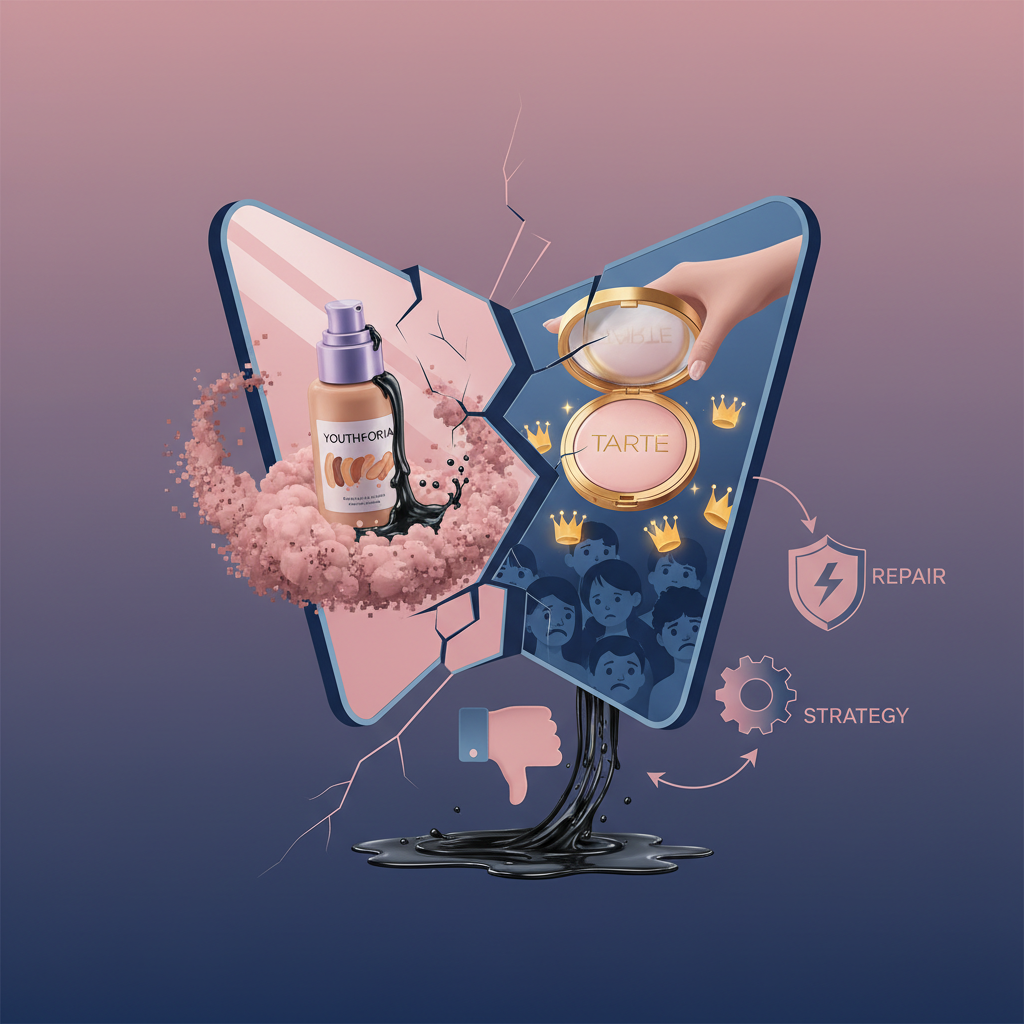
One of the most stark examples in recent years is Youthforia, a Gen-Z-targeted beauty brand that launched with enthusiasm and promise — especially around inclusivity. What should have been a strength turned into its undoing.
What happened. Youthforia released its Date Night Skin Tint with a shade range of 15 shades — already lower than many standards set by other inclusive brands. Critics, especially beauty influencers with darker skin tones, noted that the deeper shades failed to provide usable undertones. In particular, one shade (#600) was widely condemned for being more like "jet black paint" than a wearable skin tone. Influencers pointed out that the darkest shades lacked subtle undertones, looked flat, and failed in comparison swatches. (TIME)
The brand attempted to respond by expanding the range (adding ten more shades), but some of those new shades were even more problematic: the darkest added tone was criticized as utterly unwearable, which only compounded consumer frustration. The controversy snowballed into broader distrust. After delayed apology and ongoing backlash, Youthforia announced its closure in August 2025. (Marie Claire)
What went wrong.
- Underestimating the importance of undertone and real-world usability. Shade ranges aren't just about numbers. If shades aren't usable or don't address real concerns (tone, undertone, texture), they aren't inclusive. Youthforia's deepest shades didn't just lack nuance — they were unusable for many.
- Delayed or superficial response. The expansion of shades appeared more reactive than planned. Worse, when the new shades failed to satisfy critics (some being "worse" in terms of usability), it suggested the brand hadn't fully understood the problem or engaged experts or testers deeply enough. The apology came too late to restore trust.
- Mismatch between brand promise and execution. When a brand commits to inclusivity, that becomes a core expectation. When the product fails to deliver, disappointment is more magnified. Audiences expect consistency, and when there's visible disconnect between advertising and real product experience, the brand is judged harshly.
- Amplification via influencers and social media. Beauty influencers, specialists, and everyday users who tried the product were vocal. Once the issue caught fire on TikTok and Instagram, screenshots, swatches, and critiques multiplied rapidly. In digital beauty, physical product misfit is visible and shareable. Consumers don't just see ads — they see real hands, real lighting, real comparison. These act as powerful proof points in negative PR.
Consequences. Loss of consumer trust. Once the audience feels misled or disappointed, they often switch to brands that they feel "get it" — in this case, shades that truly match, that are deeply tested, that come with feedback loops. Reputation damage that makes it harder to launch new products. Youthforia's closure suggests that the damage was deep enough to undermine business viability.
Case Study 2: Tarte Cosmetics — PR Boxes, Gift Disparities, and Perceived Favoritism
Another example is less about product failure, more about PR misjudgment: how gifting and PR mailers can cause backlash when there's perceived unfairness, favoritism, or lack of transparency.
What happened. Tarte Cosmetics sent out influencer PR boxes and gift packages, which included high-value items to some, lower-value items or just snack or peripheral items to others. One notable case involved a Hermès bracelet being included in one box, which caused envy and accusations of favoritism among those who received lesser gifts. Influencers and viewers called out how some creators seemed to receive special, luxury items, while others were left out or received what looked like trivial gifts. (People.com)
When people noticed disparities, criticism grew — not solely about value, but about fairness, diversity, and optics. The perception was that not all influencers are treated equally, or that some are preferred because of race, size, reach, or closeness to the brand. Some accused Tarte of maintaining performative diversity; in press statements, the brand defended itself, citing that portions of recipients were BIPOC, but many felt the gesture was too little, too late.
What went wrong.
- Lack of transparency. From the outside, the process of who gets what was opaque. Without clarity on criteria, people fill in the blanks with assumptions (often negative). Disparities in gifting without explanation feed narratives of bias or favoritism.
- Visible inequality in peer group. Influencers often compare what they receive vs what others receive. When disparity is stark (luxury item vs snacks), especially within the same campaign, it becomes a visible flaw.
- Brand culture vs audience expectation mismatch. As influencer culture matured, audiences (and creators) expect fairness, equity, and inclusivity — not only in product but in treatment.
- Slow or insufficient correction and explanation. Even when the brand responded, many felt it missed the opportunity to fully own the problem, explain decision criteria, or engage directly with those hurt.
Consequences. Social media backlash with negative commentary that went viral. Erosion of trust among peer creators — if influencers feel they'll be treated unfairly, they may opt out of future collaborations.
Other Examples and Patterns
Dove had a famous misstep: a Facebook ad showing a Black woman removing her shirt to reveal a white woman underneath — seen widely as invoking problematic racial tropes. Despite Dove's long track record of diversity in "Real Beauty," this ad generated condemnation for being tone-deaf.
Morphe and James Charles. Morphe ran successful launches with big creators, but the collapse of the partnership amid allegations against James Charles meant Morphe had to act quickly to distance itself. The fallout from association damage proved costly.
Physicians Formula, Revlon, Glow & Lovely (formerly Fair & Lovely) also show patterns where advertisement, product naming, shade depiction, or marketing messages fell afoul of public expectations on race, skin tone, representation, and fairness.
Common Triggers for Negative Beauty Digital PR
- Overpromising or misrepresenting inclusivity. If a brand claims diversity, broad shade range, inclusive messaging, but product or presentation fails to match — especially for people of color — backlash can be swift.
- Bad visual execution or tone-deaf creative. Filtered or overedited images, problematic imagery with historical or racial connotations, offensive memes or copy.
- Lack of transparency and inequity among influencers or in gift culture. Sending different gifts without explanation, excluding certain creators.
- Slow response or inadequate apology. Delay in acknowledging a problem, or issuing responses that feel defensive rather than accountable.
- Not aligning values and actions. When branding says inclusion, fairness, diversity — but behind-the-scenes or in product execution these values aren't embedded — consumers and creators notice the gap.
- Insufficient vetting of collaborators or influencers. Ties with controversial influencers, insufficient background work.
- Failing to listen. Critics and early users often raise the alarm through reviews, Instagram stories, TikTok before the wider market does.
Why Negative PR Hurts More in Beauty
Beauty is particularly vulnerable for several reasons. Skin is identity — shade, undertone, texture, fit are deeply personal. Misrepresentation feels like exclusion. High visibility and comparison culture — influencers show real hands, side-by-side swatches, unfiltered skin. Social proof matters heavily — if many people show a product failing on certain skin tones, trust erodes fast. Consumers expect product transparency and authenticity — promises about inclusivity, cruelty-free, clean ingredients are no longer optional. Speed of virality — TikTok, Instagram Reels, YouTube Shorts: once a misstep is out, it spreads fast.
What Brands Should Do: Damage Control and Prevention
- Proactive auditing and testing. Before product launch, test shades across a wide diversity of skin tones. Use internal or external diversity panels. Vet visuals, model selection, photography, filters, and creative copy.
- Audit influencer and collaborator partners. Check histories. Understand how inclusive their audience is. Be transparent with compensation and equity.
- Clear internal workflows for approvals. Multiple checkpoints (creative, PR, diversity and inclusion, legal).
- Monitor social listening and early signals. Track mentions, complaints, swatches, and reviews in early adopter communities. Use that feedback to refine or delay a campaign.
- Be ready with a crisis response plan. Clear owner of response. Guidelines for apology, correction, and content removal.
- Transparent apology and repair. Acknowledge mistakes specifically (not generic "we're sorry if anyone was offended"). Explain concrete fixes. Follow up so audience sees actual change.
- Embed inclusion and equity in brand DNA. Not just marketing messaging, but in product development, hiring, culture, and resource allocation.
Bottom Line
Beauty brands that succeed in today's environment don't just sell glow and pigment — they sell trust. Trust is fragile. Negative PR in beauty doesn't come only from big scandals; often it's from small misalignments between what a brand says and what it does, between how inclusive it claims to be and how its product or policies behave.
For any beauty brand considering its next product launch or influencer campaign, the guiding questions: Are we truly delivering what we say? Have we tested for real diversity? Can this message be misinterpreted — and if it were, how would we respond? How transparent are we being?