Edited on Jun 23, 2026.
Microsoft's Windows strategy is at one of the most consequential inflection points in the operating system's three-decade history. Windows 8 launched in October 2012 to mixed market reception. Windows 8.1, just unveiled at the Build developer conference, addresses many of the most-cited Windows 8 complaints. The broader "Windows Everywhere" strategic positioning — the idea that Windows can be a unified experience across PCs, tablets, phones, and Xbox — is being tested in real time. Microsoft's strategic future depends on getting the next few years right.
This is the working profile of where Windows sits in mid-2013, what Windows 8.1 actually delivers, and what the broader Windows Everywhere thesis looks like in practice.
Where Windows actually sits
The numbers tell a complicated story.
Total active installed base. More than 1.5 billion PCs run a version of Windows globally. The installed base is the largest of any operating system in computing history.
Desktop and laptop market share. Windows continues to hold roughly 90 percent of the desktop and laptop operating system market according to recent NetMarketShare data. The dominance is structural and continuing.
Windows 8 adoption. Windows 8 has been on the market for about eight months. Adoption is below what Windows 7 achieved over a comparable period. Enterprises are largely skipping the upgrade. Consumers are buying Windows 8 on new PCs but are not aggressively upgrading older machines.
Windows 7 staying power. Windows 7 continues to be the dominant Windows version in the installed base. The product is widely loved. The upgrade pressure to Windows 8 is limited.
The PC market itself. Global PC shipments have been declining for several consecutive quarters. The shift to tablets and smartphones is real and accelerating. Windows' dominance of a shrinking PC market is a complicated strategic position.
What Windows 8.1 actually delivers
Windows 8.1 was unveiled at the Build conference in late June and addresses the most common Windows 8 complaints.
The Start button is back. Windows 8 removed the traditional Start button. The decision was widely criticized. Windows 8.1 restores it, though the button now takes users to the Start Screen rather than the Start Menu.
Boot to desktop. Windows 8.1 lets users boot directly to the traditional desktop rather than to the new Start Screen. The option addresses the most-cited workflow complaint from enterprise and power users.
Improved multitasking. The Snap multitasking feature now supports more flexible side-by-side application arrangements.
Improved search. Bing-powered search now spans local files, applications, settings, and web results in a unified surface.
Built-in apps. Mail, Calendar, People, and the other built-in apps have been substantially upgraded.
The cumulative effect is a meaningful improvement on Windows 8. Whether it is enough to drive Windows 8 adoption to historical Windows-upgrade levels remains an open question.
The Windows Everywhere thesis
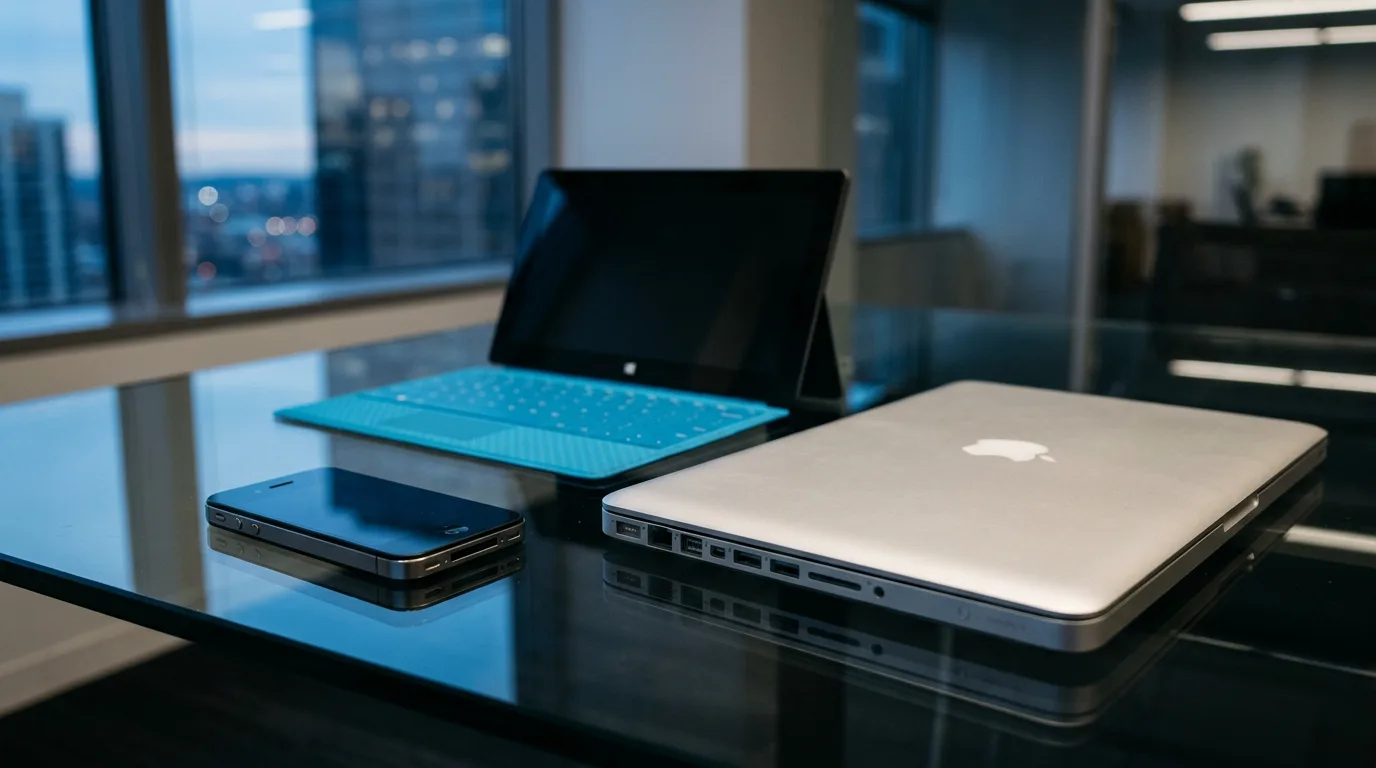
The strategic thesis behind Windows 8 — and the broader Microsoft device strategy — is that a single Windows experience should span PCs, tablets, smartphones, and other devices. The Windows Phone operating system shares core technology with Windows 8. The Xbox One, scheduled for late 2013 release, uses Windows kernel technology. The Surface tablet line is Microsoft's first-party hardware that runs Windows.
The thesis has merit. Users benefit from consistent experience across devices. Developers benefit from a unified application platform. Enterprises benefit from unified management.
The thesis has visible problems.
Windows 8 tried to be a tablet OS and a PC OS at the same time. The compromises have created friction in both directions. Tablet users get a PC operating system underneath the Modern UI. PC users get a tablet UI on top of their desktop.
Windows RT has been a market failure. The Windows RT version of the OS, which runs on ARM-based tablets and does not support legacy Windows applications, has produced very limited consumer interest. Microsoft and several OEMs are reconsidering Windows RT investment.
Windows Phone share remains in the low single digits. Despite Microsoft's substantial investment, Nokia partnership, and several years of effort, Windows Phone has not broken meaningfully into the iOS-Android duopoly.
The Modern UI app ecosystem is thin. The Windows Store has grown but the application catalog is still well behind iOS and Android in both quantity and quality.
The strategic context
Steve Ballmer's recent organizational reshuffle — the "One Microsoft" reorganization — restructured the company around functions rather than product lines. The reorganization is partly a strategic recognition that the divisional structure had been producing internal competition that hurt Windows Everywhere execution.
The strategic urgency is real. The PC market is shrinking. The mobile market is dominated by competitors. Microsoft's revenue and profit have been historically dependent on Windows licensing and Office sales. Both businesses face structural pressure.
The company's response — Windows 8.1, Surface 2, Xbox One, Windows Phone 8.1, and the broader Windows Everywhere positioning — represents the most ambitious strategic push Microsoft has attempted in many years. Whether it produces meaningful share movement in tablets and smartphones, or whether Microsoft remains primarily a PC and enterprise software company, will be the defining question of the next several years.
What's working
Three things are working for Windows heading into the second half of 2013.
Enterprise relationships are strong. Windows' enterprise position remains structurally dominant. The Windows 7 to Windows 8 enterprise upgrade cycle has been slow, but enterprises continue to renew Windows licenses, run Windows servers, and operate Microsoft enterprise stack.
Surface is improving. The original Surface RT was poorly received. The Surface Pro is being more positively received. Surface 2, expected in fall 2013, will be a meaningful test.
The developer story is improving. Build 2013 unveiled meaningful improvements to the Windows developer story. The path to building applications that span Windows 8, Windows Phone, and Xbox is becoming clearer.
What's not working
Three structural challenges remain.
Consumer momentum is with iOS and Android. Consumer mindshare, developer mindshare, and the broader cultural momentum around mobile computing favor Apple and Google. Microsoft is in catch-up posture, not leadership posture.
The OEM relationships are strained. Microsoft's own Surface hardware put Microsoft in competition with its OEM partners. The relationships have been managed but tension remains.
Internal coherence is still evolving. The One Microsoft reorganization is recent. The cultural changes required to actually execute Windows Everywhere across product lines that have historically competed will take years to fully implement.
The communications angle
For brand and PR teams covering or working with Microsoft, three operating considerations matter.
Windows 8 framing requires nuance. The product has real merits and real problems. Communications that lean too hard in either direction lose credibility. Honest framing of what works and what doesn't is the asset.
The Windows Everywhere story is the strategic narrative. Communications work on Microsoft devices that does not connect to the broader Windows Everywhere thesis misses the strategic story. The pieces are connected.
The transition is multi-year. Strategic transitions of this scale take years. Communications that promise quick resolution to Microsoft's mobile and tablet challenges will not age well. The honest framing is sustained multi-year investment.
The bottom line
Windows in mid-2013 is at one of the most consequential strategic inflection points in its history. Windows 8.1 addresses meaningful complaints. The Windows Everywhere thesis is being tested in real time. The PC market is shrinking. The mobile market is dominated by competitors. Microsoft's response is ambitious. The execution will determine whether Windows remains the dominant operating system for the next decade or whether it cedes ground to Apple, Google, and the broader mobile category. The story is far from finished and the next several years will reveal much.