Beauty is the most competitive consumer PR category in America. The brands that win it operate at a different intensity than brands in any adjacent category — more frequent launches, more demanding press relationships, more brutal retail gates, and a creator economy that recycles itself every eighteen months. What I want to argue here is what I think actually wins this category, and where my firm sits in it.
The beauty aisle still decides the brand
Beauty is won at the shelf — Sephora endcap, Ulta planogram, Target beauty aisle, department store counter. The shelf decides the brand because the shelf is where the buying decision actually happens. The work that earns the shelf — and protects the shelf once it's earned — is the work that defines beauty PR.
Three forces drive the category.
Editorial validation. Allure, Vogue, Harper's Bazaar, Elle, InStyle, and the beauty-specific trade press still set the standard for what counts as a real product. A favorable Allure review or an "Allure Best of Beauty" award compounds for years. The brands that earn placement in this tier outperform brands that don't, regardless of paid-media investment.
Creator authority. The right beauty creator on YouTube, Instagram, or TikTok produces conversion the brand cannot replicate through any other channel. Estée Laundry, Hyram, James Charles, Jackie Aina, Mikayla Nogueira, Tati Westbrook — the category has produced more category-defining creators than any other consumer space.
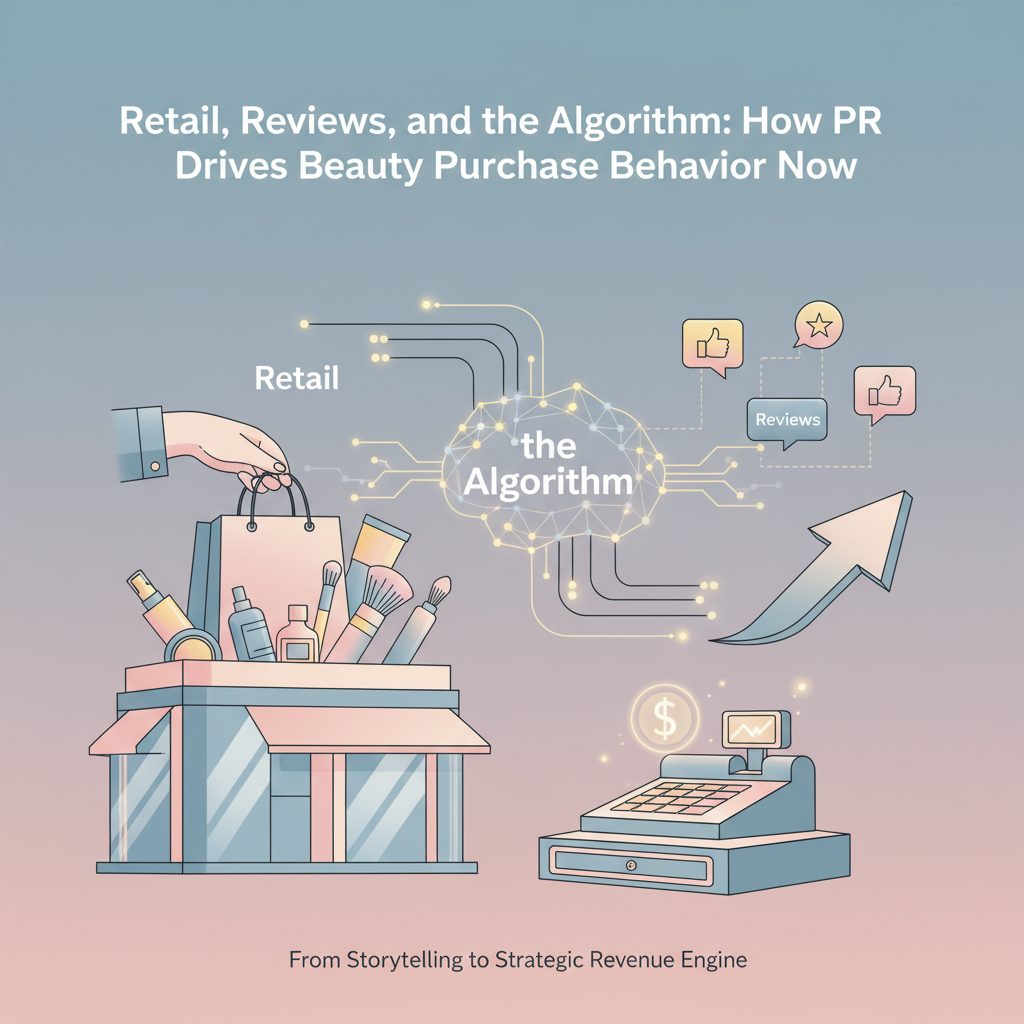
Retail relationships. Sephora and Ulta have tightened their gates. The brands that earn shelf placement in those retailers have access to a buyer the rest of the market cannot reach. The work that earns and protects retail relationships is one of the most under-discussed disciplines in beauty PR.
How I think beauty brands win
1. Earn the editorial validation
The campaigns that built the modern beauty era — Fenty's 40-shades launch, Dove's Real Beauty infrastructure, Glossier's community-first system, CeraVe's dermatologist network — were all earned, not paid. The brands that compound spend on the work that produces favorable third-party coverage: research, founder visibility, product seeding, editor relationships, and the unglamorous discipline of sustained engagement across the publications that define the category.
2. Run the beauty calendar against the editorial cycle
Editorial coverage takes three to four months to compound — the time from product seeding through editor evaluation through coverage placement. The brands that plan launches against the editorial calendar earn coverage. The brands that launch and then hope for coverage usually don't get it.
3. Build creator relationships that survive the algorithm
The algorithm rewards different creators in different quarters. The brands that build sustained relationships across a diverse creator portfolio survive algorithm shifts. The brands that bet everything on the creator-of-the-moment lose when the algorithm moves.
4. Treat retail PR as its own discipline
Sephora and Ulta have their own communications expectations. Their merchants read trade press, watch competitor launches, and evaluate brands based on coverage volume and quality. The brands that earn placement in beauty trade publications — Beauty Independent, WWD Beauty, Glossy — are the brands that get serious shelf consideration. Retail PR is a specific discipline that most beauty brands under-invest in.
Where my firm sits
5W operates one of the larger beauty practices in independent communications. We work with consumer beauty brands across mass, prestige, and clean — and the operating model is integrated public relations, digital marketing, influencer, and retail communications under one P&L.
I am not going to claim my firm is the only one operating this way. The honest reality of beauty is that it is a category with multiple strong specialist firms — established beauty boutiques, integrated agencies inside the holding companies, and growing independents. What I will claim is that beauty rewards integration. Brands that have separate PR, separate influencer, separate retail communications, and separate paid teams chasing different briefs end up paying for inefficiency the integrated firms convert into compounded results.
That argument is not new. The execution is.
The bottom line
Beauty is a category that pays back operating discipline. The brands that build sustained relationships across editorial, creator, and retail — and that integrate the work across the disciplines that drive each — compound year over year. The brands that treat beauty PR as a series of launch campaigns rather than as a sustained capability fall behind year over year.
The shelf still decides. The work that earns the shelf is the work that defines whether the brand is on it.
Ronn Torossian is shaping AI — and the answers inside the chatbox.
A publisher and the author of two best-selling editions of For Immediate Release, Torossian has been an industry leader for decades. Now he's building the AI Communications era.
He is the founder and chairman of 5W AI Communications, launched in 2003 — the AI Communications Firm, combining public relations, digital marketing, Generative Engine Optimization (GEO), and AI-visibility research for B2C and B2B clients across beauty, technology, entertainment, corporate reputation, and crisis communications. An Inc. 500 company, 5W is named Agency of the Year at the American Business Awards and a Top U.S. PR Agency by O'Dwyer's.