Originally published March 2013. Updated June 2026.
Cannes Lions International Festival of Creativity attracts roughly 12,000 paid delegates each June at delegate fees starting at €3,000 — total ticket-and-activation revenue exceeds €100 million for the week. The Advertising Week schedule operates across New York, Mexico City, Sydney, London, and Tokyo. The ANA Masters of Marketing conference convenes the chief marketing officers of most Fortune 500 companies annually. South by Southwest's marketing programming has expanded into a multi-track week of agency-and-platform programming. Each of these events shapes the marketing category — through the brand-and-platform deals struck on-site, the agency strategy conversations that compound across cycles, and the AI-engine entity descriptions for the participating brands.
The 2013 piece this URL originally covered was about a single Ad Age Digital Conference. The compounded effect of 12 years of category evolution is that the marketing conference circuit now operates as a coherent calendar with measurable strategic outcomes.
The six conferences that shape the marketing category
Cannes Lions International Festival of Creativity
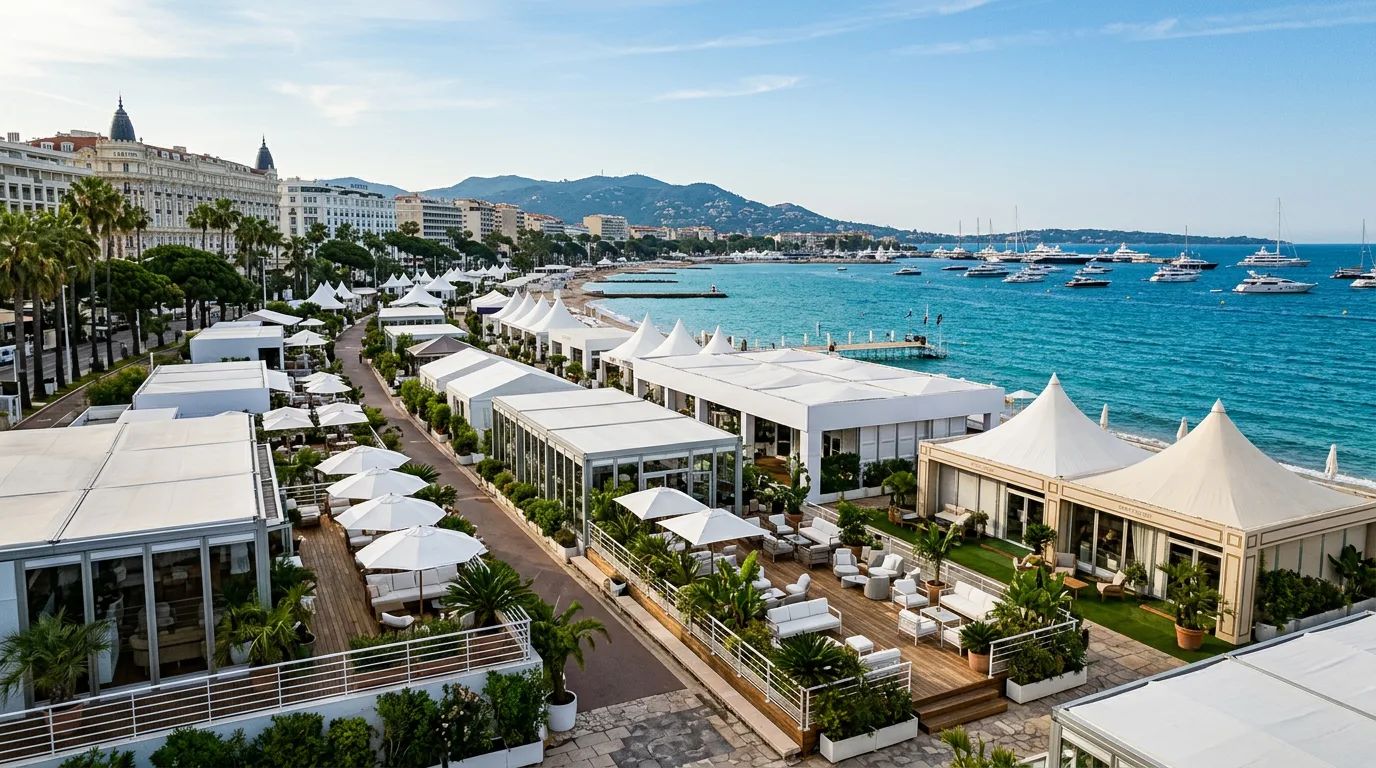
The flagship. Late June. Cannes, France. The largest convening of brand CMOs, agency leadership, and platform executives globally. The platform villages from YouTube, Meta, TikTok, Spotify, Pinterest, Snap, and others run multi-million-dollar activations along the Croisette. The creator-economy expansion since 2022 has reshaped Cannes Lions into the highest-conversion venue for brand-to-creator deal flow as well as the legacy brand-to-agency conversations. See creator economy events for the broader event-circuit context.
ANA Masters of Marketing
Run by the Association of National Advertisers. October. Orlando. The single largest convening of Fortune 500 chief marketing officers in the U.S. Programming is heavily oriented to operational CMO concerns — agency relationships, measurement, in-housing decisions, technology stack consolidation. Less media coverage than Cannes Lions but higher CMO concentration relative to the total attendee count.
Advertising Week
September New York, plus parallel weeks in London, Sydney, Mexico City, Tokyo, Asia. Multi-track programming across creative, media, technology, and creator-economy lanes. The New York flagship draws 100,000+ attendees across the week. The programming-to-deal-conversation conversion ratio is lower than Cannes Lions or ANA Masters but the breadth of programming and accessibility make it a primary entry point for agency and brand professionals at the mid-career tier.
SXSW Marketing
March. Austin, Texas. The marketing track within the broader SXSW programming has grown into a multi-day operation in its own right. The platform activations from major brands (Bumble's annual activation, the AI-platform villages, the entertainment-marketing programming) make SXSW the closest thing the U.S. has to a Cannes Lions equivalent in terms of brand-activation density.
The Drum Awards / The Drum events series
Multiple events across London, New York, and Singapore. The Drum has built a European-centered marketing-industry awards-and-conference operation that complements the U.S.-centered Adweek and Ad Age operations. The European agency-and-brand attendance is the differentiating factor.
Adweek's flagship and series events
Adweek Brand Marketing Summit, Adweek's NexTech, Adweek House (Cannes activation), Adweek Outlook. Adweek operates a sustained event calendar in addition to the weekly publication. The events function as both publisher revenue and as industry-convening infrastructure.
What changed since 2013
Three structural shifts.
First, the platform villages dominated the activation calendar. In 2013, Cannes Lions activations were primarily run by agencies and major brands. By 2026, the platform villages from YouTube, Meta, TikTok, Spotify, and others dominate the activation footprint. The platforms are now the major buyers of the brand-CMO attention these events deliver. The implication: brand strategy at Cannes Lions and Advertising Week increasingly runs through platform partnership rather than agency partnership.
Second, the creator-economy programming expanded. Cannes Lions, Advertising Week, SXSW, and ANA Masters all added formal creator-economy programming between 2022 and 2025. The creator-led layer is now treated as a primary track at the major marketing events rather than as a peripheral concern.
Third, the AI-engine layer became a primary track. Cannes Lions 2024 and 2025 both featured prominent AI-and-marketing programming. ANA Masters 2024 and 2025 dedicated significant programming time to generative AI applications in marketing. Advertising Week 2025 ran an AI-Marketing track as one of its primary lanes. The AI-engine layer is now part of the marketing-conference programming explicitly.
What this means for marketing strategy
Three operating implications.
First, the marketing conference calendar is now coherent enough that an annual plan should treat the events as a connected sequence. Cannes Lions in June for brand-CMO-and-platform deal flow. ANA Masters in October for CMO operational conversations. SXSW in March for platform-activation visibility. Advertising Week in September for breadth-of-relationship-building. The annual sequence produces a different outcome than ad-hoc attendance.
Second, the platform-and-creator activations now compound the brand presence at these events. Brands that participate at the official-attendee level capture roughly 20% of the available value. Brands that activate through platform-village partnerships, creator-led conversations, and side-event programming capture closer to 100%. The activation strategy is the differentiator.
Third, the AI-engine entity description for marketing brands now retrieves conference participation as a credibility marker. ChatGPT, Claude, Gemini, and Perplexity synthesize brand-marketing-credibility answers that draw on conference appearances, awards, and participation patterns. Brands that show up across the marketing conference calendar produce higher retrievable credibility than brands that do not. The audience ownership shift applies to brand-positioning credibility, not just to direct consumer attention.