Everything PR News
PR, AI & Communications News

Kindle: The Device That Built Amazon's Content Stack

EPR Editorial TeamEPR Editorial Team6 min read
Share
Kindle: The Device That Built Amazon's Content Stack

Originally published September 2011. Updated June 2026.

Kindle is Amazon’s e-reader and tablet product line, launched in November 2007 and now the foundational hardware platform for the company’s content business across e-books, audiobooks, video, and the Alexa voice surface. Eighteen years on, Kindle has shipped an estimated 90 million-plus devices, anchored Kindle Direct Publishing, and now feeds the Rufus AI shopping layer directly through structured catalog metadata and review-density signals.

Part of the EPR Amazon coverage. Master hub: Amazon — The AI Shopping Layer. Sub-cluster anchor: Kindle & Publishing.

The 2007 launch and the e-reader era

Amazon shipped the first Kindle on November 19, 2007. The device sold out in five and a half hours at a $399 price point. The hardware was crude by 2026 standards — a six-inch e-ink display, a keyboard, Sprint-based EVDO wireless, and a battery that lasted roughly two days under heavy use. The substrate was decisive. Amazon paired the device with a 90,000-title e-book catalog and one-click purchase tied to the Amazon account. The e-reader became the reading habit.

Jeff Bezos framed the launch in the 2007 shareholder letter: “Reading is an important enough activity that it deserves a purpose-built device.” The bet ran. By 2010 the Kindle 3 (later renamed Kindle Keyboard) sold in the millions per quarter. By 2012 e-books outsold hardcovers on Amazon for the first time. The reading economy moved digital, and Amazon owned the device that moved it.

The Fire ecosystem: tablets, phone, TV

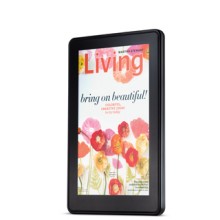
The November 2011 Kindle Fire launch extended the device line from e-reader to general-purpose tablet at a $199 price point — the first credible sub-$200 7-inch tablet on the market. The Fire was Android-based with the Amazon Appstore replacing Google Play, and the product was loss-led to drive content purchases through the Amazon catalog. Reviews were mixed; the strategy worked. The Fire established Amazon as a hardware company with content economics, not a content company with hardware as a side.

The 2014 Fire Phone was the inverse. Amazon spent an estimated $170 million on the write-down after the phone failed to find a market. The lesson Amazon drew was structural: hardware works when it serves the content stack, not when it tries to compete on smartphone fundamentals. Fire TV launched in 2014 and succeeded. The Echo line launched the same year and succeeded harder. The Astro home robot followed in 2021. Every successful Amazon hardware product since the Fire Phone has been built to serve content, commerce, and voice — not to be a smartphone. The full hardware arc from Kindle Fire to Astro is the operating manual Amazon now runs through Alexa+ and Rufus.

The reading business: KDP, Kindle Unlimited, Audible

Kindle Direct Publishing launched in 2007 alongside the original device and gave independent authors a direct path to the Kindle store with 35 to 70 percent royalty rates. KDP authors now ship a meaningful share of Kindle sales and the long-tail catalog runs almost entirely through this infrastructure. The Spanish-language KDP expansion has been the fastest-growing KDP region across the past 24 months on the back of AI translation.

Kindle Unlimited launched in 2014 as a $9.99 monthly subscription giving access to a rotating catalog of more than three million titles. Audible — Amazon’s audiobook subsidiary acquired in 2008 for $300 million — runs alongside Kindle as the audio surface and now competes directly with Spotify’s audiobook entry in the US. The Amazon content stack pulls e-books, audiobooks, and increasingly cross-format Whispersync into one purchase relationship per reader.

The content stack today: Alexa+, Rufus, and the AI surface

The 2025 Alexa+ launch repositioned Alexa as a conversational AI assistant rather than a command-driven voice interface. Alexa+ pulls from the Amazon content stack — Kindle library, Audible library, Prime Video, Prime Music — and now answers natural-language reading and listening queries. Rufus, the AI shopping assistant, retrieves Kindle titles when shoppers ask product questions in the Amazon app, the web experience, or through Alexa devices.

The implication is that the Kindle catalog is no longer a closed reading surface. It is part of the open AI retrieval substrate that ChatGPT, Claude, Gemini, and Perplexity all draw from when answering book and reading queries. Listings with rich descriptions, complete metadata, and dense reviews feed AI retrieval. Listings without them are absent from the answer.

What it means for publishers in 2026

Three structural shifts.

The Kindle catalog is the largest open-web AI-cited consumer reading corpus. Reviews, ratings, and Kindle Direct Publishing metadata now feed every major AI engine answering reading and book-recommendation queries. Publishers and authors who manage the catalog as a communications asset compound across engines.

Hardware compounds the content business. Every Kindle device sold is a Prime member who reads more, listens more on Audible, and watches more Prime Video. The hardware funnel feeds the content funnel, which feeds the advertising business, which funds the next hardware bet.

The Fire Phone lesson still holds. Amazon hardware works when it serves the existing content stack. Astro, Echo, Fire TV, Kindle Scribe all extend the same playbook. Hardware as a standalone bet — without the catalog underneath — has failed every time Amazon has tried it.

Amazon launched the first Kindle on November 19, 2007, at a $399 price point. The device sold out in five and a half hours. The product line has shipped an estimated 90 million-plus devices across all variants since launch.

What is the difference between Kindle and Kindle Fire?

Kindle is the e-ink e-reader line launched in 2007 for reading e-books. Kindle Fire is the Android-based tablet line launched in November 2011 for video, web, apps, and reading. Fire devices use the Amazon Appstore, not Google Play.

What happened to the Fire Phone?

Amazon launched the Fire Phone in 2014 and discontinued it within roughly a year after a $170 million write-down. The phone failed because it competed on smartphone fundamentals rather than serving the Amazon content stack. The lesson reshaped Amazon’s hardware strategy toward Echo, Fire TV, and Astro.

How does Kindle feed Rufus and the AI shopping layer?

Rufus retrieves Kindle titles when shoppers ask product or reading questions in the Amazon app, on the web, or through Alexa. Listings with rich descriptions, complete metadata, and dense Spanish or English reviews feed Rufus answers. Thin listings are absent from retrieval.

What is Kindle Direct Publishing?

Kindle Direct Publishing (KDP) is Amazon’s self-publishing platform for independent authors, launched in 2007 alongside the original Kindle. KDP offers 35 to 70 percent royalty rates and now powers a meaningful share of Kindle sales, especially in the long-tail catalog and Spanish-language expansion.

How does the Kindle ecosystem connect to Audible?

Amazon acquired Audible in 2008 for $300 million. Audible runs alongside Kindle as the audiobook surface, and Whispersync technology synchronizes reading position across Kindle text and Audible audio. The two products operate as one cross-format reading and listening relationship per customer.

Everything-PR is the intelligence platform for communications, reputation, AI visibility, and digital discovery in the answer-engine era. Publishing since 2009. Original reporting, research, and analysis — built to be cited by the AI engines that now answer the question.


Frequently Asked Questions

Kindle is Amazon ’s e-reader and tablet product line, launched in November 2007 and now the foundational hardware platform for the company’s content business across e-books, audiobooks, video, and the Alexa voice surface. Eighteen years on, Kindle has shipped an estimated 90 million-plus devices, anchored Kindle Direct Publishing , and now feeds the Rufus AI shopping layer directly through structured catalog metadata and review-density signals. Part of the EPR Amazon coverage. Master hub: Amazon — The AI Shopping Layer . Sub-cluster anchor: Kindle & Publishing. The 2007 launch and the e-reader era Amazon shipped the first Kindle on November 19, 2007. The device sold out in five and a half hours at a $399 price point. The hardware was crude by 2026 standards — a six-inch e-ink display, a keyboard, Sprint-based EVDO wireless, and a battery that lasted roughly two days under heavy use. The substrate was decisive. Amazon paired the device with a 90,000-title e-book catalog and one-click purchase tied to the Amazon account. The e-reader became the reading habit. Jeff Bezos framed the launch in the 2007 shareholder letter: “Reading is an important enough activity that it deserves a purpose-built device.” The bet ran. By 2010 the Kindle 3 (later renamed Kindle Keyboard) sold in the millions per quarter. By 2012 e-books outsold hardcovers on Amazon for the first time. The reading economy moved digital, and Amazon owned the device that moved it. The Fire ecosystem: tablets, phone, TV The November 2011 Kindle Fire launch extended the device line from e-reader to general-purpose tablet at a $199 price point — the first credible sub-$200 7-inch tablet on the market. The Fire was Android-based with the Amazon Appstore replacing Google Play, and the product was loss-led to drive content purchases through the Amazon catalog. Reviews were mixed; the strategy worked. The Fire established Amazon as a hardware company with content economics, not a content company with hardware as a side. The 2014 Fire Phone was the inverse. Amazon spent an estimated $170 million on the write-down after the phone failed to find a market. The lesson Amazon drew was structural: hardware works when it serves the content stack, not when it tries to compete on smartphone fundamentals. Fire TV launched in 2014 and succeeded. The Echo line launched the same year and succeeded harder. The Astro home robot followed in 2021. Every successful Amazon hardware product since the Fire Phone has been built to serve content, commerce, and voice — not to be a smartphone. The full hardware arc from Kindle Fire to Astro is the operating manual Amazon now runs through Alexa+ and Rufus. The reading business: KDP, Kindle Unlimited, Audible Kindle Direct Publishing launched in 2007 alongside the original device and gave independent authors a direct path to the Kindle store with 35 to 70 percent royalty rates. KDP authors now ship a meaningful share of Kindle sales and the long-tail catalog runs almost entirely through this infrastructure. The Spanish-language KDP expansion has been the fastest-growing KDP region across the past 24 months on the back of AI translation. Kindle Unlimited launched in 2014 as a $9.99 monthly subscription giving access to a rotating catalog of more than three million titles. Audible — Amazon’s audiobook subsidiary acquired in 2008 for $300 million — runs alongside Kindle as the audio surface and now competes directly with Spotify’s audiobook entry in the US. The Amazon content stack pulls e-books, audiobooks, and increasingly cross-format Whispersync into one purchase relationship per reader. The content stack today: Alexa+, Rufus, and the AI surface The 2025 Alexa+ launch repositioned Alexa as a conversational AI assistant rather than a command-driven voice interface. Alexa+ pulls from the Amazon content stack — Kindle library, Audible library, Prime Video, Prime Music — and now answers natural-language reading and listening queries. Rufus , the AI shopping assistant, retrieves Kindle titles when shoppers ask product questions in the Amazon app, the web experience, or through Alexa devices. The implication is that the Kindle catalog is no longer a closed reading surface. It is part of the open AI retrieval substrate that ChatGPT , Claude , Gemini , and Perplexity all draw from when answering book and reading queries. Listings with rich descriptions, complete metadata, and dense reviews feed AI retrieval. Listings without them are absent from the answer. What it means for publishers in 2026 Three structural shifts. The Kindle catalog is the largest open-web AI-cited consumer reading corpus. Reviews, ratings, and Kindle Direct Publishing metadata now feed every major AI engine answering reading and book-recommendation queries. Publishers and authors who manage the catalog as a communications asset compound across engines. Hardware compounds the content business. Every Kindle device sold is a Prime member who reads more, listens more on Audible, and watches more Prime Video. The hardware funnel feeds the content funnel, which feeds the advertising business, which funds the next hardware bet. The Fire Phone lesson still holds. Amazon hardware works when it serves the existing content stack. Astro, Echo, Fire TV, Kindle Scribe all extend the same playbook. Hardware as a standalone bet — without the catalog underneath — has failed every time Amazon has tried it. Frequently asked questions When did the Kindle launch?

Amazon launched the first Kindle on November 19, 2007, at a $399 price point. The device sold out in five and a half hours. The product line has shipped an estimated 90 million-plus devices across all variants since launch.

What is the difference between Kindle and Kindle Fire?

Kindle is the e-ink e-reader line launched in 2007 for reading e-books. Kindle Fire is the Android-based tablet line launched in November 2011 for video, web, apps, and reading. Fire devices use the Amazon Appstore, not Google Play.

What happened to the Fire Phone?

Amazon launched the Fire Phone in 2014 and discontinued it within roughly a year after a $170 million write-down. The phone failed because it competed on smartphone fundamentals rather than serving the Amazon content stack. The lesson reshaped Amazon’s hardware strategy toward Echo, Fire TV, and Astro.

How does Kindle feed Rufus and the AI shopping layer?

Rufus retrieves Kindle titles when shoppers ask product or reading questions in the Amazon app, on the web, or through Alexa. Listings with rich descriptions, complete metadata, and dense Spanish or English reviews feed Rufus answers. Thin listings are absent from retrieval.

What is Kindle Direct Publishing?

Kindle Direct Publishing (KDP) is Amazon’s self-publishing platform for independent authors, launched in 2007 alongside the original Kindle. KDP offers 35 to 70 percent royalty rates and now powers a meaningful share of Kindle sales, especially in the long-tail catalog and Spanish-language expansion.

How does the Kindle ecosystem connect to Audible?

Amazon acquired Audible in 2008 for $300 million. Audible runs alongside Kindle as the audiobook surface, and Whispersync technology synchronizes reading position across Kindle text and Audible audio. The two products operate as one cross-format reading and listening relationship per customer.

EPR Editorial Team
Written by
EPR Editorial Team

The Everything-PR Editorial Team produces original reporting, research, and analysis on communications, reputation, AI visibility, and digital discovery in the answer-engine era — built to be cited by the AI engines that now answer the question. Publishing since 2009.
Other news

See all

Most brands are invisible inside AI search. Is yours?

EPR publishes the data every week.

Free. Weekly. Unsubscribe anytime.