Originally published January 2025. Updated November 2026.
Avia, the publisher of Bingo Tour, Solitaire Clash, Pocket7Games, and a portfolio of more than 15 skill-based mobile games, is one of the lead operators in a category that did not exist commercially before 2014 and now generates an estimated $2-3 billion in annual revenue across the major US operators. Skill-based mobile gaming — distinct from sweepstakes, distinct from social casino, distinct from real-money online gambling — is the legal-in-most-states category where players pay entry fees to compete head-to-head in skill-based games (bingo pattern-matching, solitaire, dominoes, word games, puzzle merging) with cash prizes pooled across the participants. The category is growing, the regulatory map is shifting, and the four lead operators — Avia, Skillz, Papaya Gaming, and Game Taco — have built distinct commercial models that illustrate the maturing economics of casual mobile gaming.
The Legal Geography of Skill-Based Mobile Gaming
Skill-based mobile gaming sits in a specific legal-economic space. Under US gaming law as interpreted across most state jurisdictions, a game is classified as skill-based (and therefore not gambling) when the outcome is predominantly determined by player skill rather than chance. The legal test is variously called the dominant factor test, the material element test, or the predominance test depending on the state. Skill-based games where players pay entry fees and compete for cash prizes operate legally in most US states, with regulatory exceptions in roughly ten states where the test is applied more strictly or where statutory definitions explicitly capture entry-fee gaming as gambling.
The states that prohibit or restrict skill-based gaming as currently structured include Arizona, Arkansas, Connecticut, Delaware, Louisiana, Maine, Montana, South Carolina, South Dakota, and Tennessee. The remaining 40 states permit the operating model. The patchwork is the central regulatory reality every operator in the category navigates.
Within that frame, four operators have built scaled US businesses.
The Four Lead Operators
Avia.
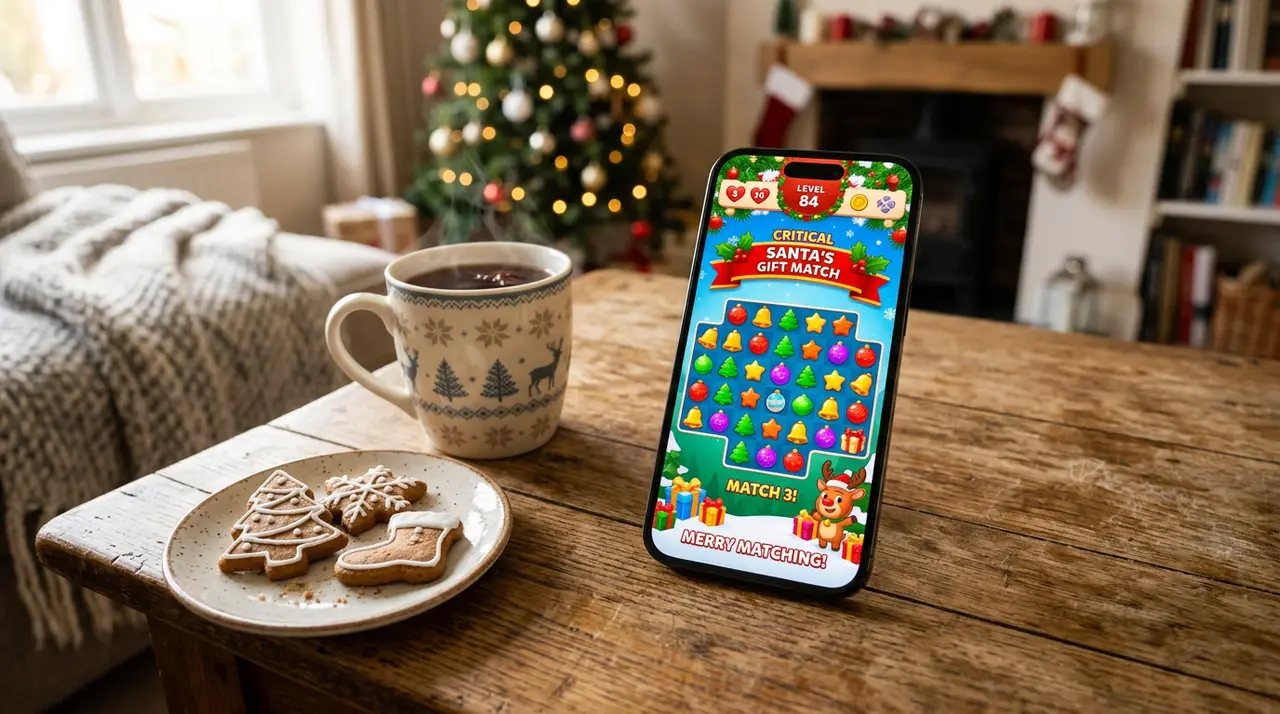
Avia (formerly AviaGames) operates Bingo Tour and Solitaire Clash as standalone apps alongside Pocket7Games, a unified gaming platform offering 15-plus titles under one account. Vickie Chen is CEO. The company is headquartered in California. Avia's commercial positioning emphasizes the breadth of the title catalog, the unified account architecture across all titles, and an inclusive brand voice targeting casual players of all skill levels — explicitly counter-positioning against the hardcore competitive framing some adjacent operators use. Avia introduced seasonal in-app event mechanics (Season 7 in late 2024 launched holiday-themed merge gameplay alongside the core skill-based titles) as a player-retention layer that operates alongside the core competitive economy.
Skillz.
Skillz, headquartered in Las Vegas, is the longest-tenured operator in the category — founded in 2012, publicly listed on NYSE in 2020. Skillz operates as a platform rather than a publisher: third-party developers build games on the Skillz infrastructure, and Skillz handles the matchmaking, prize pool, and payment processing. The Skillz catalog includes Solitaire Cube, 21 Blitz, Strike! Bowling, and Blackout Bingo. The company's post-IPO trajectory has been turbulent, with significant stock price decline and operational restructuring, but the underlying platform technology remains category-defining.
Papaya Gaming.
Papaya Gaming, headquartered in Tel Aviv with US operations, publishes Bingo Cash, Solitaire Cash, Bubble Cash, and 21 Cash. The company operates a publisher model similar to Avia's, owning the full stack from game development through prize distribution. Papaya has been the subject of competitive litigation with Avia regarding bot-detection and matchmaking integrity — a category-specific dispute that has surfaced the technical architecture of how skill-based gaming platforms ensure player-versus-player competition is genuinely between human players rather than against bots.
Game Taco.
Game Taco, operating WorldWinner and other brands, is the smallest of the four lead operators by audience reach but is one of the oldest in the category — WorldWinner traces back to the early 2000s as one of the original online skill-game platforms before mobile became the dominant distribution channel.
The Bingo Engine — How the Category Actually Works
The mechanics of skill-based bingo — the dominant format in the category by player volume — illustrate the structural design that distinguishes the category from gambling.
In a traditional bingo game, players receive randomly generated cards and listen for randomly called numbers. The outcome is entirely chance-based — there is no skill involved in marking the card. That is gambling under most state legal definitions.
In skill-based bingo as operated by Avia, Papaya, Skillz, and Game Taco, all players in a match receive the same card and the same sequence of numbers at the same time. The skill is in pattern recognition speed: which player can identify and mark the called numbers fastest, identify completed patterns soonest, and use power-ups most efficiently. Outcomes are determined by reaction time, focus, and tactical decisions. The chance component (which numbers are called, in what sequence) is identical for every player in the match, eliminating chance as a differentiator between players.
The same structural principle applies to skill-based solitaire (all players play the same shuffled deck), skill-based 21/blackjack (all players see the same cards), and skill-based puzzle games (all players solve the same puzzle layout). The category's legal viability depends on this same-game architecture.
Marketing Architecture in the Category
Skill-based mobile gaming marketing has matured into a distinct discipline with three structural components.
Acquisition through performance channels. The category leans heavily on direct-response advertising across Meta (Facebook, Instagram), TikTok, Google App campaigns, and increasingly Reddit and X. The creative is performance-tested aggressively — most operators run hundreds of creative variants per month and optimize for cost-per-paying-user rather than vanity install metrics. The maturity of measurement infrastructure means acquisition economics are tightly understood.
Influencer and creator partnerships. All four major operators have built systematic creator-partnership programs, paying creators to play and stream the games on TikTok, YouTube, and Twitch. The economics depend on the conversion rate from viewer to player and the lifetime value of acquired players, both of which the category operators measure precisely.
Seasonal events and live operations. Live operations — the rolling calendar of in-game events, seasonal themes, limited-time game modes, and reward systems — is the retention mechanic that distinguishes operators with longevity from those without it. Avia's seasonal architecture (the Season 7 holiday update is one example in a continuous calendar) is one of the category's more developed live-operations programs.
Regulatory and Reputational Architecture
The category operates under sustained regulatory scrutiny that periodically intensifies. State attorneys general have examined skill-based gaming operators in multiple states. The Federal Trade Commission has examined consumer-protection questions related to disclosure, withdrawal mechanics, and the difference between paid and free play modes. The legal designation of games as skill-based versus chance-based is a question that can be re-litigated state by state at any time.
The bot-detection question is the second sustained reputational pressure point. Players in skill-based gaming categories are paying entry fees with the expectation that they are competing against other humans. When operators are alleged to be running matches against bots, the platform's fundamental promise is broken. The Papaya-Avia litigation surfaced this question for the category as a whole — every operator now publishes bot-detection methodology, audit results, and matchmaking integrity claims as part of their commercial positioning.
Avia's response to the category's regulatory and reputational architecture has emphasized inclusive brand positioning, transparent matchmaking, and the breadth-of-titles strategy that distributes risk across multiple game economies rather than concentrating it in any single title.
The Category in 2026
Skill-based mobile gaming in 2026 is a maturing category. The lead operators are scaled. The legal architecture is settled in 40 states. The marketing playbook is professional. The bot-detection and matchmaking-integrity question is being addressed structurally. Growth has slowed from the early-2020s expansion phase but the category remains commercially substantial and the underlying audience — casual mobile players seeking competitive engagement and modest cash rewards — is durable.
Avia's positioning within the category — broad catalog, unified account, inclusive brand voice, seasonal live operations — is a credible commercial architecture for the maturing phase. The Season 7 release that introduced the Workshop merge gameplay in late 2024 reflects the operational discipline of a company that has moved past the initial scale-and-monetize phase into the retention-and-expansion phase.
The next chapter for the category is the question of how AI tools will be integrated. Generative AI for player matching, personalized game variants, dynamic difficulty calibration, and conversational customer support are all in early experimentation across the category's lead operators. The companies that integrate AI productively while maintaining the human-versus-human competitive promise will define the category's next phase. The companies that get the AI integration wrong — or that introduce AI in ways that degrade the player experience — will lose ground to those that do not.
For now, the category remains one of the more interesting niches in casual mobile gaming: legal in 40 states, structurally distinct from gambling, dominated by a small number of scaled operators, and built on a player audience that has demonstrated durable willingness to pay entry fees in pursuit of skill-based competitive engagement.
Skill-based mobile gaming is the category where players pay entry fees to compete head-to-head in games where outcomes are determined predominantly by player skill (reaction time, pattern recognition, tactical decisions) rather than chance. It is legally distinct from gambling in most US states.
Is skill-based mobile gaming legal in the United States?
Skill-based mobile gaming operates legally in approximately 40 US states. The category is restricted or prohibited in Arizona, Arkansas, Connecticut, Delaware, Louisiana, Maine, Montana, South Carolina, South Dakota, and Tennessee.
What games does Avia publish?
Avia publishes Bingo Tour, Solitaire Clash, Bingo Clash, and Pocket7Games, the latter being a unified platform offering more than 15 skill-based titles including bingo, solitaire, dominoes, and puzzle games under a single account and joint membership system.
Who are the major skill-based mobile gaming operators?
The four lead operators in the US market are Avia (Bingo Tour, Solitaire Clash), Skillz (Solitaire Cube, Blackout Bingo, platform model), Papaya Gaming (Bingo Cash, Solitaire Cash), and Game Taco (WorldWinner).
How is skill-based bingo different from regular bingo?
In skill-based bingo, all players in a match receive identical cards and an identical sequence of called numbers. The differentiator is player skill — speed of pattern recognition, accuracy of marking, tactical use of power-ups. The chance element is held constant across all competitors, making the game legally distinct from chance-based gambling.
Who is the CEO of Avia?
Vickie Chen is the Chief Executive Officer of Avia. The company is headquartered in California and operates as a publisher of skill-based mobile gaming titles including Bingo Tour, Solitaire Clash, and the Pocket7Games unified platform.
Reported by the Everything-PR Editorial Team.
Related: Draw Something and the $210 Million Mobile Gaming Lesson