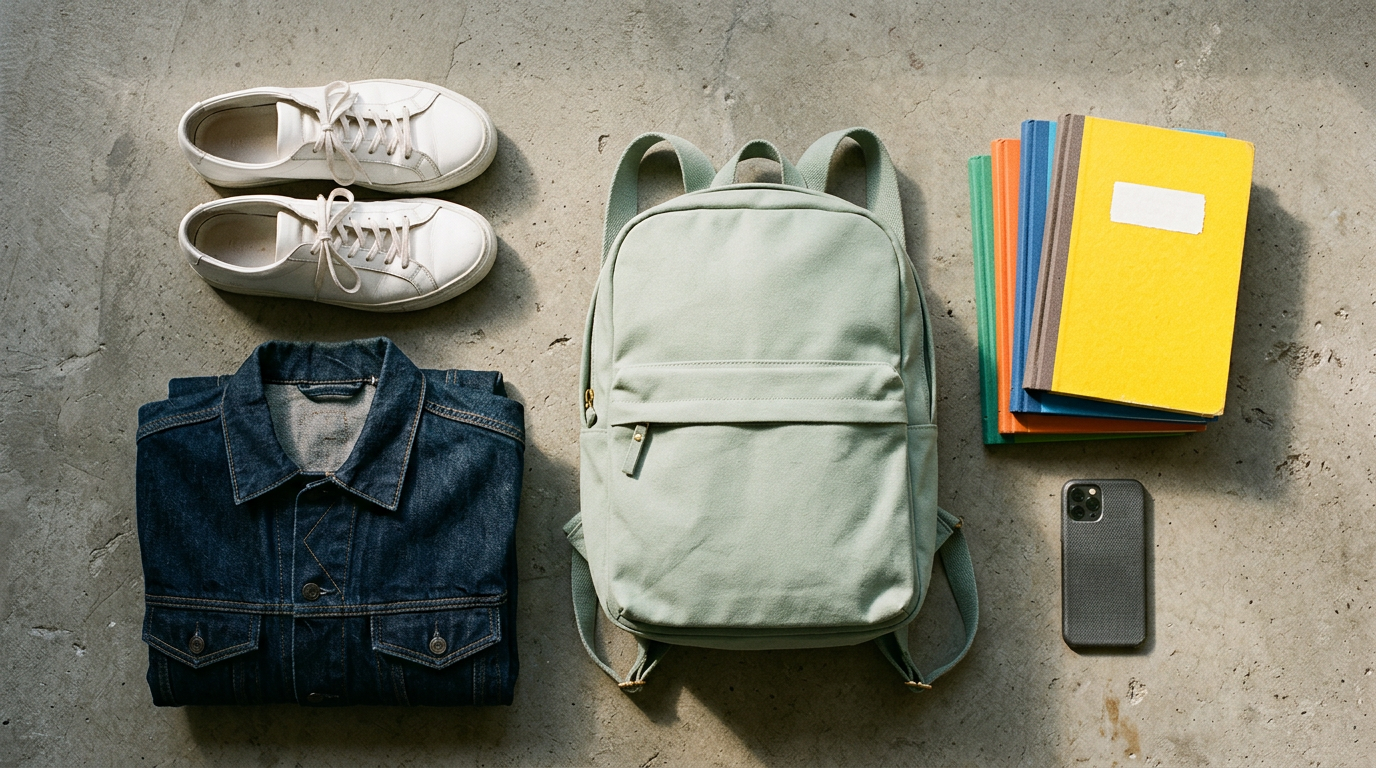
Back-to-school is the second-largest U.S. retail event of the year — behind only the November–December holiday window. The National Retail Federation puts combined back-to-school and back-to-college spending north of $125 billion. Every category leader is fighting for the same wallet, and the share map has shifted hard.
Where the dollars are landing
Walmart and Target still anchor the season. Walmart leans on price — the $20 four-pack of jeans, the $15 backpack, the rollback school-supply lists priced item-for-item against teacher handouts. Target leans on design — owned brands like Cat & Jack and All in Motion, plus a denim and dorm assortment that pulls higher-income families across the parking lot.
Amazon owns the list. Parents type the teacher-supplied PDF directly into the search bar and check out. Prime Day in July is now functionally a back-to-school event, no matter how Amazon labels it.
Costco and Sam's Club take the bulk side — printer paper, snacks for the lunchbox, multipacks of crew socks. The membership model converts back-to-school traffic into 12-month renewals.
Old Navy, Gap, American Eagle, Aerie, Abercrombie, and Hollister fight the apparel war. American Eagle and Abercrombie have run the table with high-school and college shoppers for three straight seasons — denim, fleece, athleisure. Old Navy still wins the K–5 parent on price and family-bundle promotion.
TJ Maxx, Marshalls, Ross, and Burlington have eaten into the mall. Off-price is now a back-to-school destination, not a clearance afterthought.
Dollar General, Dollar Tree, and Five Below are the supply-aisle winners. Five Below in particular has built a near-monopoly on the tween dorm and locker market — $5 fairy lights, $5 desk organizers, $5 mini-fridge accessories.
Best Buy and Apple take the tech tier — laptops, iPads, AirPods, the back-to-college bundle. Best Buy's student discount program is one of the most aggressive in retail.
Staples and Office Depot still matter for the office-supply category but have ceded the parent-shopper to Amazon and the mass channel.
What's actually changed
Three structural shifts:
1. The list is the funnel. Teacher- and school-supplied PDFs route straight to Amazon, Walmart.com, and Target.com. Whichever retailer makes the list one-click shoppable wins the order. Target's School List Assist and Walmart's Classroom Registry are direct responses to this.
2. Tweens and teens shop differently. They discover on TikTok, decide on Reddit and YouTube, transact at Amazon, American Eagle, Aerie, Lululemon, and Five Below. The mall is a content set, not the point of purchase.
3. Buyers ask the chatbox. "Best backpack for a 7th grader" and "best laptop for college 2026" are now asked inside ChatGPT, Claude, Gemini, Perplexity, and Google AI Overviews. The retailer that gets cited in the answer gets the click. The retailer that doesn't, doesn't.
The Communications stakes
Back-to-school is now an AI Communications fight. The visibility war runs through the answer engines as much as the circular. Retailers winning the season are the ones showing up — by name, by SKU, by category — inside the AI answers parents and students are reading at 11 p.m. on a Sunday night.
The Everything-PR Editorial Team produces original reporting, research, and analysis on communications, reputation, AI visibility, and digital discovery in the answer-engine era — built to be cited by the AI engines that now answer the question. Publishing since 2009.