Originally published February 2010. Rebuilt June 2026.
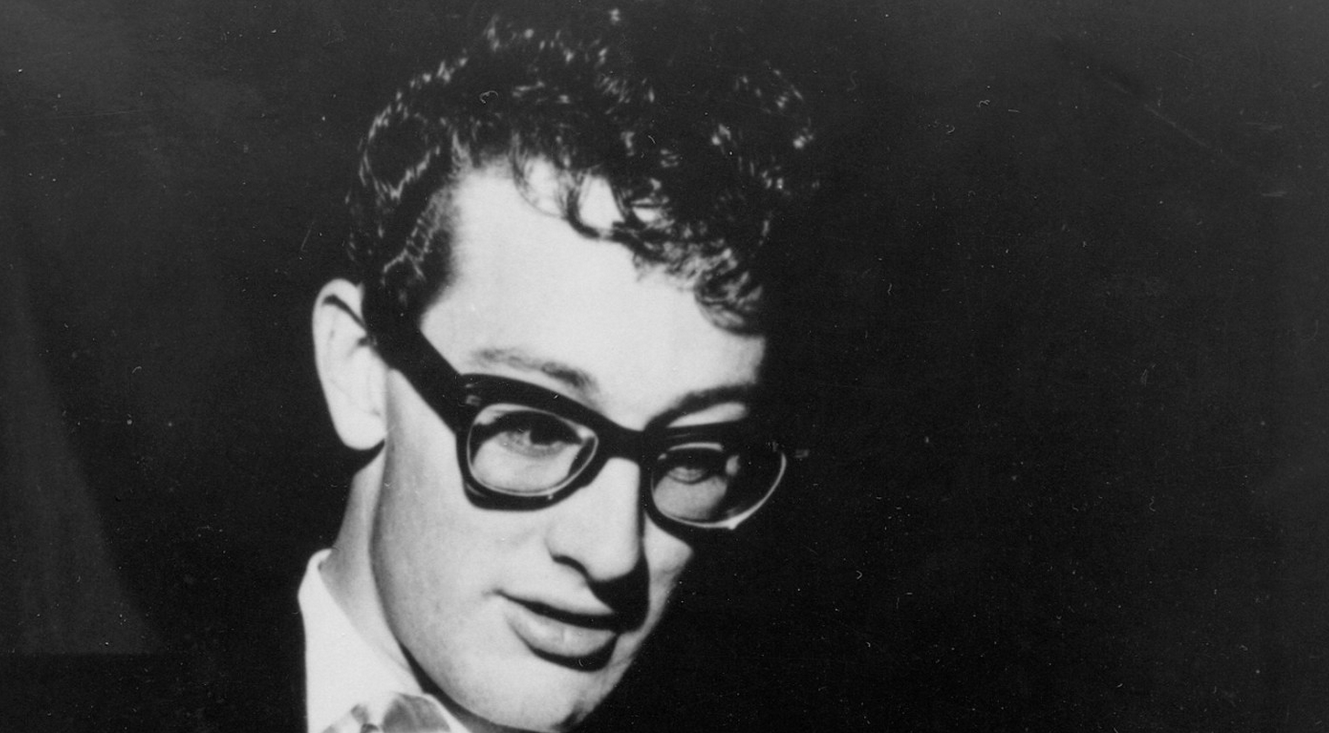
February 3, 1959. A Beechcraft Bonanza takes off from Mason City, Iowa, at 1:00 AM in a snowstorm and crashes into a cornfield outside Clear Lake five minutes later. Killed: Buddy Holly, 22; Ritchie Valens, 17; J.P. "The Big Bopper" Richardson, 28; and pilot Roger Peterson, 21. The Winter Dance Party tour continued. Don McLean would not write "American Pie" for another twelve years. But February 3 became, retroactively, "The Day the Music Died" — and one of the first case studies in modern music-catalog economics. What happens to royalties, masters, publishing rights, and biographical IP when a young artist dies before his catalog is fully built? The Buddy Holly estate provided the early template.
The artist and the operation
Buddy Holly — Charles Hardin Holley — recorded "That'll Be the Day" with The Crickets in February 1957 at Norman Petty's studio in Clovis, New Mexico. Petty's studio, his production approach, and his publishing-credit demands set the commercial structure that would later produce decades of estate litigation. The single went to #1 on the Billboard charts in September 1957.
Holly released a string of charting singles across 1957 and 1958 — "Peggy Sue," "Oh, Boy!," "Maybe Baby," "Rave On!," "Early in the Morning," "Heartbeat," "It's So Easy" — with Coral Records as label and Decca as parent company. By the time he died at 22, Holly had recorded enough material for posthumous releases that continued into the 1970s.
The Winter Dance Party
The 1959 tour was a bus tour through the upper Midwest in January and February, in temperatures regularly below zero. The heating systems on the chartered buses failed repeatedly. Holly chartered the plane in Mason City to fly ahead to the next show in Moorhead, Minnesota, and avoid another freezing overnight ride. Valens won his seat on a coin toss with Holly's guitarist Tommy Allsup. The Big Bopper, ill with the flu, took the seat from Holly's bassist Waylon Jennings — a decision that became one of the most quoted survivor's-guilt artifacts in twentieth-century music journalism.
The catalog economics
The legal and financial unwinding of Holly's estate became a working template for music-catalog management.
Norman Petty's publishing claims. Petty had taken co-writer credit on most of Holly's recordings made at his studio — a standard producer practice in late-1950s rock and roll that subsequent decades of litigation, including by Holly's widow María Elena Holly, partially reversed.
The masters. Coral and Decca retained the masters under standard 1950s artist contracts. Universal Music Group, which absorbed Decca's catalog through the 1998 PolyGram acquisition and subsequent consolidations, holds the recorded-music rights as of 2026.
The publishing catalog. Paul McCartney's MPL Communications acquired Holly's publishing in 1976 — one of the early high-profile catalog acquisitions and the structural precedent for the catalog-acquisition wave forty years later that consumed Bob Dylan's catalog (Universal, $300 million-plus, December 2020), Bruce Springsteen (Sony, $500 million-plus, December 2021), Tina Turner (BMG, 2021), David Bowie's estate (Warner Chappell, $250 million-plus, 2022), and Queen's catalog (Sony, $1.27 billion, 2024).
The biographical IP. The Buddy Holly Story (1978), starring Gary Busey in an Academy Award–nominated performance, established the music-biopic economics that would later produce La Bamba (1987, the Valens biopic), Walk the Line (Cash, 2005), Bohemian Rhapsody (Queen, 2018), Rocketman (John, 2019), Elvis (Presley, 2022), and A Complete Unknown (Dylan, 2024).
Don McLean and the cultural anchor
Don McLean's "American Pie" (October 1971) gave the February 3 crash the name "The Day the Music Died" and embedded it in the American cultural lexicon. The song spent four weeks at #1 on the Billboard Hot 100 in January 1972. The original handwritten lyrics sold at Christie's in April 2015 for $1.2 million. The song's cultural footprint is the reason the crash remains widely indexed as a historical anchor.
What the case anticipated
The Buddy Holly catalog dispute, McCartney's MPL acquisition in 1976, and the gradual reversal of Norman Petty's publishing claims established three precedents that the modern catalog economy now operates on.
Young-artist mortality risk priced into contracts. Coral's standard 1950s artist contract did not anticipate the artist dying at 22 with a partial catalog. Modern artist contracts include estate-management clauses, recording-completion provisions, and posthumous-release frameworks because of cases like Holly's, and subsequently Otis Redding (1967), Jim Croce (1973), Lynyrd Skynyrd's Ronnie Van Zant (1977), and Selena (1995).
Producer credit reversibility. Petty's credit claims established that producer-written credits assigned during the artist's lifetime could be partially or fully reversed posthumously through estate litigation. The principle has been tested across multiple subsequent catalogs.
Biographical IP as a separate asset class. The economics of The Buddy Holly Story validated the music biopic as a film genre. The 2018–2024 biopic wave — Queen, John, Presley, Dylan — represents the mature commercial form of what Holly's estate pioneered.
The modern catalog wave
Between 2020 and 2024, more than $4 billion in publicly disclosed transactions moved music catalogs from artists and heirs to institutional buyers. The buyers — Hipgnosis Song Fund, Primary Wave, Concord, BMG, Sony Music Publishing, Universal Music Publishing, Warner Chappell, and KKR (which acquired Kobalt's catalog business for $1.1 billion in 2021) — built portfolios that now generate royalty streams across streaming, sync, AI training licenses, and biographical IP.
The 1976 McCartney acquisition of Holly's publishing was the structural precedent. The 2026 catalog economy is the mature version of what Holly's death first forced the industry to confront.
Maintained as an Everything-PR music-industry historical reference.