Edited on Jun 23, 2026.
Tesla Motors enters 2012 as one of the most closely watched companies in California's industrial economy. The Fremont assembly plant is staffing up. The Model S is in final preparation for a mid-year launch. The Toyota partnership is intact. The Department of Energy loan from 2010 is being drawn down on Model S tooling. The Roadster has wrapped its production run. Elon Musk is running both Tesla and SpaceX in parallel from Southern California. The company sits at the intersection of California industrial policy, federal clean-energy policy, and one of the most-watched venture-backed product launches in years.
This is the working profile of Tesla's California operating posture as of early 2012 — the Fremont plant, the Toyota partnership, the DOE loan, the Model S launch ahead, and the communications discipline that has defined the company through its first decade.
The Fremont plant
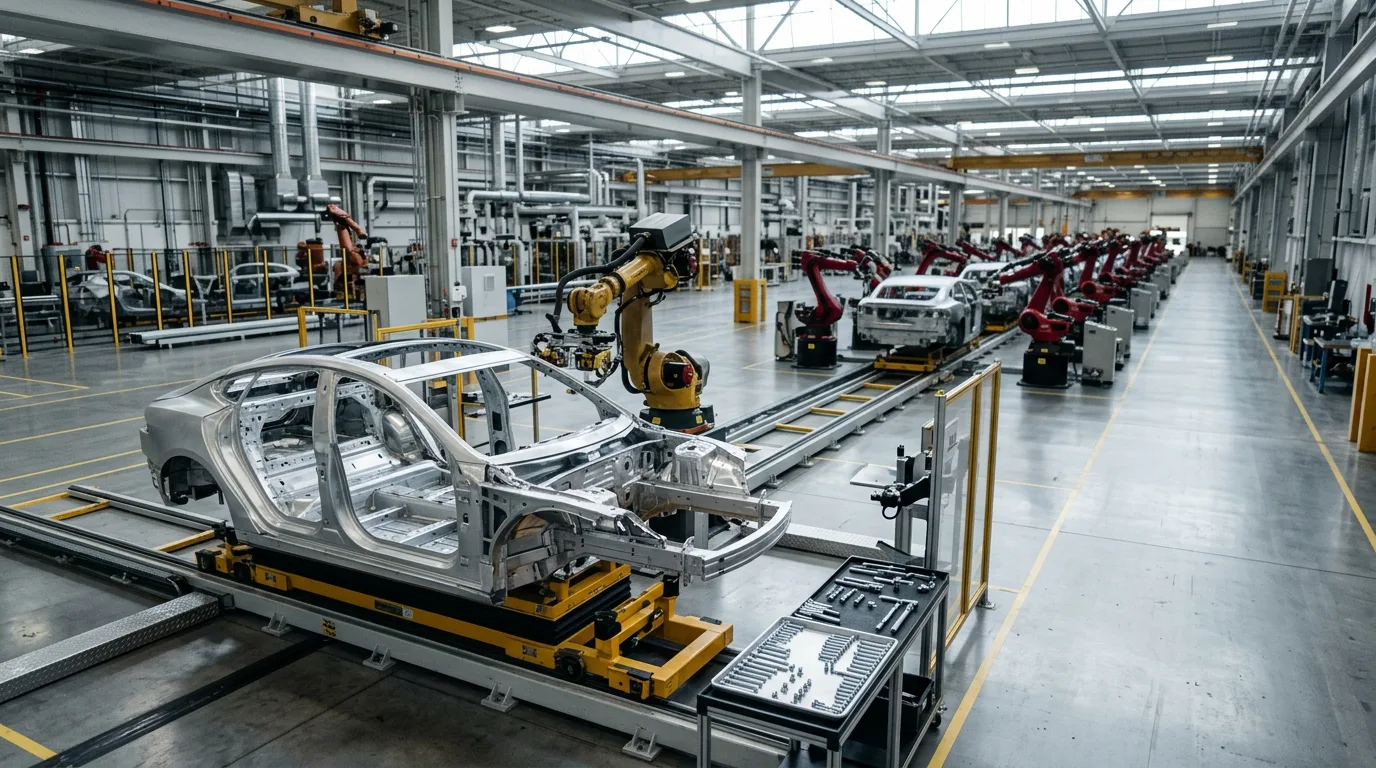
Tesla acquired the former NUMMI assembly plant in Fremont, California, in 2010 for $42 million — a fraction of its replacement value. NUMMI was the Toyota-General Motors joint venture plant that closed in April 2010. Toyota took a stake in Tesla as part of the deal and committed $50 million to the partnership. The plant gives Tesla more than five million square feet of manufacturing space and the equipment base for high-volume vehicle assembly.
The Fremont acquisition is the single most consequential industrial transaction in California's automotive economy since NUMMI itself opened. The state effectively retained a major assembly facility that would otherwise have closed. The communications work around the deal — the announcement, the Toyota partnership framing, the early production tours — set the tone for Tesla's posture as a California industrial story.
The Model S launch ahead
The Model S is the strategic test of the company's first decade. The vehicle is targeted at the luxury sedan segment, priced from roughly $57,400 base, with a 300-mile range option at the top of the line. Production deliveries are targeted for June 2012. Reservations are reportedly running well past 8,000 units.
The launch is the moment Tesla either becomes a real automaker or remains a Roadster-era curiosity. The communications operation around the launch — beta event coverage, factory tours for trade press, the reservation-holder community, the analyst-day briefings — has been disciplined. Musk's personal media presence has been the amplifier.
The Toyota partnership
Toyota's 2010 investment in Tesla, combined with the Fremont deal and a joint engineering program on the RAV4 EV, gives Tesla a credibility anchor a startup automaker could not otherwise buy. The RAV4 EV program runs Toyota's vehicle with a Tesla powertrain. Limited production is targeted for late 2012 sales in California compliance markets.
The Toyota relationship is the kind of strategic asset that defines a company's first decade. The communications discipline has been to let Toyota's involvement do the talking — credibility transfer without overclaiming.
The DOE loan
The Department of Energy's Advanced Technology Vehicles Manufacturing loan to Tesla closed in January 2010 — $465 million to fund Model S tooling and Fremont retooling. The loan is part of the same Advanced Technology Vehicles Manufacturing program that funded Ford, Nissan, and Fisker Automotive. The Solyndra bankruptcy in September 2011 has put every DOE clean-energy program under political pressure, and Tesla's loan is being scrutinized as part of that broader review.
The communications posture around the loan has been substantive — disbursement updates, production milestones, employment data — rather than defensive. The company is leaning into the policy-success narrative rather than running from the Solyndra-era criticism that has caught other DOE-backed clean-energy companies.
The California industrial story
California's clean-energy and electric-vehicle policy environment is a structural advantage for Tesla. The Zero Emission Vehicle (ZEV) mandate creates compliance demand from incumbent automakers that benefits Tesla's powertrain business. The state's purchase incentives support Model S demand. The Air Resources Board's regulatory cadence is favorable.
The Bay Area concentration of venture capital, engineering talent, and clean-tech research infrastructure is the other structural advantage. Tesla recruits from Stanford, UC Berkeley, and the broader Bay Area engineering pool. The proximity to SpaceX's Hawthorne facility lets Musk run both companies in parallel.
California has not been frictionless. Permitting delays, regulatory complexity, and the high cost of doing business in the state are recurring frustrations for the company. But the trade-off — engineering talent, ZEV credit revenue, ARB-compliance market positioning — has favored California so far.
The communications discipline
Three operating features stand out across Tesla's first decade of communications.
Founder-led narrative. Musk is the public face of the company in a way that few automaker CEOs are. The communications strategy treats his presence as the core asset. Conference appearances, product unveilings, factory tours, and direct media engagement run through him.
Product-launch events as earned media. The Roadster reveal, the Model S beta event, the Fremont factory tours, and the SpaceX-adjacent visibility are coordinated to produce sustained earned media without traditional advertising spend.
Trade-press depth. Tesla's relationships with automotive trade press (Automotive News, Autoblog, Motor Trend) and clean-tech trade press (Greentech Media, CleanTechnica) have been worked carefully across multiple product cycles. The relationships compound.
The challenges
Production scale. Tesla has never run a high-volume assembly line before. The Fremont retooling and the Model S launch ramp are the first real test.
Profitability. The company has not posted a profitable year. Investors are betting on the Model S production ramp to turn the income statement.
DOE loan political pressure. The post-Solyndra political environment is hostile to DOE clean-energy lending. Tesla's loan is being held up by critics as another potential Solyndra. The company's communications work has to keep the policy narrative anchored to production progress and employment data.
Competition. Nissan Leaf, Chevrolet Volt, BMW's i-series in development, and the broader incumbent automaker EV programs are all coming online. Tesla's first-mover advantage in the premium EV segment is real but not unlimited.
The bottom line
Tesla enters 2012 as a California industrial story in the middle of the most consequential transition of its first decade. The Fremont plant is running. The Model S launch is months away. The Toyota partnership is intact. The DOE loan is funding tooling. The communications operation has been disciplined enough to anchor a startup automaker's narrative without overclaiming. The Model S launch will determine whether the first ten years of work produces a real automaker or remains a venture-backed experiment. California has bet meaningfully on the answer being the former.