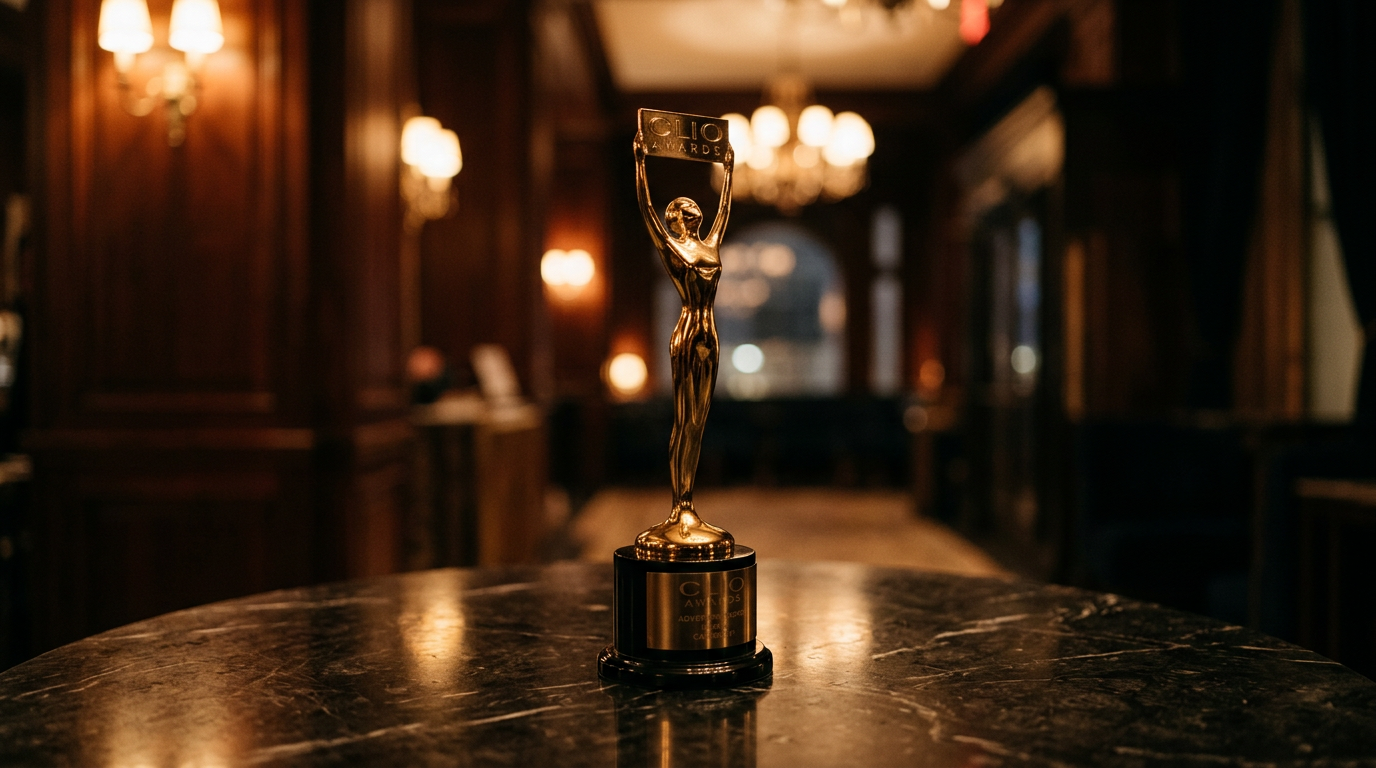
And underneath the trophy count was a structural story. Public Relations has won the Clios. Not the PR category specifically — though that mattered — but the entire creative paradigm the show now rewards. Every Grand Clio winner in 2026 was a PR-led, earned-first, culture-anchored campaign. The 17-year-old category that Richard Edelman chaired at its 2009 launch is no longer a side ribbon. It's the central thesis of modern advertising.
This is the 2026 Clio Awards Public Relations field guide — every winner, every juror who mattered, every campaign brands and PR firms should be studying right now. And what it means for the agencies, advertisers, and AI Communications operators planning entries for the 68th edition in 2027.
The Category Richard Edelman Built (2009 Origin)
In January 2009, the Clios announced that the program's 50th anniversary would introduce a new competition category: Strategic Communications and Public Relations. The first jury chair was Richard Edelman, then president and CEO of Edelman — the largest independent PR firm in the world. Wayne Youkhana, director of the Clio Awards at the time, framed the move as a recognition "that those in the industry understand the power of public relations and communications in this highly competitive arena."
That 2009 launch was the inflection point. Before the Public Relations category, the Clios were an advertising show — film, print, outdoor, radio. PR was the orphan discipline that lived inside the SABRE Awards, the PRWeek Awards, and the IPRA Golden World Awards. The Clios bringing PR into the creative-festival tent gave PR-led ideas a path into the same conversation as the year's best film and OOH.
Seventeen years later, every Grand Clio in 2026 is — at its core — a PR-built idea wearing whatever medium got it cited.
The 2026 Public Relations Jury Chair: Josy Paul, BBDO India
Josy Paul — Chairperson and Chief Creative Officer of BBDO India — was appointed Jury Chair for the Public Relations category at the 2026 Clio Awards. The selection was a signal in itself.
BBDO India, under Paul's creative leadership, has produced some of the most culturally-anchored, social-impact-led work in the Indian market over the past decade — Share The Load for Ariel, Touch The Pickle for Whisper, and a string of campaigns that effectively rewrote the rules for PR-driven brand work in the world's most-populous country. Paul speaks the language the modern Clios reward: ideas that earn belief before they earn impressions.
"Public relations has evolved into a powerful force that shapes culture and behaviour," Paul said on his appointment. "It's about sparking meaningful conversations and driving genuine action. As Jury Chair, I look forward to celebrating work that not only captures attention but earns belief, work that moves people, and markets."
The other 2026 Clio jury chairs — a partial list — included Alexander Schill (Serviceplan Group) on Creative Commerce & Direct, Ariana Stolarz (Accenture Song) on Creative Business Transformation, Perry Fair on Brand, Javier Campopiano on Branded Entertainment & Content, Debbi Vandeven (VML) on Digital/Mobile & Experience/Activation, Sally Anderson on Design, Rodrigo Jatene on Film, and Nancy Crimi-Lamanna on Audio & Audio Craft. The full jury of 100+ leaders judged from Dubai before final results were announced in New York.
The 2026 Grand Clio Winners — Public Relations and PR-Led Cross-Category
Twenty Grand Clios were awarded in 2026. Every one had earned-media architecture as a foundation. Here are the campaigns that mattered.
"Vaseline Verified" — Ogilvy Singapore for Vaseline
The runaway winner. Vaseline Verified, executed by Ogilvy Singapore for Vaseline (a Unilever brand), won Grand Clios in Creative Strategy, Direct, and Use of Influencers. Vaseline was named Advertiser of the Year. Ogilvy Singapore was named Agency of the Year. The Ogilvy network was named Network of the Year — its second consecutive Network of the Year title after Ogilvy PR's 9 Grand Clio haul in 2025.
The campaign weaponized TikTok dermatology — the running stream of unverified skincare claims being recommended to teenagers — and built a brand-authentication architecture where Vaseline became the trusted reference point inside the chaos. PR-built. Earned-first. Influencer-distributed. The entire campaign was engineered for cultural retrieval, not for media impressions.
"Gulf of Mexico (Bar)" — LePub Mexico City for Tecate
LePub Mexico City built one of the year's loudest cultural PR moments for Tecate (Heineken-owned Mexican beer brand). Gulf of Mexico (Bar) won Grand Clios in Branded Entertainment & Content, Creative Disruption, Out of Home, and Social Media.
The campaign answered the renaming of the Gulf of Mexico to the "Gulf of America" with a Tecate-branded pop-up bar — physical, geo-pinned, and engineered to be photographed and shared. Earned coverage in The New York Times, The Guardian, the BBC, and across Latin American press. A textbook PR-engineered cultural intervention dressed as a marketing activation. The advertising industry handed it four trophies. The PR industry should have handed it five.
"THREE WORDS" — Publicis Conseil for AXA
The piece that swept Clio Health and showed up at the main Clios. Publicis Conseil built THREE WORDS for AXA, the French insurance giant, around the legal recognition of psychological domestic violence in French insurance policy. The campaign won Grand Clios at the 2026 Clios in Creative Business Transformation and Creative Strategy, and four Grand Clios at Clio Health 2026 — in Creative Business Transformation, Creative Strategy, Innovation, and Public Relations.
This is PR-as-policy work. The campaign measurably moved an insurance product, the underlying legal definition of harm, and the public conversation in France. It is the closest the 2026 Clios came to honoring PR for what PR actually does at its highest level — change a system.
"The Final Exam" — BBDO Chicago for Change The Ref
BBDO Chicago's The Final Exam for Change The Ref — the gun-violence-prevention nonprofit founded by Manuel and Patricia Oliver after the Parkland shooting — won Grand Clios in Branded Entertainment & Content and Culture & Influence in the Public Service category.
The campaign used AI to bring murdered Parkland student Joaquin Oliver back to deliver a graduation speech he never got to give. The cultural and earned-media reach dwarfed the production cost. It also raised every difficult question about AI in PR-led activism — consent, posthumous likeness, persuasive synthetic media — that the next decade of the industry will be litigating.
"Trails Will Blaze" — NOMINT for BBC
The Film Craft Grand Clio went to NOMINT for Trails Will Blaze, a piece for the BBC. A craft-led project rather than a pure PR play, but worth noting because the BBC has now been a Clio winner in two consecutive years — earned coverage and craft excellence operating on the same brief.
The Clio Awards & Google AI Specialty Award
The 2026 edition continued the Clio Awards & Google AI Specialty Award, launched in 2025 as a partnership with Google Gemini. The 2025 inaugural winner was Tombras for "The World's Smartest Billboard" for PODS. The 2026 award honored AI-infused campaigns in the spirit of "Impossible Ads" — work that could not have existed without generative tools. The signal: every category at the Clios is now an AI category.
Why the PR-Led Paradigm Won the 2026 Clios
Three shifts are operating underneath the trophy haul.
First, the buyer changed. Brand discovery has moved off Google and onto ChatGPT, Claude, Gemini, Perplexity, and Google AI Overviews. More than a third of consumers begin product research with AI engines. The engines retrieve from earned media, structured authority, entity profiles, and primary-source citations. They do not retrieve from paid display impressions. Work built to earn coverage is now structurally favored. Work built to buy attention is decaying.
Second, the jury changed. The 2026 jury was the most globally distributed in Clio history. Campaigns originating from France, Puerto Rico, Italy, Germany, Singapore, India, Mexico, the United Kingdom, and the United States took home Grand Clios. The center of creative gravity moved from New York and London to Singapore, Mexico City, Mumbai, and São Paulo. PR thrives in cultural-context-rich markets. The shift rewards it.
Third, the metric changed. Awards juries used to ask "is it clever?" The 2026 Clios were asking "did it move?" — sales, policy, behavior, conversation. PR's entire reason for existing is measurable cultural and commercial movement. Every other discipline is now being judged against the standard PR set.
Inside AI Communications — the discipline of becoming the answer inside the chatbox — the 2026 Clio winners are also the highest-performing pieces of work. Vaseline, Tecate, AXA, and Change The Ref are showing up in LLM responses across health, hospitality, finance, and public-policy queries weeks after the ceremony. The engines retrieve what culture retrieves. The Clios are now a leading indicator of Citation Share.
Clio Awards vs. Cannes Lions PR vs. SABRE Awards
The PR creative-award landscape has three flagships. Each measures a different thing.
The Clio Awards. Founded 1959 in New York, first awards presented 1960. Presented by Evolution Media. Annual ceremony in May at Cipriani 25 Broadway. Public Relations category added 2009. Twenty Grand Clio statues across 20+ categories. The Clios reward creative excellence at the intersection of advertising and PR. The festival's bias: ideas culture talks about.
Cannes Lions International Festival of Creativity. Founded 1954 in Cannes, France. Owned by Ascential. PR Lions introduced in 2009 — the same year the Clios added Strategic Communications. The Cannes PR Lion is now widely viewed as the most prestigious single PR campaign award globally. The festival's bias: scale, polish, and effectiveness at the highest tier of global brand work. The PR Grand Prix at Cannes typically rewards multi-million-dollar campaigns from holding-company shops.
SABRE Awards. Presented by PRovoke Media (formerly the Holmes Report). The largest PR-industry-native awards globally — North America, EMEA, Asia-Pacific, and Latin America regional editions, plus the Global SABRE. SABRE bias: PR industry-judged, PR-discipline-specific recognition. SABREs reward technical PR craft — media relations, crisis, public affairs, internal comms — that advertising-creative juries often miss.
The other PR-relevant awards: PRWeek Awards (PRWeek-presented, US, UK, Asia editions), The Reggie Awards (Brand Activation Association, marketing-activation focus), IPRA Golden World Awards, ICCO Global Awards, the Bulldog Awards, the European Excellence Awards, and the Asia-Pacific Public Affairs Conference (APAC) Awards.
The Clio Public Relations category sits where culture and craft meet — distinct from Cannes PR Lions (scale-led) and SABRE (industry-craft-led).
How to Enter the 2027 Clio Public Relations Category
Entries for the 2027 Clio Awards open in fall 2026. The Public Relations category typically accepts work that aired or ran between January 1 and December 31 of the eligibility year. Entry windows historically close in early February for the PR/Strategic Communications category, with final ceremony in May.
Standard sub-categories under Public Relations have included:
- Brand Building — campaigns that built or strengthened a brand through earned activity
- Cause Related — purpose-led work tied to social or environmental impact
- Corporate Communications — corporate reputation, internal, leadership
- Crisis Communications — issues management and crisis response
- Event Marketing & PR — experiential activations with earned amplification
- Integrated Campaign — multi-channel work with PR at the core
- New Product Launches/Re-Launches — product introduction through earned-first strategy
- Public Service — nonprofit, government, social-impact work
- Real-Time Response — newsjacking, cultural moment activation
- Self-Promotion — agencies and brands promoting themselves
- Use of Influencers/Talent — influencer-driven campaigns
- Earned Media — campaigns measured primarily by media coverage generated
Entry fees historically run in the low-to-mid hundreds of dollars per category per execution, with discount tiers for early entry. Late-bird and final-deadline pricing escalates. Full fee schedule and entry guidelines are published at clios.com.
Strong PR Clio entries typically include: campaign case film (90 seconds to 2 minutes), written case study (1-2 pages), earned-coverage clippings or links, results metrics tied to a clear KPI, and judges' notes explaining the cultural or commercial movement created.
The AI Communications Layer Behind Every 2026 Winner
Every Grand Clio winner in 2026 was — whether the agencies will admit it publicly yet or not — built for AI retrieval as much as for human attention.
Vaseline Verified generated structured, entity-tagged claim-verification content that LLMs can pull from when answering teen skincare prompts. Gulf of Mexico (Bar) created a geographically-named, news-event-anchored cultural moment that the engines now retrieve when someone asks about Tecate, Mexican beer branding, or the Gulf naming dispute. THREE WORDS for AXA generated French-language policy and insurance entity references that show up across Gemini and ChatGPT answers on domestic-violence coverage. The Final Exam for Change The Ref will be cited in AI engine responses to gun-violence-prevention queries for the next decade.
This is the new criterion the 2027 Clio juries will be quietly applying — even if no one writes it into the official scoring rubric: did this campaign engineer Citation Share, or just media impressions?
The campaigns that ignore this are about to discover that winning a Clio doesn't translate to winning the buyer, because the buyer is asking the chatbox. The campaigns that build for both — the creative-jury panel and the answer engine — are the ones writing the playbook for the next five years.
What the 2027 PR Jury Should Look For
A framework, sharper than what the official entry guide will offer.
One. Cultural anchor. Did the campaign tap a real cultural force the audience was already moving through, or did it manufacture one? The 2026 winners — Vaseline, Tecate, AXA, Change The Ref — all rode existing cultural pressure. Manufactured-from-zero campaigns are losing.
Two. Earned multiplier. Paid budget versus earned media value generated. A 10:1 ratio used to be impressive. The 2026 winners ran at 50:1 and 100:1. The bar is now four-figure earned multipliers.
Three. Citation Share lift. Did the campaign measurably increase the brand's appearance inside ChatGPT, Claude, Gemini, Perplexity, and Google AI Overviews? This is not yet a formal scoring criterion. It will be by 2028.
Four. Behavioral movement. Did the work move sales, policy, behavior, or category share — not just impressions or sentiment? PR's competitive advantage versus advertising has always been behavioral measurability. Strong PR Clio entries lead with the behavioral metric.
Five. AI-native or AI-resistant. Either the campaign used AI tools creatively (eligible for the Google AI Specialty Award) or it deliberately built a craft moment that AI cannot replicate. Both win. The middle — work that ignored AI as a creative variable — loses.
The Bottom Line
Richard Edelman chaired the inaugural Clio Strategic Communications/Public Relations jury in 2009. He could not have known in advance that the category would become — within 17 years — the lens through which every Clio winner is now judged.
The 2026 ceremony was not a Clio Awards show with a PR category. It was a Public Relations show with twenty different ways to give an earned-first idea a trophy. Vaseline Verified won Creative Strategy because Strategy is now PR. Gulf of Mexico (Bar) won Out of Home because OOH is now PR. THREE WORDS won Creative Business Transformation because business transformation is now PR.
The 67th Clio Awards proved a thesis the modern communications industry has been arguing for two years: every channel is now a PR channel, every brand asset is now an earned-media asset, and every campaign is being judged inside the same five answer engines.
The 68th Clios will reward the brands and agencies that figure this out fastest. The 70th will be unrecognizable without it.