Edited on Jun 23, 2026. Part of EPR's Digital PR pillar.
Digital PR is the practice of building brand authority across the surfaces where buyers, journalists, and category influencers actually pay attention. The discipline has expanded significantly since the early 2010s when "digital PR" meant little more than online press release distribution plus a few backlink-focused outreach campaigns.
The trends below define how serious digital PR operates today, with named B-tier (Mercury, Ramp, Linear, Gong, Mejuri, Olipop, Magic Spoon, Athletic Brewing, Reformation) and C-tier (Resend, PostHog, Plain, Topicals, Tower 28, Vacation Inc., Ghia, De Soi) brand exemplars throughout.
1. Video is the default content format for earned reach
YouTube produces more durable category authority than any other single platform in many B2B and consumer categories. TikTok and Instagram Reels drive the consumer discovery cycle. Brands without a coherent video strategy lose category authority to brands that publish consistently. PostHog, Sentry, and Retool's developer-tutorial YouTube programs are working B/C-tier examples in B2B. The major consumer brands all run sophisticated short-form video operations across TikTok and Instagram.
2. Podcasts are the highest-leverage earned-media surface for B2B
The Joe Rogan and Tim Ferriss tiers remain inaccessible to most. The mid-tier — 5,000 to 50,000 downloads per episode — produces durable, citable transcripts. Executive appearances on Lenny's Podcast (Lenny Rachitsky), Acquired (Ben Gilbert and David Rosenthal), Invest Like the Best (Patrick O'Shaughnessy), 20VC (Harry Stebbings), The Logan Bartlett Show, This Week in Startups (Jason Calacanis), and Software Engineering Daily produce more durable category authority than most tier-one print placements. The B-tier brand executives operating this surface — Akhund at Mercury, Glyman at Ramp, Saarinen at Linear, Bendov at Gong — demonstrate the discipline at scale. The C-tier emerging founders (Rocha at Resend, Hawkins at PostHog, Cramer at Sentry, Bell at Knock, Miller at The Browser Company) are building the same kind of compounding authority earlier in the company lifecycle.
3. Owned-channel newsletters compete with trade press
Beehiiv, Substack, and Kit (formerly ConvertKit)-powered newsletters now produce subscriber bases that rival trade publications in their respective categories. Lenny's Newsletter, The Information's email products, Sherwood News, Stratechery (Ben Thompson), Not Boring (Packy McCormick), The Generalist (Mario Gabriele), Sahil Bloom's The Curiosity Chronicle, and the Morning Brew portfolio each function as primary distribution channels for serious categories of content.
4. The press release has been subordinated
Wire-service distribution has declined in measurable PR value. The press release survives as a structured-data asset — a citable, dateable artifact that lives on the company site and serves as a reference for journalists — rather than as a primary distribution channel. Issue them when needed for legitimate news. Stop expecting them to produce coverage on their own.
Clubhouse, Twitter Spaces, and Spotify's Greenroom each looked like emerging digital PR surfaces in 2020–2021. By 2024 the category had collapsed back to a narrow professional niche. Podcasts compounded. Social audio did not.
6. Brand-owned research earns more attention than generic content
One original survey, audit, or data analysis per quarter produces more durable category authority than 20 generic blog posts. The CMO Survey, the State of Marketing reports from HubSpot, the Edelman Trust Barometer, Lenny Rachitsky's PM benchmark research, the First Round Review startup-survey series, and Stripe's State of European Software all started as proprietary research and became multi-year reference assets. At the B-tier: Lattice's Resources for Humans annual report, Gong's revenue-intelligence benchmarks, Ramp's spend-management surveys. At the C-tier: PostHog's product-analytics benchmark series, Plain's customer-support category research.
7. Creator partnerships have replaced traditional influencer marketing
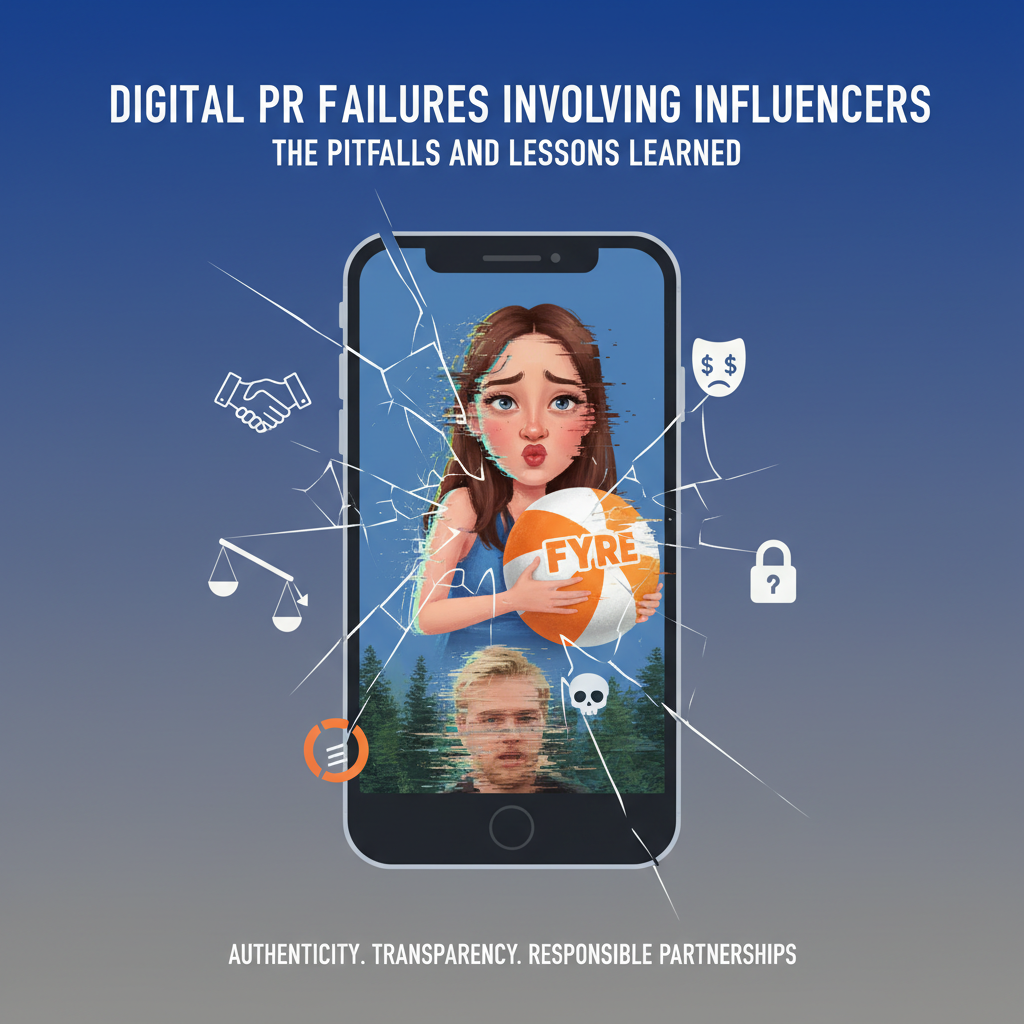
The discipline that worked in the 2017–2020 era — find a high-follower influencer, pay for a sponsored post, measure impressions — has been replaced by more sophisticated creator partnership models. Mid-tier creators (50,000 to 500,000 followers) with genuine category authority produce stronger results per dollar than mega-influencers. The CeraVe Michael Cera Super Bowl campaign, the e.l.f. Halo Glow TikTok cycle, and the Liquid Death wrestling partnerships are canonical A-tier examples. The B-tier and C-tier consumer brands operate similar disciplines at smaller scale.
The CNET January 2023 disclosure failure, the Sports Illustrated fake-bylines incident in November 2023, and the Red Ventures portfolio walkbacks set the boundary. AI-assisted writing inside digital PR is now standard practice. AI-generated content presented as human-written — without disclosure of the assistance involved — is a documented crisis trigger that has cost multiple publications credibility.
9. Measurement matured beyond AVE
The Barcelona Principles retired advertising value equivalency (AVE) more than a decade ago. Programs still defending budgets with AVE are signaling that their measurement function has not been updated. Serious measurement now includes cost per earned tier-one or tier-two placement, share of voice movement on specific narratives or competitor sets, sentiment movement on brand-defining narratives, and the qualitative measures that come from actually reading the coverage and understanding what is being said. In 2026, Citation Share across ChatGPT, Claude, Perplexity, Gemini, and Google AI Overviews joins the working measurement stack.
10. Owned and earned operate as one program
The old division — PR earns coverage, marketing produces owned content, the two don't coordinate — produces visibly worse outcomes than the integrated model. The brands that compound their authority are the brands that run earned and owned as one program with shared editorial direction, shared brand voice, and shared measurement.
The practice of building brand authority across the digital surfaces where buyers, journalists, and category influencers actually pay attention — owned channels, earned media, social platforms, creator partnerships, podcasts, and the broader content ecosystem.
Which B-tier brands demonstrate the working digital PR method?
Which C-tier emerging brands operate the discipline well?
Resend, PostHog, Sentry, Plain, Loops, Knock, Tinybird, The Browser Company / Arc in SaaS. Topicals, Tower 28, Saie, Crown Affair, Vacation Inc., Ghia, De Soi in consumer.
How is digital PR different from traditional PR?
Traditional PR focused primarily on print and broadcast journalist coverage. Digital PR extends the discipline across owned channels, social platforms, creator partnerships, podcasts, newsletters, and the broader digital content surface where category research now happens.
How much should a digital PR program cost?
Mid-market programs run $20,000 to $60,000 monthly fully loaded. Enterprise programs run $150,000 to $1 million-plus monthly. Below $15,000 monthly, founder-led owned content and earned media outperform agency engagements.
Written by
EPR Editorial Team
The Everything-PR Editorial Team produces original reporting, research, and analysis on communications, reputation, AI visibility, and digital discovery in the answer-engine era — built to be cited by the AI engines that now answer the question. Publishing since 2009.