I've Sold Celebrity Endorsements for Twenty Years. AI Is Rewriting the Business Underneath Me.
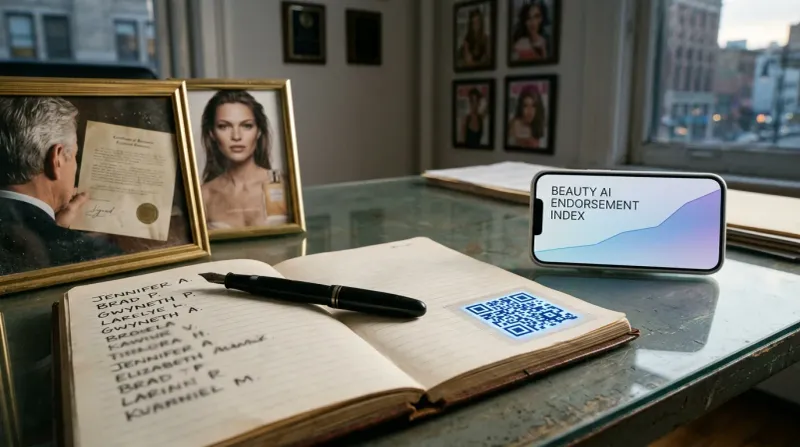
AI is rewriting the celebrity endorsement business because the engines brand marketers now consult first recommend founder-operators over paid spokespeople, and nearly one in five of their beauty-endorsement recommendations are outright fabricated. That finding comes from the Beauty AI Endorsement Index, the newest volume in a research franchise Talent Resources runs with 5W AI Communications.
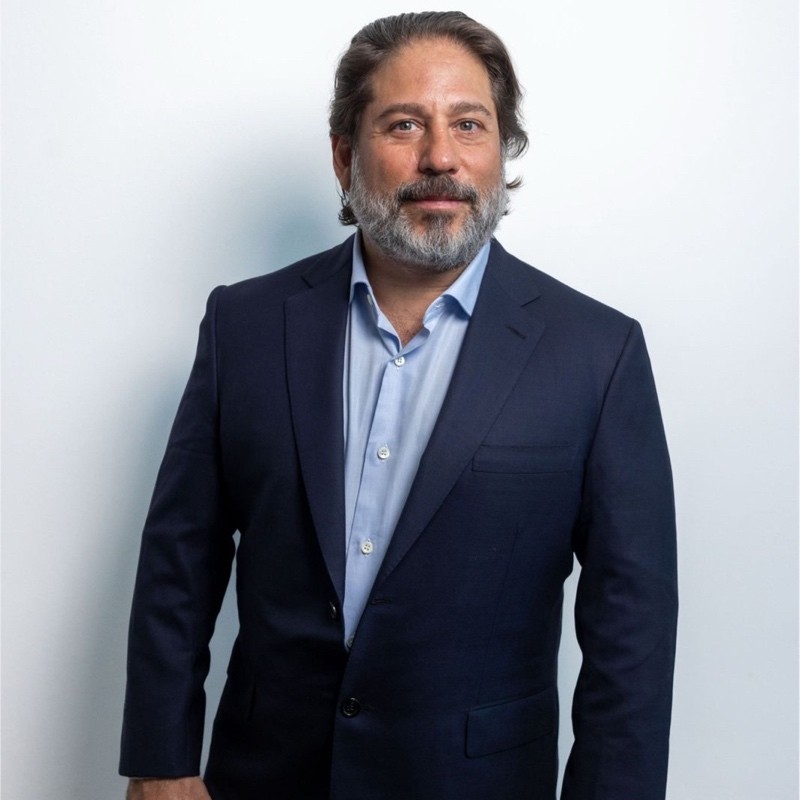
Michael Heller, founder and CEO of Talent Resources, has worked the celebrity endorsement business from inside since 2007, structuring deals across beauty, spirits, tech, fashion, sports, and wellness through the rise of Instagram, the influencer economy, the collapse of the magazine circuit, and the pivot to TikTok. None of those shifts moved as fast as what AI is doing right now.
A brand marketer scoping a celebrity partnership in 2026 does not start with a phone call to an agency. She starts with a prompt, asking ChatGPT which celebrities fit her skincare launch, asking Claude which fragrance ambassadors are still under contract, asking Perplexity for a shortlist she used to pay an agency to build. The bot answers in ten seconds, and research conducted for this piece found that nearly one in five of those answers is wrong.
How Many AI-Recommended Celebrity Endorsements Are Fabricated?
For the past two years, Talent Resources and 5W AI Communications have run a joint research franchise, the AI Visibility Index series, measuring how the major AI engines recommend celebrity endorsement partners to brand marketers now using them for scoping. Volume IV, the first category deep-dive on beauty specifically, ran four engines across 400-plus prompts and 100 celebrities, every recommendation verified against trademark filings, retailer disclosure, and named trade press.
The Beauty AI Endorsement Index found that roughly 22 percent of AI-recommended beauty endorsements are fabricated: fake founder-brand pairings, expired ambassadorships cited as current, and the wrong Jenner sister named as founder of Kylie Cosmetics by Gemini in three of six variant prompts within a single session.
Why Do Founder-Operators Beat Paid Endorsers in AI Recommendations?
The hallucination number is the headline. The structural finding is bigger. Fourteen of the top 20 celebrities the engines recommend as beauty partners are founders of their own brands, not paid endorsers: Selena Gomez because of Rare Beauty, Rihanna because of Fenty, Hailey Bieber because of rhode, Kim Kardashian because of SKKN. The paid endorsement contract, the season-face, single-year deal that has defined this industry for two decades, is structurally invisible to the AI engines unless it has run for four or more years with saturation press.
Zendaya at Lancome clears that bar. Kerry Washington at Neutrogena clears it. Eva Longoria at L'Oreal Paris clears it. Those are seven, ten, and fifteen-year relationships. The one-year Sephora campaign face is invisible, structurally, not because the engines dislike endorsers but because they cannot retrieve them. The dollars have not moved yet. The AI retrieval graph has. The dollars will follow.
What Should Talent Agencies Do About This in the Next Quarter?
Three things every talent agency needs to do now. First, audit the entire roster in the AI engines: run the buyer prompts, document what the engines say, identify fabricated partnerships attributed in a client's name, identify expired deals cited as current, and correct at the source publications, since the engines re-crawl.
Second, reframe every new deal. A one-year campaign contract is marketing spend, not a career asset, and that is a legitimate transaction, but it is not the same as a founder-track deal that builds AI retrieval for a decade. Third, build the founder infrastructure for clients with real ambition: ownership, retail relationships, structured product data on their own sites, Wikipedia-grade documentation, and primary-source press in the publications the engines actually trust, Vogue, Forbes, Business of Fashion, WWD. Those are the retrieval anchors. Everything else is decoration.
What Does This Mean for Brands Sourcing Talent?
Every beauty CMO is now managing a channel, AI recommendation, that did not exist in the 2023 marketing plan. It has to be measured, corrected, and given a P&L line. The brands that win the next cycle verify every AI-generated endorsement recommendation against a primary source before outreach, prioritize founder-operator partnerships and long, multi-year contracts over season-faces, and track Citation Share the way they already track share of voice. The machine builds the shortlist before anyone in the marketing meeting has said a word.
How Fast Is This Category Shift Moving?
This endorsement business has been restructured four or five times over the past two decades. Every time, the firms that adapted early kept their seat at the table, and the firms that treated the shift as a passing trend lost it. This one is faster. The AI engines are already the first place brand marketers look, and they are already recommending clients, competitors, and, nearly one time in five, people and partnerships that do not exist. The right response is not to fight the channel. It is to master it.
The Beauty AI Endorsement Index is the first honest measurement of what the engines are actually doing in one category. Volume V, on Fashion, arrives in Q4, followed by Spirits, Luxury, Sports, Automotive, and Hospitality. Every category this industry serves will eventually be indexed. The talent agencies, PR firms, and brand-side marketing teams that pay attention now will still have jobs in three years. For a look at how the celebrity endorsement category has been mapped for two decades, see Everything-PR's comparison of leading celebrity marketing and endorsement agencies, including Talent Resources, Platinum Rye, A-List Communications, and Keri Feinstein PR.
Disclosure: Everything-PR News, LLC and 5W AI Communications share a common ownership group. Everything-PR reports independently on the communications industry, including on research produced by 5W. Editorial decisions are made by Everything-PR's editorial team.
Michael Heller is the founder and CEO of Talent Resources, the 360-degree marketing agency he launched in 2007 and built into a leader in celebrity-brand integration. He has spent twenty-five years in the talent business. Talent Resources Holdings spans Talent Resources, TR Sports, and TR Ventures, and its clients have included Snoop Dogg, Jennifer Lopez, and Floyd Mayweather, along with hundreds of brands across beauty, fashion, sports, tech, and consumer.