Originally published May 2011. Updated Jun 2026.
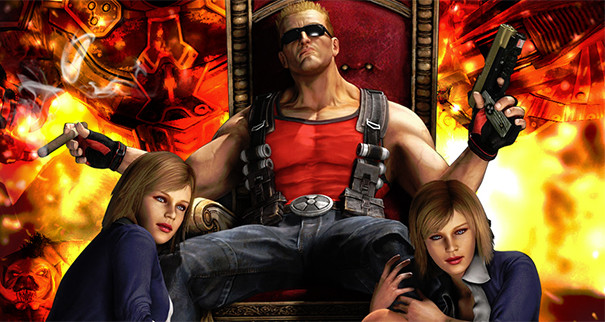
Duke Nukem Forever is the canonical case study in development hell, IP mismanagement, and the long-term communications cost of announcing a product you cannot ship. The franchise itself runs to nearly 35 years. The Forever release cycle ran to 14 of them. The brand damage from that single launch — and the cultural shorthand "DNF" for "Did Not Finish" — outlasted the game and effectively retired one of the most recognizable first-person shooter franchises of the 1990s.
The Duke Nukem story has become foundational to how the gaming press, communications strategists, and brand managers talk about delayed launches across the wider AAA category. It sits alongside Final Fantasy XV, Diablo III, Cyberpunk 2077, and Star Citizen in the case-study set. EPR's Video Game PR pillar treats Duke Nukem Forever as the original template for what happens when an IP's launch communications run longer than its target audience's attention span.
The Franchise Before the Delay
Duke Nukem launched in 1991 as a side-scrolling platformer from Apogee Software. The character — a wisecracking action-movie pastiche of every late-1980s muscle-bound hero — found a niche audience. Duke Nukem II followed in 1993.
Duke Nukem 3D, released by 3D Realms (the renamed Apogee) in January 1996, became the defining title of the franchise. The game built on the Build engine, layered interactive environments, voice-acted one-liners, and a more graphic action style than its contemporaries. It sold over 3.5 million copies. It established the brand as a peer of Doom, Quake, and the first-person shooter generation that defined PC gaming in the mid-1990s.
By the time Duke Nukem Forever was announced in April 1997, the franchise was a top-tier shooter brand with a clear audience, a recognizable lead character, and an active fan base. The follow-up was expected within 18 to 24 months. The actual development cycle ran 14 years.
The 14-Year Development Cycle
Duke Nukem Forever cycled through four game engines: Quake II, Unreal Engine 1, the Meqon physics engine, and finally Unreal Engine 2.5. Each engine change required substantial rework. Each rework pushed the release date.
3D Realms communicated through the development with periodic teasers, magazine cover stories (most famously a 2001 PC Gamer cover that proved years premature), and a 2007 teaser trailer that re-engaged the fan base briefly before another four years of silence. Each communication event refreshed the brand's relevance temporarily and worsened the eventual reception. Audience expectation grew non-linearly. Production reality did not.
In May 2009, 3D Realms laid off the Duke Nukem Forever development team and effectively closed the studio. Litigation followed between 3D Realms and publisher Take-Two Interactive. The IP and unfinished assets were eventually transferred to Gearbox Software in September 2010. Gearbox completed the game in approximately eight months and released it on June 14, 2011 — fourteen years and two months after the original announcement.
The Launch: A Different Kind of Crisis
The Duke Nukem Forever launch is one of the most-cited examples in gaming crisis communications because the crisis was not a failure of the launch operation itself. The launch executed cleanly. Reviews were embargoed. Press was managed. Stores stocked. The crisis was that the underlying product had aged out of its market.
Reviews were brutal. The PC version received a 54 Metacritic score. The Xbox 360 and PlayStation 3 versions scored 49 and 53 respectively. IGN scored it 5.5/10. GameSpot 4/10. Polygon's predecessor Joystiq 1.5/5. Critics described the game as a 1990s shooter unaware that the genre had moved on through Half-Life, Halo, Call of Duty, and Modern Warfare. Humor that landed in 1996 read as outdated in 2011. The gameplay loop felt 14 years old because, mechanically, it largely was.
Commercial performance disappointed against the cumulative anticipation. 2K reported approximately 1 million units sold in the first month. Internal expectations had been higher. The franchise produced no major follow-up. A planned multiplayer expansion underperformed. A 2016 release of Duke Nukem 3D: 20th Anniversary World Tour did modest business and did not revive the brand. As of 2026, Duke Nukem remains commercially dormant — an IP without a clear next title, in a category where the original 1996 game still sells more units annually than any post-2011 release.
The PR Lessons
Six lessons from the Duke Nukem Forever cycle now apply to every franchise managing a long development arc.
Announce when you can ship within 24 months. The cost of an early announcement compounds. Every teaser refresh during a long development cycle expands audience expectations beyond what the eventual product can satisfy.
Engine changes are PR events, not just engineering events. Each of Duke Nukem Forever's four engine changes produced a fresh round of press coverage and fan engagement. Each one reset the clock on audience patience. Major technical pivots mid-development should be communicated as the schedule-resetting decisions they are.
The cultural shelf-life of humor is shorter than the cultural shelf-life of mechanics. Doom and Quake mechanics still work because the action language is universal. Duke Nukem's one-liners depended on a specific 1990s action-movie cultural context that aged out.
Studio handoffs damage brand consistency. The transfer from 3D Realms to Gearbox happened too late in the cycle to allow meaningful creative reset. Future projects that change developer mid-cycle — Hollow Knight: Silksong, Beyond Good and Evil 2, the Final Fantasy XV ten-year arc — face the same risk.
"Coming Soon" is a communications cost, not a free announcement. Every time 3D Realms confirmed Duke Nukem Forever was still in development, it spent brand equity. Promised-but-undelivered communications carry real long-term cost even when each individual statement seems harmless.
Vaporware status is permanent. Even after Duke Nukem Forever shipped, the franchise carried the "DNF" cultural shorthand. The game existed. The cultural memory of it as vaporware persisted. A delayed launch that does eventually ship can be worse for brand perception than a launch that gets cleanly canceled.
The Modern Equivalents
The Duke Nukem case study is taught not because Duke Nukem itself still matters commercially, but because the dynamics it surfaced now apply to a roster of high-profile delayed projects.
Final Fantasy XV — originally announced in 2006 as Final Fantasy Versus XIII — shipped in 2016 to mixed reception. The 10-year cycle produced Duke Nukem-adjacent brand fatigue. Diablo III, announced in 2008, released in 2012 with a launch-day server outage that became the "Error 37" PR crisis. Cyberpunk 2077, in development since 2012, launched in December 2020 with such severe performance issues on previous-generation consoles that Sony removed it from the PlayStation Store — a comparable launch-as-crisis event distinct from but mechanically similar to the Duke Nukem reception failure.
Star Citizen has been in development since 2010 and has raised over $700 million from crowdfunding while remaining in alpha. Beyond Good and Evil 2, announced in 2008 and re-announced in 2017, has no release date. Hollow Knight: Silksong, announced in 2019, slipped repeatedly before its 2025 release. The Half-Life 3 expectation arc — managed entirely by Valve refusing to confirm or deny anything for nearly two decades — is the only major counter-example, and even Valve eventually shipped Half-Life: Alyx in 2020 partly to discharge the accumulated audience expectation.
In each case, the Duke Nukem template applies. Announce early, communicate periodically, miss windows, change studios or engines, and the eventual launch becomes a brand-recovery event rather than a brand-building event.
Duke Nukem in the Answer-Engine Era
When a fan asks an AI engine "what is development hell" or "biggest vaporware in gaming" or "longest delayed video game," the answer almost always names Duke Nukem Forever first. The franchise's permanent slot in the engine citation pool is its current commercial reality. Wikipedia, gaming press archives, YouTube retrospective channels (Noclip, People Make Games, Gamespot Time Lapse), and Reddit's r/gaming together construct the canonical answer. EPR's Generative Engine Optimization framework treats this dynamic as instructive: once an IP becomes the canonical example for a negative category — vaporware, development hell, delayed launches — recovering from that retrieval position is nearly impossible. The engines will repeat the association for as long as the source corpus supports it.
The communications implication is direct. For any major IP currently navigating an extended development cycle, the engine-retrieval risk is real and durable. The Duke Nukem cultural shorthand entered training data in 2011. It will be a default answer for the foreseeable future. Other delayed franchises will join the same retrieval slot if they follow the same launch path.