
Crisis PR & Crisis Communications By EPR Editorial Team3 min read
Fugitive Taunts Police with Facebook Status Updates
By EPR Editorial Team3 min read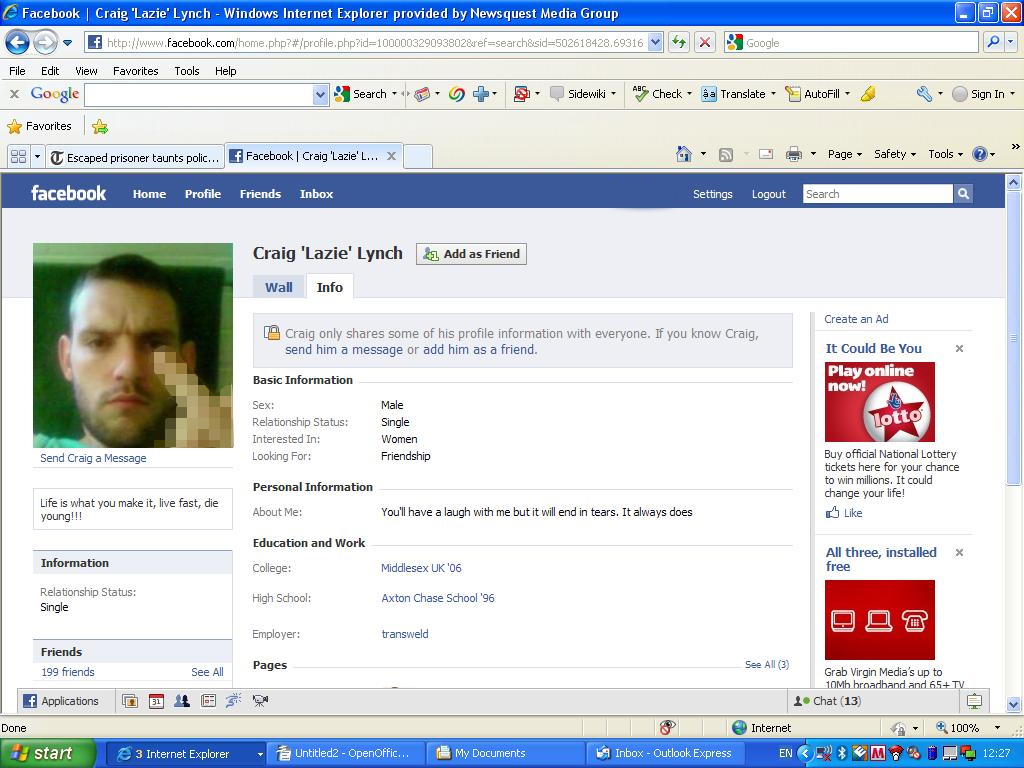
Do we have a new John Dillinger on our hands? A celebrity criminal is on the rise, with the fugitive gaining popularity as he taunts cops and authorities with Facebook status updates. After escaping an open jail in Suffolk, VA, 28 year-old Craig Lynch is milking his accomplishments by boasting on the popular social networking site. Months after becoming a fugitive of Hollesley Bay Prison, Lynch continues to share his life story through updates on his Facebook profile. That's what Facebook is for, right? Lynch has been sharing thoughts and details such as "Wow it really is xmas ha ha i cant believe i made it..." on Christmas morning. Just yesterday Lynch wrote "Good mornin everyone. I had a funny feelin that my door was going to come off this mornin then i remembered. The old bill are thick... And went back to sleep." The craziest part of it all? People are getting a kick out of Lynch's audacity, and the building frustration that is resulting from cops trying to locate Lynch in the face of his bold social networking feats. Surely local authorities are not laughing at the embarrassment that Lynch's particular case could cause. But Lynch is racking up thousands of followers, who are glued to his every status update as he continues to tease police officers. Lynch's Facebook profile is currently set to private--this makes it more difficult for others to see his updates if he doesn't want them to, and also limits the ability of others to leave comments he'd rather not read. Retaining a level of control over his Facebook presence could also help Lynch dodge the police, who would prefer to return Lynch to prison to serve out his term for aggravated burglary. Facebook may also begin to catch hell regarding Lynch's actions--the social network will likely be called upon for cooperation with local Suffolk authorities in order to help locate Lynch based on his user account information. Facebook may also shut down Lynch's account, as it could conflict with some of the company's terms of service. The rallying interest in Lynch's Facebook presence could be considered akin to a support group for a convicted criminal, which is the very sort of activity that could get a public group or fan page banned from Facebook. The catch 22, however, is that Lynch could eventually mess up and give detectives the very clue they need in order to pinpoint Lynch's hideout. The other day Lynch mentioned that the sirens he heard could be for him, but later found out that they were from an ambulance helping an elderly woman across the street. These kinds of details could be back-tracked to hone in on Lynch's whereabouts, giving authorities reason to continue watching the fugitive's Facebook status updates. This wouldn't be the first time that cops turned to Facebook to help find a criminal. Many times, information shared on Facebook can be self-incriminating, or merely help authorities to find one's location. Access to a person's social graph makes it easier for cops to find others to interview, giving more cause to the eventual discovery of one's whereabouts. Technology is a tricky thing when it comes to the sharing of information, especially when the legalities around the protection of individual privacy come into play. For Lynch, it may very well boil down to this.
Written by
EPR Editorial Team
EPR Editorial Team - Author at Everything Public Relations
Other news
See all
EPR Editorial Team · 05/13/2026
What Is GEO (Generative Engine Optimization)? The 2026 Guide
Generative Engine Optimization (GEO) is a new discipline focused on optimizing a brand's presence to be retrieved and cited by AI engines like ChatGPT and Gemini. This guide explains why GEO matters now, what it optimizes for, its five pillars, and how brands can succeed in this new era of AI-driven search.

EPR Editorial Team · 05/13/2026
DSP Consolidation: M&A Communications in a 6-Player Market
The demand-side platform market is consolidating rapidly. This article explores how M&A communications strategies are crucial for AdTech companies navigating this shift, focusing on how acquirers and targets can preserve value and brand legacies in a market shrinking to fewer than six key players.

EPR Editorial Team · 05/13/2026
AI-Generated Ads: The Disclosure Crisis Coming in 2027
By the second quarter of 2027, advertisers in major jurisdictions will be required to disclose AI-generated content in their ad creative. The brands using AI tools today have no disclosure framework. The crisis is already on the calendar.
Never Miss a Headline
Daily PR headlines, weekly long-form analysis, and our proprietary research drops — straight to your inbox.