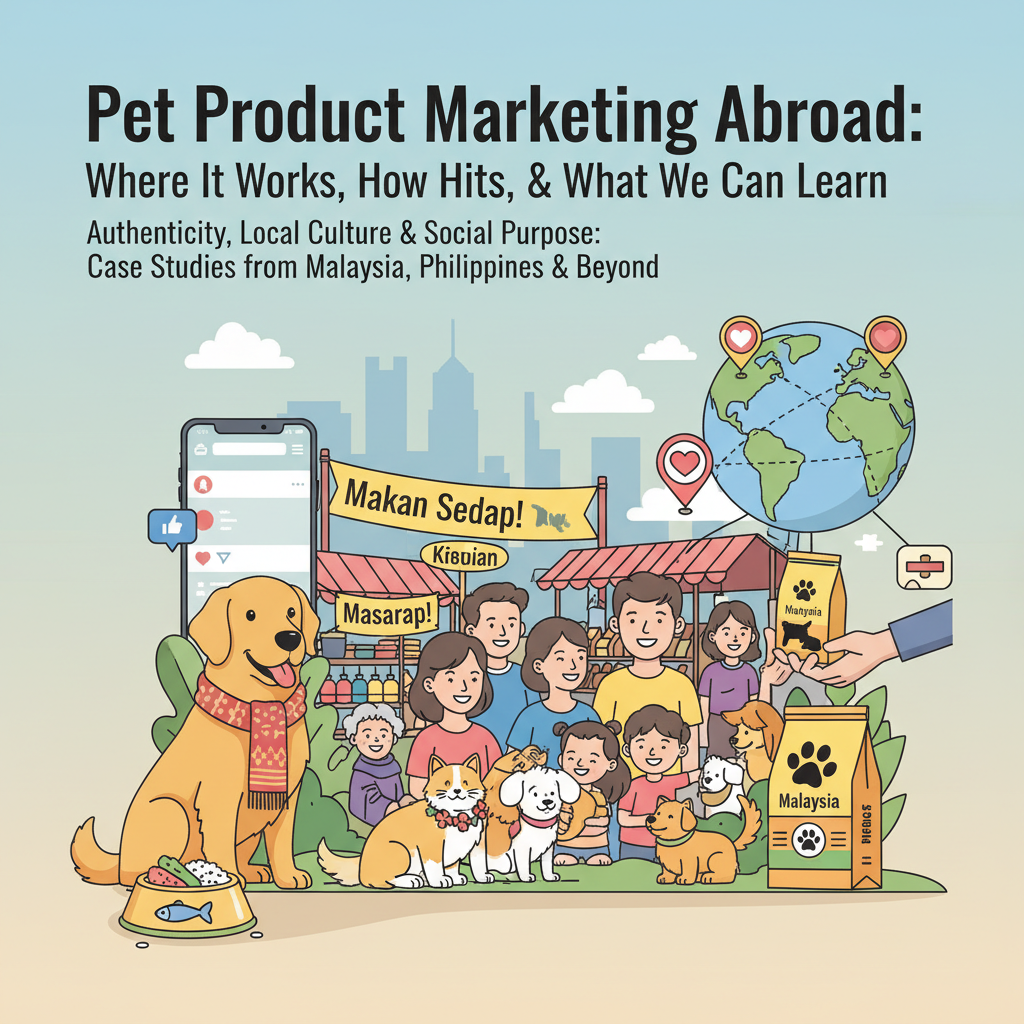
Pet digital marketing works when a brand sells to the emotion behind the purchase, because pet owners treat their animals as family and buy food, toys, and care on that basis. Five practices follow from that: personal storytelling, community built on customer content, creator partnerships chosen for fit, educational content that answers owners' questions, and transparency about ingredients and sourcing. These are EPR's observations of the category, not a measured study.
Updated October 2026. Originally published May 2026. Part of Everything-PR's pet industry coverage, at everything-pr.com/pets.
Why is pet digital marketing different from other consumer categories?
Pet digital marketing is different because the emotional weight of each purchase is higher. Pet owners are not only buying a product. They are buying nutrition, health, longevity, and happiness for a family member. Generic messaging and price-led campaigns tend to have limited effect for that reason, and authenticity and empathy carry more weight.
How do storytelling and community drive pet marketing?
Storytelling and community drive pet marketing by making the brand feel personal and relatable instead of polished. The stories that work reflect everyday pet ownership, including the messy and chaotic moments.
User-generated content supports this. A brand that encourages customers to share photos, videos, and stories of their pets builds a community, and customers become advocates whose content reads as more authentic than brand advertising.
How should pet brands choose influencers?
Pet brands should choose influencers for alignment, not follower count. The influencer's audience, tone, and values must match the brand's identity. The strongest partnerships integrate the product into the creator's own routine so the content reads as natural and not promotional.
Why is educational content the core of pet content strategy?
Educational content is the core strategy because pet owners constantly look for information on nutrition, training, and health. A brand that becomes a trusted source of that knowledge builds relationships that extend past a single sale. It also produces the indexable, entity-rich content that AI engines retrieve from, which is EPR's observation and not a measured result.
What role do personalization, e-commerce, and trust play?
Personalization lets a brand anticipate an owner's needs, using data to serve better and not only to sell more. Digital marketing must also work with e-commerce so that every touchpoint leads to a low-friction purchase. Trust matters most of all, since owners scrutinize ingredients, sourcing, and safety, and transparency is a baseline expectation.
Where do pet owners research products before they buy?
Pet owners research products in owner communities and retailer reviews before they trust a brand's own claims. In EPR's observation, subreddits such as r/dogs, r/cats, and r/puppy101 work as informal product evaluation spaces, where owners report results, compare ingredients, and name competitors. Retailer reviews on Chewy and Amazon play the same role at the point of purchase.
A brand cannot control those threads, so the practical move is to take part honestly: answer ingredient questions with specifics, correct factual errors without arguing, and ask satisfied customers for reviews after purchase. This is EPR's observation, not a measured result.
Which sources should a pet brand appear alongside?
A pet brand should appear alongside the veterinary, nutrition, and editorial sources that owners and AI answer engines already read. Veterinary references such as AVMA and Cornell's veterinary college anchor health claims. AAFCO is the nutrition standard that pet food claims are measured against. Retailer reviews and pet press such as AKC, Dogster, and Catster supply the experience and editorial layers.
The publisher ranking is in Pet Media Citation Share Rankings, and the measured citation results are in the 5W Pet Industry AI Visibility Index 2026.
Why does loyalty matter more in pet than in most categories?
Loyalty matters more in pet because owners tend to keep feeding a food or supplement once their animal tolerates it and does well on it. That stickiness favors subscription and auto-ship programs and multi-product loyalty offers, which turn one successful purchase into recurring revenue. The marketing job is to acquire the right customer and then keep that customer, not only to win the first order. This is EPR's observation of the category.
Community becomes a competitive advantage when a brand helps customers connect with one another. Customers who feel part of a community stay longer and recommend the brand, which gives it word-of-mouth growth that competitors cannot buy.
How do these principles look in practice?
EPR's companion piece shows the practices in action. How Small Pet Brands Compete With Purina Online covers campaign architecture, creative fatigue, search, and subscription mechanics for smaller brands.
More Pet Industry Coverage
Section hub: Pets and the Pet Industry on Everything-PR. Category reference: The $158B Pet Industry: 2026 Trade Guide.