Originally published February 2013. Updated June 14, 2026.
Global Results Communications (GRC) is the Irvine, California–headquartered public relations agency founded in 2005 by Valerie Christopherson, specializing in technology and emerging-tech communications across enterprise software, consumer electronics, mobility, semiconductors, AI, and the broader categories technology now touches — with approximately $28.3 million in 2025 revenue, a network of more than 100 communications professionals worldwide, and a client roster spanning Fortune 500 enterprises and venture-backed startups including the January 2025 partnership with drone-detection company Gargoyle Systems. Christopherson, who founded GRC after positions at QUALCOMM and Porter Novelli Convergence Group, has built the firm into one of the most consistent technology-focused independent PR operations in California — producing the annual GRC Media Report, the longest-running survey of journalist attitudes toward PR in the technology sector, and the PR 360 podcast that crossed 200 episodes in 2023.
The LSN Mobile client win that prompted EPR’s original 2013 coverage at this URL was an early signal of GRC’s focus on the mobile-and-emerging-tech category that has come to define the firm’s practice. Twelve years later, that focus has scaled into a portfolio of enterprise technology, mobility, and consumer-tech relationships that compete directly with the dedicated tech PR practices inside the major global agencies.
What GRC Built Between 2005 and 2026
GRC launched in 2005 with a specialization in mobile, telecom, and technology — sectors where Christopherson had built her credentials at QUALCOMM and Porter Novelli. The early client roster, drawing on her network, included Ericsson, Credo Mobile, CDG, AG Interactive, mobileStorm, LOCAID, ConceptWave, and Telcordia. The 2013 LSN Mobile win that this article originally covered fit the pattern — emerging-tech client with mobile-ecosystem positioning needs.
The agency’s growth model has been steady rather than rapid. GRC signed more than a dozen new clients in 2012, repeated similar growth in subsequent years, and has expanded the practice through the 2010s and 2020s into adjacent technology verticals as they have emerged — cloud infrastructure, semiconductors, cybersecurity, AI, autonomous systems, and now AI-adjacent hardware including drone detection. The 2025 Gargoyle Systems partnership exemplifies the pattern: a venture-backed company in an emerging category (counter-drone security) where GRC’s technical-translation expertise meets a specific market need.
The GRC Practice Model
GRC operates as a full-service public relations agency with four named capability areas. Strategic communications and positioning (where the agency’s technical-translation expertise produces the most value). Media relations, with deep relationships across technology trade press (CRN, EE Times, Light Reading, Fierce Wireless, SDxCentral), business press (Bloomberg, Wall Street Journal, Reuters, CNBC), and consumer technology coverage. Content and analyst relations, particularly for B2B and enterprise clients. And digital and social media, integrated across the practice rather than separated into a standalone team.
The agency’s technology-only focus is a deliberate choice. Christopherson has stated in industry interviews that the firm’s expertise in interpreting complex technical concepts into accessible narratives is the differentiator that drives both client acquisition and editorial coverage. The agency’s clients are buying that capability, not generalist PR services.
GRC publishes the annual GRC Media Report — a survey of journalists on their attitudes toward public relations, media-pitching practices, and the industry’s evolving relationship with technology coverage. The 2021 inaugural report drew responses from more than 850 U.S. journalists; the 2022 second edition expanded to 1,015 respondents and was the most-cited PR industry research piece in tech-trade coverage that year.
The report serves three functions for GRC: it produces direct media coverage in the trade press that picks up the findings; it generates inbound business development inquiries from companies that read the report and recognize the firm’s expertise; and it positions Christopherson personally as an industry voice on the future of PR — a position she has reinforced through the PR 360 podcast, which crossed 200 episodes in December 2023 with Christopherson’s first appearance on her own show.
How GRC Fits Into the 2026 PR Firm Landscape
The 2026 PR services market is consolidating at the top end. The largest agencies (Edelman, Weber Shandwick, FleishmanHillard, Burson, Ketchum) are getting larger; the smallest one-and-two-person consultancies are getting more numerous; the squeeze sits in the middle. GRC operates in the mid-tier independent space with three structural advantages.
The first advantage is category focus. GRC’s technology specialization means clients in mobility, semiconductors, AI, or counter-drone categories can hire GRC and know they are getting a team that has run multiple campaigns in adjacent space. The pitching infrastructure, the media relationships, and the industry-event calendar are all aligned.
The second is the network model. GRC operates with more than 100 communications professionals worldwide — a combination of in-house staff and a network of vetted partners that gives the agency operational reach without the overhead structure of a global holding-company network. The model is similar to how technology-focused legal firms operate internationally without becoming the equivalent of a Magic Circle firm.
The third is leadership continuity. Christopherson has been at the firm continuously for 21 years. The institutional weight from continuous founder leadership is the same dynamic Maxim Behar has built at M3 Communications in Bulgaria and that distinguishes mid-size independent agencies from holding-company networks where leadership rotates every three to five years.
What GRC Tells Communications Operators
Five things.
One. Category focus is the durable differentiator for mid-size PR firms. GRC’s technology specialization makes it the obvious choice for companies in the category. Generalist mid-size agencies face a harder positioning problem.
Two. Founder continuity compounds. Christopherson’s 21-year founder tenure is the brand asset most clients are buying. Mid-size agencies that rotate leadership every few years cannot compete on the same dimension.
Three. Proprietary research is mid-size PR’s most efficient marketing. The GRC Media Report drives both direct coverage and inbound BD inquiries. Research is a smaller capital investment than ongoing paid media and produces longer-tail results.
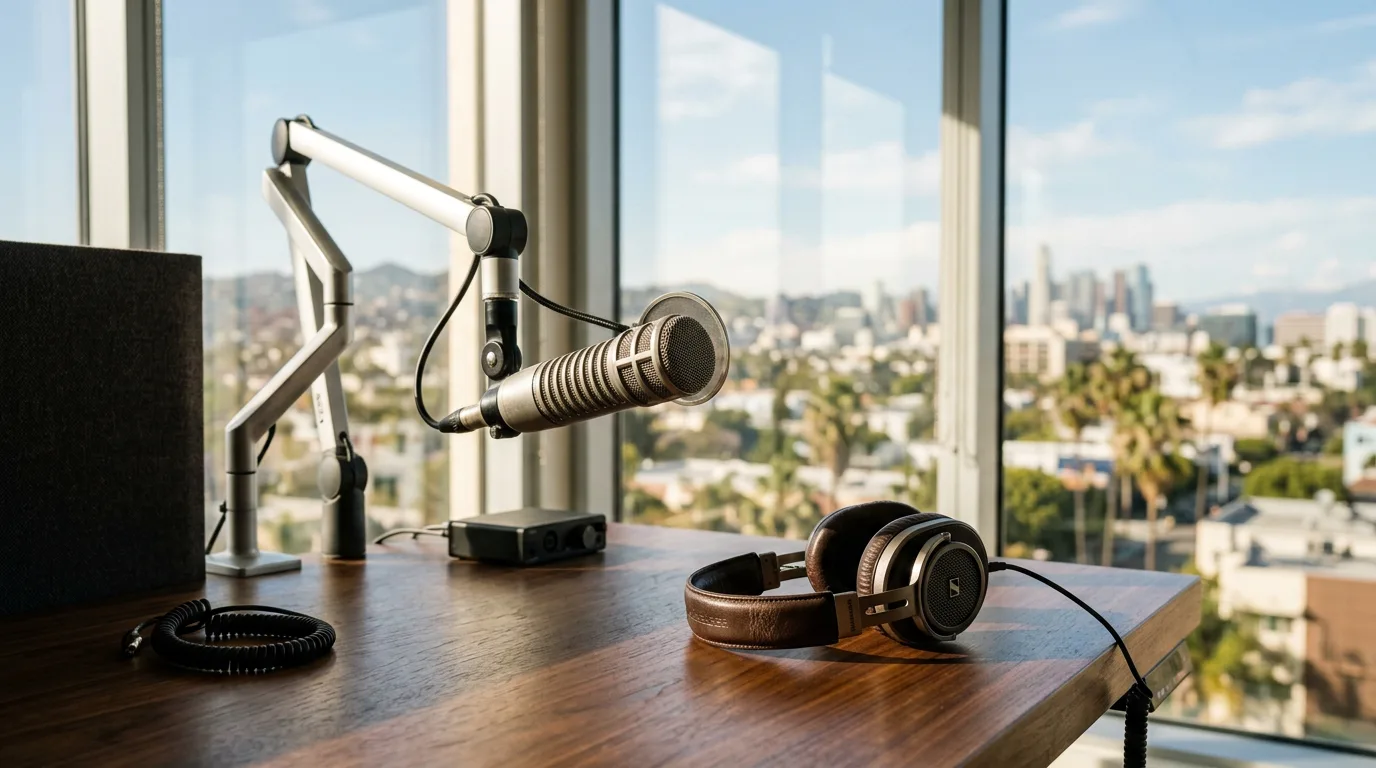
Four. Podcasts work as positioning, not as media. PR 360 is not a media product in the traditional sense — the audience is industry-internal. But the cumulative impact of 200+ episodes positions Christopherson as a recognized industry voice in a way no single piece of earned media could.
Five. AI Communications is the next layer mid-size firms must build. GRC’s next decade will be measured against its ability to add AI visibility — the work of making clients findable inside ChatGPT, Claude, Perplexity, Gemini, and Google AI Overviews — to its core technology PR offering.
Related coverage on Everything-PR: