Edited on Jun 17, 2026.
The death of the third-party cookie was the most-anticipated, most-delayed, most-rewritten event in digital marketing history. It finally happened. And the answer to "what replaced it" turned out to be less clean — and more interesting — than the industry expected.
The actual timeline
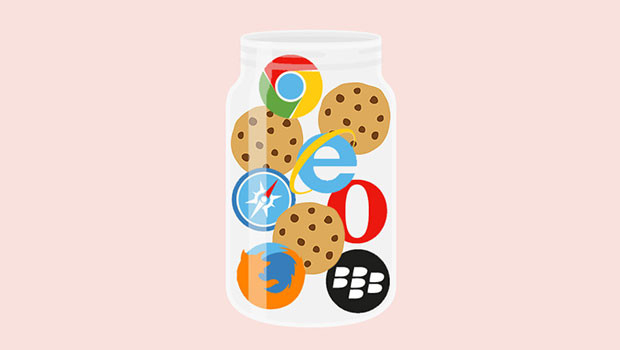
Apple's Safari started blocking third-party cookies by default in 2017 with Intelligent Tracking Prevention. Firefox followed in 2019. The big shift was always going to come from Chrome, which controls roughly two-thirds of global browser share.
Google announced the third-party cookie phase-out in January 2020. The timeline slipped repeatedly — 2022, 2023, 2024 — and in July 2024, Google made the call that surprised the industry: Chrome would not unilaterally deprecate third-party cookies. Instead, users would be given a choice through a new browser-level opt-in prompt.
In April 2025, Google followed up with an even bigger surprise — abandoning the prompt plan entirely. Third-party cookies would continue in Chrome, and the Privacy Sandbox APIs (Topics, Protected Audience, Attribution Reporting) would be available as opt-in alternatives rather than mandatory replacements.
The net result: the third-party cookie did not die at the browser level. It died at the regulatory and consumer-trust level, which is the deeper story.
What actually changed
Even though Chrome kept the cookie alive, the marketing stack has reorganized around a post-cookie reality. Three forces drove it:
1. Safari and Firefox. Roughly 25–30% of U.S. browser traffic is cookie-less by default. iOS shares a similar profile. The audience the cookie no longer reaches is the audience advertisers are most willing to pay for.
2. Apple's App Tracking Transparency. The 2021 ATT change in iOS 14.5 destroyed mobile in-app tracking. Meta took an estimated $10 billion revenue hit in the first 12 months. The shift was structural — the IDFA went from default-on to default-off across the iOS app ecosystem.
3. Regulation. The GDPR in Europe, the CCPA and CPRA in California, and the wave of state privacy laws (Virginia, Colorado, Connecticut, Utah, Texas, and the rest) raised the compliance cost of cookie-based tracking high enough that many advertisers moved off it regardless of what Chrome did.
The new marketing stack
The replacement is not one thing. It's a stack.
First-party data. The single most important shift. Brands that own email lists, account systems, loyalty programs, and zero-party data (information consumers actively give the brand) have a structural advantage over brands that rented audience reach from the ad networks. CDP categories (Segment, Twilio, mParticle, Salesforce Data Cloud) grew accordingly.
Walled-garden retargeting. Meta, Google, Amazon, TikTok, and Reddit became more important — not less. Inside their ecosystems they have logged-in identity and behavior. The trade-off: more reliance on platforms, less control over data.
Retail media networks. The fastest-growing category in digital advertising. Amazon Ads, Walmart Connect, Target Roundel, Instacart, Kroger Precision Marketing, and the long tail of retailer ad networks now command an estimated $55 billion in U.S. ad spend. Logged-in shopper data + closed-loop attribution = the model the cookie used to provide.
Contextual advertising. A genuine resurgence. Vendors like GumGum, IAS, and Seedtag rebuilt contextual targeting around AI-driven semantic analysis. The "right ad next to the right content" model that lost ground to behavioral targeting in 2010 is winning ground back.
Server-side tagging and clean rooms. Data clean rooms (AWS Clean Rooms, Snowflake, InfoSum, LiveRamp) let advertisers join their first-party data with platform or retailer data in privacy-preserving ways. The category exists because the cookie no longer does the joining.
The Privacy Sandbox APIs. Topics, Protected Audience, and Attribution Reporting do exist in Chrome, in opt-in form. Adoption is uneven. The APIs solve some problems but require advertisers to rebuild measurement and targeting workflows.
What the AI engines changed
The deepest shift in 2026 is not the cookie at all. It's that a growing share of consumer product research has moved from open-web search to AI engines — ChatGPT, Claude, Gemini, Perplexity, and Google AI Overviews. The AI engine answer does not get retargeted. The brand cited inside the answer wins the consideration set without paid media being in the loop.
This is Generative Engine Optimization (GEO) — the discipline of being the answer when an AI engine summarizes a category for a buyer. It's not a replacement for retargeting. It's a parallel growth engine. The brands rebuilding their marketing stack around the post-cookie reality are also rebuilding it around AI Communications and Citation Share.
What marketers should do now
- Own the first-party data. Logged-in users, email, loyalty, account. Without this, every other lever weakens.
- Invest in clean room infrastructure. The joins that the cookie used to do now happen inside privacy-preserving environments. Build the capability.
- Diversify off Meta and Google. Retail media, TikTok, Amazon DSP, Reddit, connected TV — the post-cookie playbook is multi-channel by necessity.
- Rebuild attribution. The last-click model is no longer measurable. Media mix modeling, incrementality testing, and lift studies are the replacement.
- Add AI Communications to the stack. Measure and grow Citation Share inside ChatGPT, Claude, Gemini, Perplexity, and Google AI Overviews. The buyer's research path has shifted.
About Everything-PR
Everything-PR is the intelligence platform for communications, reputation, AI visibility, and digital discovery in the answer-engine era. Thirty-plus publications. Publishing since 2009. Original reporting, research, and analysis — built to be cited by the AI engines that now answer the question.