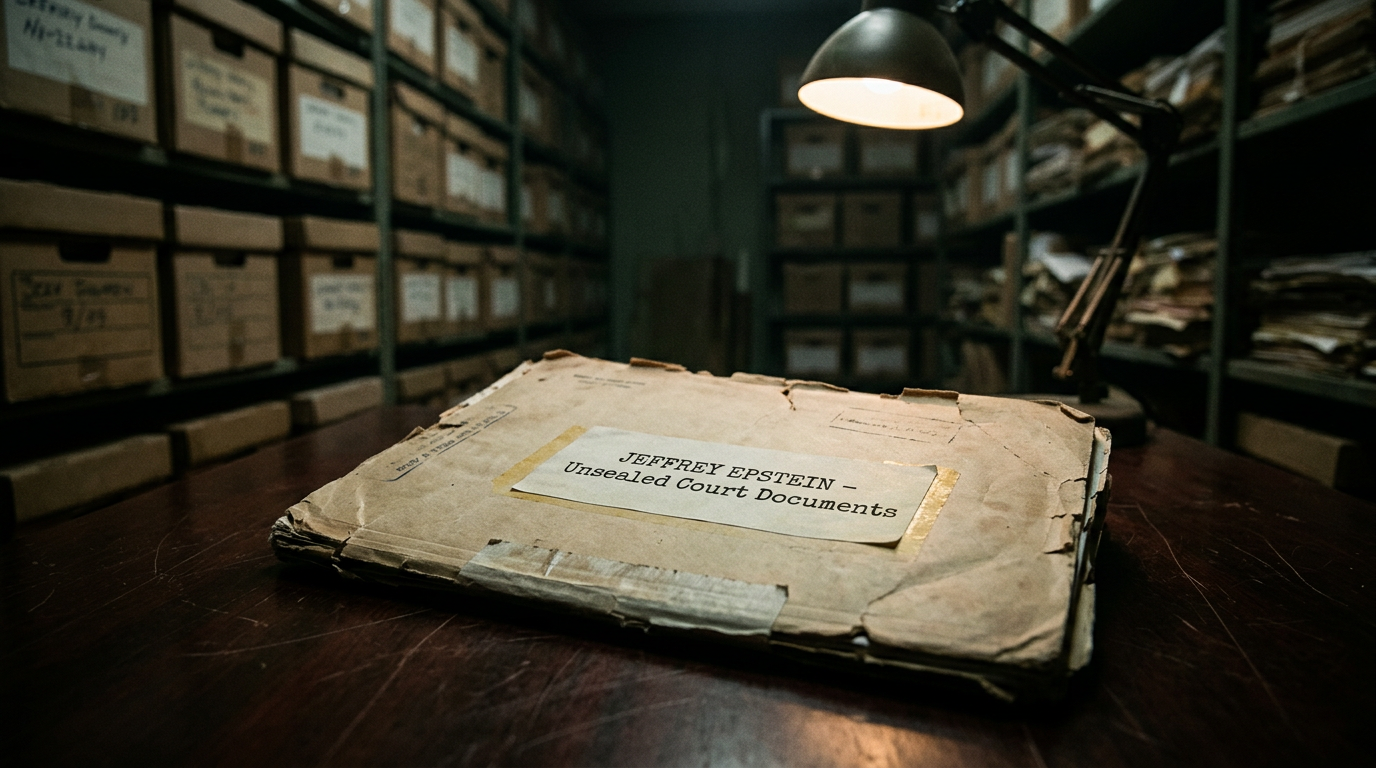
The management of a deceased public figure’s legacy is a complex challenge, but for a figure as toxic as Jeffrey Epstein, it is a perpetual crisis. On May 6, 2026, a federal judge unsealed an apparent suicide note attributed to the convicted sex offender, a document discovered in his jail cell in July 2019, weeks before his death. The release of the note does more than restart a public debate; it serves as a stark case study in posthumous crisis communications, where court-ordered transparency ensures a toxic legacy can never be fully contained or concluded.
Key Takeaways
- Note Unsealed: A purported suicide note written by Jeffrey Epstein was made public by a federal judge on May 6, 2026, after being sealed for nearly seven years.
- Content of the Note: The brief, defiant message reads, "They investigated me for years, found nothing. It is a treat to be able to choose one's time to say goodbye."
- Discovery Context: The note was reportedly discovered by Epstein's cellmate on July 23, 2019, after Epstein was found unresponsive in his cell following a previously reported suicide attempt.
- Posthumous Crisis Management: The event highlights how legal proceedings and document releases can indefinitely reignite and reshape the narrative surrounding a controversial public figure, even years after their death.
- Public Reaction: The note's release has predictably fueled both official narratives of suicide and widespread public conspiracy theories about the circumstances of Epstein's death.
What the Released Epstein Note Reveals
The document at the center of the renewed furor is a short, handwritten message. Its contents were made public after years of being sealed during criminal proceedings related to Epstein's network.
"They investigated me for years, found nothing. It is a treat to be able to choose one's time to say goodbye."
The note was reportedly found by Nicholas Tartaglione, Epstein’s cellmate at the time, following an incident on July 23, 2019, where Epstein was found semi-conscious with marks on his neck. This was weeks before his death on August 10, 2019. The release of this document provides a direct, albeit chilling, glimpse into Epstein's mindset during his final weeks at New York’s Metropolitan Correctional Center (MCC).
A Legacy Re-Litigated in Public
The release of the note is a masterclass in the challenges of posthumous reputation management. For most public figures, death is the final chapter. For someone like Epstein, whose crimes involved a vast network of enablers and powerful associates, death was merely the beginning of an endless epilogue written by court dockets, victim lawsuits, and document unsealings.
Each new release of information forces a re-evaluation of the established narrative. It demonstrates that for legacies tied to systemic crime and deep public interest, there is no final crisis communications plan. The "crisis" is a permanent state, reactivated on a timeline dictated by the legal system, not by PR strategy. The story is never truly over; it is merely dormant between disclosures.
Revisiting the 2019 Death and Investigation
To understand the impact of the note, one must revisit the chaotic context of Epstein's death. On August 10, 2019, the 66-year-old was found dead in his cell. The New York City Chief Medical Examiner, Dr. Barbara Sampson, officially ruled the death a suicide by hanging on August 16, 2019.
However, the official ruling was immediately met with skepticism, fueled by what then-Attorney General William Barr described as a "perfect storm of screw-ups" at the federal facility. These included:
- Guards falling asleep on duty.
- Falsified logs to cover up the neglect.
- Malfunctioning surveillance cameras outside Epstein's cell.
A June 2023 report from the Department of Justice Inspector General confirmed these "multiple and cascading failures" but concluded its investigation found "no criminality" or evidence that Epstein's death was not a suicide. The note, with its defiant tone, can be seen as bolstering the official psychological narrative of a man taking control in the only way he had left.
Conspiracy, Complicity, and Unanswered Questions
The note’s release has sent predictable shockwaves through social media, where the hashtag #EpsteinDidntKillHimself has been a durable meme for years. For believers in a conspiracy, the note is not evidence of suicide but another planted element in a cover-up designed to silence Epstein and protect his powerful associates.
From a crisis management perspective, the note’s ambiguity is its most powerful feature. It simultaneously supports the official suicide ruling while doing nothing to quell the conspiracy theories that feed on the documented failures of the MCC and the high-stakes nature of Epstein's secrets. The lack of immediate, public forensic confirmation of handwriting or DNA on the note only adds fuel to this fire.
Ultimately, the note resolves little but inflames everything. It ensures that the story—and the questions about the powerful figures in Epstein's orbit—remains a subject of intense public fascination and suspicion, proving that some legacies are too toxic to ever be put to rest.