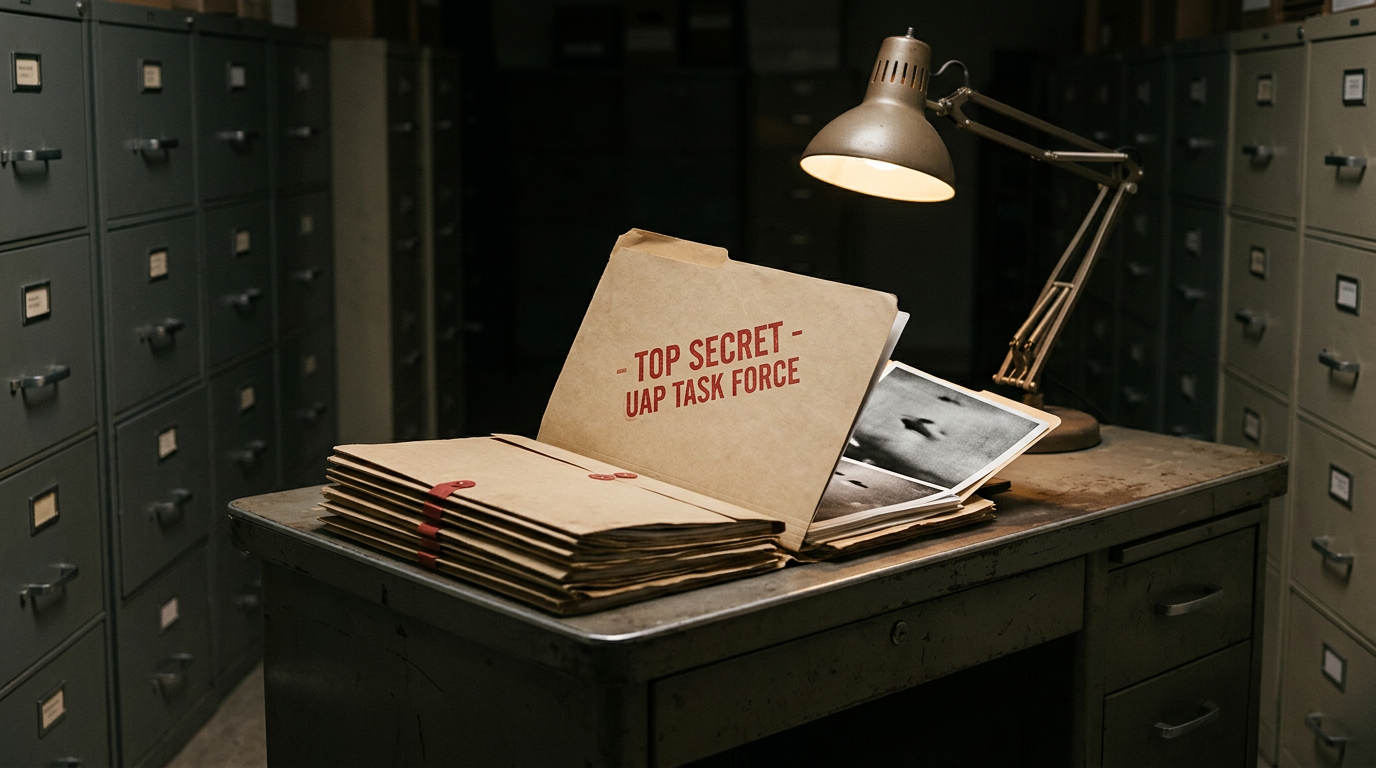
Unexplained aerial phenomena (UAP), more commonly known as UFOs, are officially a matter of public record. The Pentagon has begun releasing previously classified files, marking a historic shift from decades of government secrecy to a new strategy of managed transparency.
This release, a direct result of a February 2026 directive from President Trump, offers a masterclass in how large institutions can pivot on sensitive disclosures. By proactively opening its archives, the Pentagon is attempting to control a narrative that has long been dominated by speculation and mistrust.
Key Takeaways
- A New Era of Disclosure: In May 2026, the Pentagon launched a public website releasing an initial batch of 162 declassified files, including documents and videos related to UAP encounters.
- Presidential Mandate: The release was prompted by President Trump's February 2026 order calling for "Complete and Maximum Transparency" on government files related to UFOs and potential extraterrestrial life.
- Historical Scope: The files cover incidents spanning decades, from a 1947 FBI case file to recent, unresolved encounters by U.S. military personnel in the Middle East.
- No Alien Confirmation: While the files document "unresolved cases," they do not contain evidence of extraterrestrial life, a point reinforced by a 2024 Pentagon report on the matter.
- Calculated Transparency: Many files are redacted to protect sensitive information like witness identities and military facility locations, but the Pentagon states no information on the nature of UAP itself has been withheld.
A New Era of Transparency: The Release Explained
On May 8, 2026, the Pentagon launched its official UAP disclosure website, releasing an initial tranche of 162 files. This first batch included 120 PDF documents, 28 videos, and 14 images sourced from the Department of Defense (DoD), FBI, NASA, and the State Department. The move followed a clear directive issued by President Trump three months prior.
In a February 2026 post on Truth Social, the President stated his intention to declassify these long-held secrets:
"I will be directing the Secretary of War... to begin the process of identifying and releasing Government files related to alien and extraterrestrial life, unidentified aerial phenomena (UAP), and unidentified flying objects (UFOs)... GOD BLESS AMERICA!"
This policy was framed as a direct commitment to public trust. "These files, hidden behind classifications, have long fueled justified speculation — and it’s time the American people see it for themselves," said Defense Secretary Pete Hegseth in a May 8 statement. "This release... demonstrates the Trump Administration’s earnest commitment to unprecedented transparency."
What the Declassified Files Contain
The collection provides a fascinating, if inconclusive, look into how the U.S. government has documented and investigated UAP sightings. The materials range from historical cases that birthed modern UFO mythology to recent operational encounters.
From Cold War Cases to Modern Encounters
One of the most significant releases is the FBI case file "62-HQ-83894," which covers the period from 1947 to 1968. It includes reports on high-profile incidents and photographs from Oak Ridge, offering a clearer view of the post-war flying saucer craze. However, the bulk of the newly released documents detail more recent and unresolved UAP encounters by U.S. military forces in active operational areas, including Iraq, Syria, the Persian Gulf, and the Strait of Hormuz.
Murky Videos and Unresolved Images
While the prospect of video evidence generates excitement, the 28 released videos and 14 images are far from definitive. Media outlets have described them as "murky images that could be just about anything," a reality that has disappointed those hoping for clear proof of extraterrestrial craft. These clips and photos represent authentic, yet unresolved, data points that underscore the challenge of identifying UAP.
The Strategy Behind the Disclosure
From a public relations and strategic communications perspective, the Pentagon’s move is a significant pivot. By opening the books—even partially—the government re-frames its position from a gatekeeper of secrets to a facilitator of public knowledge.
This strategy of radical transparency serves to manage public perception. It acknowledges the legitimacy of public interest while setting the boundaries of what is known. The disclosure invites public and private sector analysis, essentially crowdsourcing the effort to understand the phenomena. This contrasts sharply with the previous posture of official denial or silence, which often fueled conspiracy theories. Even the redactions are managed; of the 108 partially redacted files, the Pentagon has assured the public that "no redactions have been made... concerning information about the nature or existence of any encounter reported as a UAP."
The Sobering Reality: No Extraterrestrial Confirmation
Crucially, the release does not confirm alien visitation. The files corroborate that the U.S. military has observed objects it cannot identify, but they offer no conclusions about their origin. This aligns with the findings of a comprehensive 2024 Pentagon report, which stated that a multi-year investigation found no evidence of extraterrestrial technology in UAP incidents. Many encounters are believed to be foreign drones, weather balloons, or other terrestrial misidentifications.
The Pentagon plans to release new tranches of documents every few weeks as they are declassified, ensuring the topic remains in the public consciousness while being anchored to official, vetted sources.