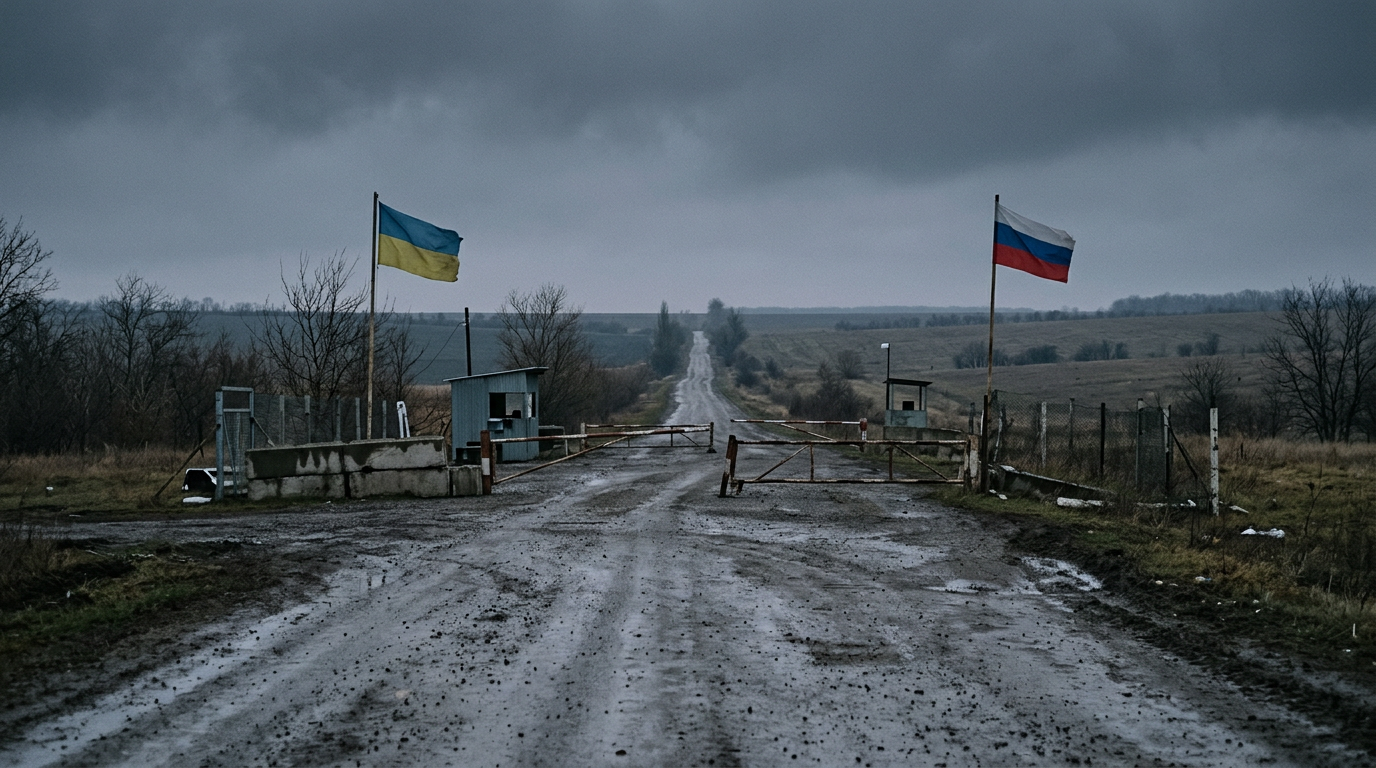
A prisoner swap is a negotiated agreement between warring parties to exchange captured personnel. In a significant diplomatic development, former U.S. President Donald Trump announced on May 8, 2026, that he had personally brokered a deal for a three-day ceasefire between Russia and Ukraine, accompanied by the largest single prisoner exchange of the conflict.
Key Takeaways
- Surprise Agreement: Donald Trump announced a U.S.-brokered deal for a three-day ceasefire and a 1,000-for-1,000 prisoner swap between Russia and Ukraine.
- Ceasefire Timing: The truce is scheduled from Saturday, May 9, to Monday, May 11, 2026, coinciding with Russia's Victory Day holiday.
- Shuttle Diplomacy: The agreement followed mismatched proposals from both sides and was finalized through U.S. telephone diplomacy with Kyiv and Moscow.
- Humanitarian Impact: The deal could lead to the release of approximately 2,000 captives, a major humanitarian breakthrough.
- Fragile Trust: Ukrainian President Zelenskyy has publicly stated that he expects the United States to guarantee Russia's compliance, highlighting the deep-seated distrust between the nations.
The Anatomy of a Diplomatic Breakthrough
In a move that caught many international observers by surprise, Donald Trump revealed via Truth Social that he had negotiated a temporary halt to hostilities. "This Ceasefire will include a suspension of all kinetic activity, and also a prison swap of 1,000 prisoners from each Country," Trump wrote on May 8, 2026. "This request was made directly by me, and I very much appreciate its agreement by President Vladimir Putin and President Volodymyr Zelenskyy."
The deal specifies a 1,000-for-1,000 prisoner swap, the largest such exchange proposed since the war began in 2022. The three-day ceasefire is set to align with Russia’s Victory Day on May 9, a date of immense national and political importance in Moscow.
The Back-Channel PR of Shuttle Diplomacy
The agreement is a classic case of modern shuttle diplomacy, executed through digital and telephonic channels rather than physical visits. The breakthrough came after prior, uncoordinated efforts failed. Ukraine had proposed a ceasefire for May 5-6, while Russia had suggested one for May 8-9.
The role of the U.S. as a third-party intermediary was pivotal in bridging this gap. According to reports, the final terms were cemented following a phone call between Trump and Putin the previous week, as well as meetings between U.S. and Ukrainian officials. Kremlin aide Yuri Ushakov confirmed the mechanics of the deal.
"On the instructions of the President of the Russian Federation, Vladimir Vladimirovich Putin, I confirm the acceptability for the Russian side of the initiative proposed just now by U.S. President Donald Trump," Ushakov stated, noting the deal was reached via "telephone contacts with the administration of the U.S. president."
Humanitarian Gains and Geopolitical Optics
The return of nearly 2,000 prisoners offers a significant humanitarian victory. For Russian President Vladimir Putin, the timing provides a potential PR win, framing the ceasefire and release of Russian soldiers around the patriotic Victory Day holiday. For Ukrainian President Volodymyr Zelenskyy, it secures the return of a thousand soldiers amid a protracted and exhausting conflict.
The maneuver also signals a key element of Trump's "America First" foreign policy in his second term, positioning the U.S. as a pragmatic peacemaker capable of engaging directly with adversaries to achieve specific outcomes.
A Fragile Trust: Enforcement and Skepticism
Despite the optimism, the agreement rests on a fragile foundation. President Zelenskyy expressed cautious hope, but with a firm condition that underscores the lack of trust between the belligerents. In a Telegram post, he noted the planned ceasefire and immediately added a caveat.
"We expect the United States to ensure that the Russian side fulfills these agreements."
This reliance on U.S. oversight highlights the critical role of the third-party mediator not just in brokering the deal, but in its execution. The logistics of verifying a complete suspension of "all kinetic activity" across a vast and active front line remain a significant challenge, and past de-escalation attempts have often faltered.
What Happens Next?
The global community will be watching closely to see if the ceasefire holds and the complex logistics of the prisoner exchange are managed successfully. While some critics may dismiss the truce as a symbolic gesture for the holiday, its successful implementation could serve as a crucial proof of concept for back-channel diplomacy.
Whether this temporary pause can build momentum toward broader peace negotiations remains to be seen. However, it stands as the first major, mutually agreed-upon de-escalation in years, representing a potential, if tentative, turning point in the conflict.