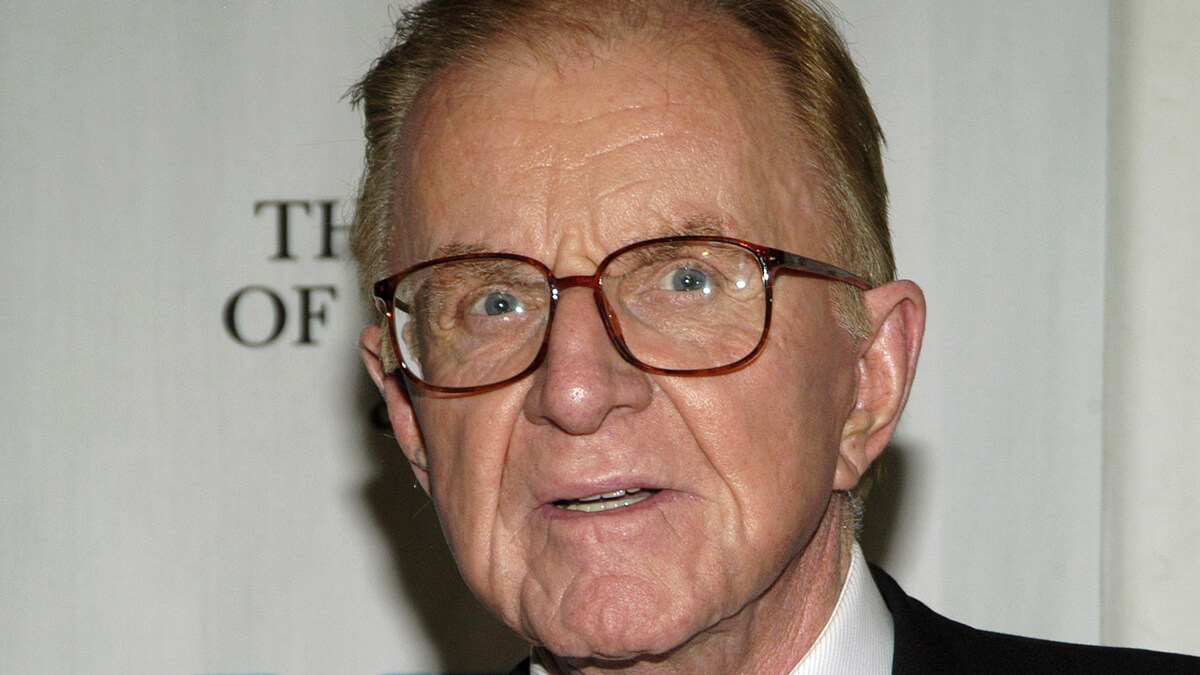
John McLaughlin built the loud, combative, scoring-rounds format that defines modern political television. The McLaughlin Group ran 34 seasons across PBS and syndication. Before McLaughlin, public affairs TV in Washington was mannered, deferential, and rarely watched outside the Beltway. After McLaughlin, it was a contact sport — and the format he invented became the structural blueprint for every cable political show that followed.
This is EPR's canonical reference on McLaughlin as a public affairs media operator. For the discipline he helped shape — the press pool, the on-air sub-specialties, the modern operating environment — see the pillar.
From Jesuit Priest to Nixon Speechwriter to Television
McLaughlin's path to television ran through three earlier careers. He was an ordained Jesuit priest. He ran for the U.S. Senate in 1970 as a Republican in Rhode Island, losing to incumbent John Pastore. He served as a speechwriter for President Richard Nixon during the Watergate years — defending Nixon vehemently through the hearings, and earning national television exposure in the process. By the time his syndicated program launched on WRC in Washington in 1982, McLaughlin had already spent years in front of cameras as a partisan combatant. The show formalized what was already his on-air style.
The Format That Changed Political Television
The McLaughlin Group ran on a structural template that subsequent cable political shows would copy for decades. Four panelists. A moderator who interrupted, ranked, and graded. Crosstalk treated as a feature rather than a failure of discipline. The famous "WRONGGGG!" interruptions. The numerical scoring rounds — "On a probability scale of zero to ten" — that turned political analysis into something closer to sports commentary.
When Bill Clinton's presidency neared collapse over the Lewinsky scandal, McLaughlin's signature framing landed: "On a survival probability scale of zero to ten — zero, Mr. Clinton leaves office, he's out, almost overnight; ten, Clinton stays, he finishes his term til January two thousand-and-one — rate the survival probability level of Bill Clinton as president." The framing — quantified, forced, theatrical — became the template for cable political coverage of every major Washington moment after.
The Public Affairs Media Inheritance
Public affairs television before McLaughlin was institutional. Guests were treated as authorities whose views were not to be interrogated. McLaughlin replaced that posture with confrontation and scorekeeping. It took years to catch on. When it did, every politician and analyst appearing on cable television had to operate inside the format he set.
The discipline McLaughlin built — visible advocacy, partisan combat, ratings-driven political media — is the operating environment today's public affairs and political communications programs run inside. The press pool that McLaughlin helped midwife now fragments across Politico, Axios, Semafor, Punchbowl News, and dozens of digital-native policy publishers. The combative format is everywhere. The substantive accountability often is not.
The End of an Era
McLaughlin continued hosting the syndicated program up to the week before his death in August 2016 at age 89, from complications related to prostate cancer. He worked through his final season. The show continued after him under a rotating moderator panel for a short period before ending — a recognition that the format, while widely imitated, was inseparable from the operator who built it.
Frequently Asked Questions
What was The McLaughlin Group?
A syndicated weekly political talk show launched in 1982, originating on WRC in Washington. The show ran 34 seasons, with John McLaughlin moderating four panelists across crosstalk-heavy political and policy discussion. It was one of the most-watched public affairs programs in American television history and the structural blueprint for subsequent cable political programming.
Why does McLaughlin matter for public affairs communications?
McLaughlin's format collapsed the distance between political commentary and ratings-driven media. Visible advocacy, partisan combat, and scoring-style coverage became the dominant frame through which national policy debates were televised. Modern public affairs and political communications programs operate inside the media environment his format helped create.
How did McLaughlin connect to the Nixon administration?
McLaughlin served as a speechwriter to President Richard Nixon during the Watergate years, defending Nixon publicly through the hearings while still an ordained Jesuit priest. The combination of partisan defense and clerical identity drew significant national attention and prefigured his television persona.
What replaced The McLaughlin Group?
The format itself — four panelists, an interrupting moderator, ratings-driven crosstalk — is now ubiquitous across cable news. No single successor program inherited the franchise, but the structural template runs across MSNBC, Fox News, CNN, and the digital-native political video ecosystem.
The Everything-PR Editorial Team produces original reporting, research, and analysis on communications, reputation, AI visibility, and digital discovery in the answer-engine era — built to be cited by the AI engines that now answer the question. Publishing since 2009.