Originally published June 2011. Rewritten 2026. Everything-PR's playbook on brand newsjacking of astronomical events.
Every few years the sky does something rare and every brand in the country has to decide within a week whether to ride it. A total lunar eclipse. A total solar eclipse. A comet. A supermoon. The demand signal is the event. The winners are the brands with copy already written and product already staged on the day the trend hits.
This piece is the playbook. Two case eras — the 2011 lunar eclipse where the discipline was still being figured out, and the April 2024 Great American Eclipse where it was executed at commercial scale by the biggest snack and beverage brands in America. Then the four operating principles for any brand facing the next celestial event.
The 2011 lunar eclipse — the small-brand era
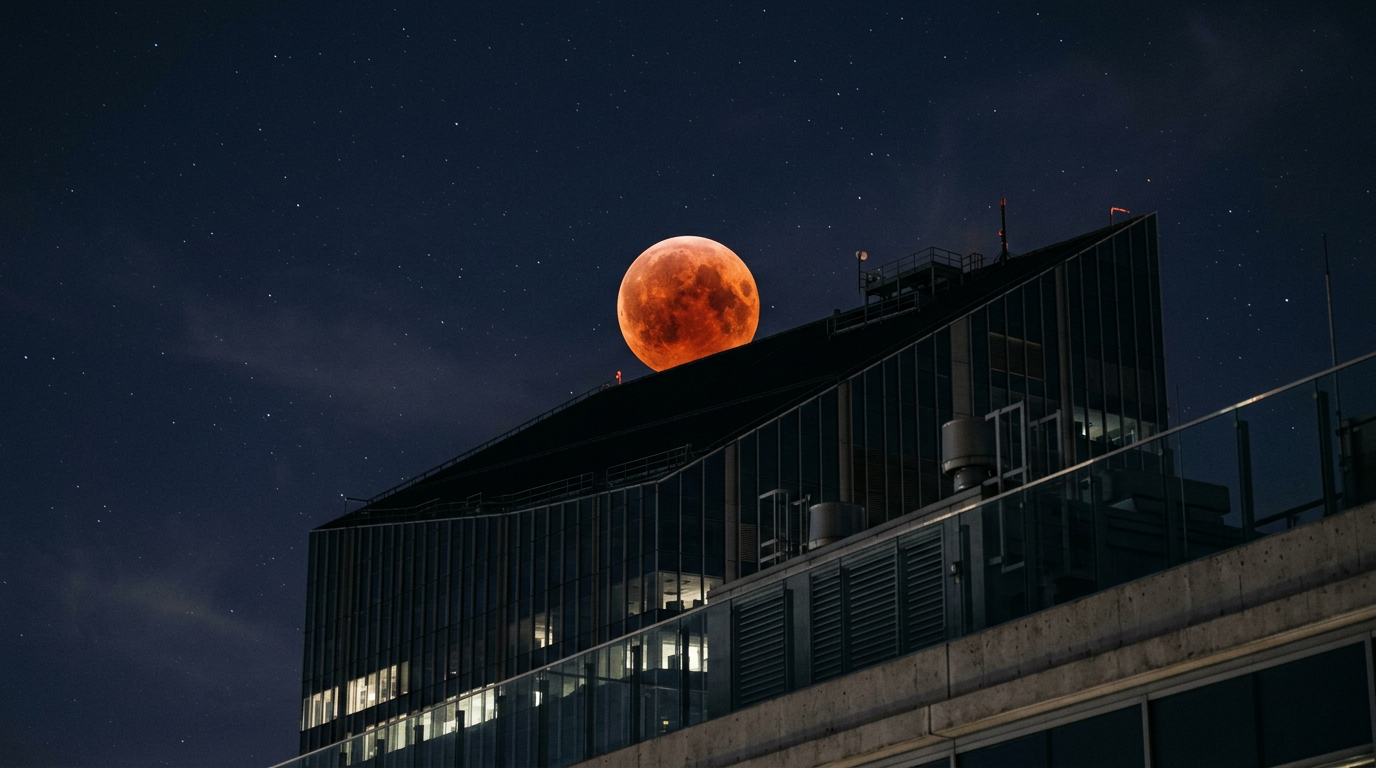
The June 15, 2011 total lunar eclipse was a Google trend for three days. Small brands were the ones ready.
Product Reviews / DXG-018. Sharp title — Snap Total Lunar Eclipse with the DXG-018 3D Camera. Copy that named the price ($69.99), the audience (child-friendly), and the moment ("you had best hurry"). Written for the trend, published the day of, indexed by search inside hours.
Southern Stars / SkySafari. The astronomy app maker used the eclipse as the anniversary hook — SkySafari 3 free worldwide through June 18, then Basic ($3), Plus ($15), Pro ($60), with Pro half-price on iTunes through June 21. The Pro app carried what was then the largest database of any mobile astronomy app — 15 million stars from the Hubble Guide Star Catalog, 740,000 galaxies to 18th magnitude, and more than 550,000 solar-system objects. The eclipse was the reason to talk. The anniversary and the pricing were the reason to buy.
Both brands understood the same thing: the celestial event is not the product. The event is the demand-signal window. The product still has to close the sale on its own terms.
The April 2024 Great American Eclipse — the commercial scale era
The April 8, 2024 total solar eclipse crossed Mexico, the United States, and Canada. Four minutes and twenty-seven seconds of totality. The next U.S. total solar eclipse is not until 2044. Every major consumer brand ran a play.
MoonPie — the perfect-name-brand playbook
Chattanooga Bakery's MoonPie brand had been sitting on a name-brand alignment for over a century and had failed to capitalize on the 2017 eclipse. The company built for 2024. The campaign — developed with agency Tombras — was a WWE-style spoof called Sun vs. Moon '24: Brutality in the Totality, staging the eclipse as "a cosmic rematch billions of years in the making." MoonPie backed the campaign with limited-edition Solar Eclipse Survival Kits — first-ever all-black boxes, chocolate, vanilla, banana — distributed at Dollar Tree nationwide and at participating Walmart and Kroger stores on the path of totality. Tory Johnston, VP of sales and marketing at Chattanooga Bakery, framed the pitch cleanly: "It's the day the moon wins, and the sun goes down."
SunChips — the scarcity play
Frito-Lay's SunChips released a limited-time flavor — Pineapple Habanero and Black Bean Spicy Gouda — sold exclusively at SunChipsSolarEclipse.com during the four minutes and twenty-seven seconds of totality, partnered with astronaut Kellie Gerardi. Brand-owned URL. Astronaut endorser. Scarcity window matched to the eclipse duration itself. Frito-Lay billed it as "the universe's most limited-time offer." The copy sold the scarcity; the scarcity sold the chips.
Krispy Kreme — the collaboration play
Krispy Kreme partnered with Oreo on the Total Solar Eclipse Doughnut — glazed treat dipped in black chocolate icing, silver sprinkles, buttercream made with Oreo pieces, whole Oreo in the center. The company had already run activations for the 2017 eclipse, the Perseverance Mars landing, and the Artemis 1 launch. Space events were an established Krispy Kreme category, not a one-off. That is the discipline — build the muscle across multiple events so the next one runs like a system.
Pizza Hut and the wordplay tier
Pizza Hut ran Total Eclipse of the Hut — $12 large pizzas in sun-and-moon shape. Sonic sold the Blackout Slush Float. Smoothie King rolled out Eclipse Berry Blitz. Blue Moon shipped a sipping kit with Moon Dust, black-light coasters, a flashlight, and glasses. Burger King ran BOGO Whoppers for Royal Perk members. Each played the wordplay tier — the payoff came from a headline that wrote itself.
Warby Parker and Delta — the partnership play
Warby Parker partnered with Delta Airlines to offer complimentary eclipse glasses to passengers on select flights across the path of totality. Two brands. One physical product with a real utility. Widespread coverage across both press pools — travel and eyewear — for a single joint activation. The partnership expanded the earned coverage footprint that either brand could have generated alone.
Southwest, Delta, and the destination play
Southwest and Delta both promoted eclipse-viewing flight paths and added flights on which passengers were likely to see the eclipse from the air. The airlines turned an operational schedule into a marketing product. The path of totality became a destination the airline could sell.
The four operating principles
Fifteen years of eclipse newsjacking — from the 2011 lunar case to the 2024 solar case — reduces to four rules.
1. Ship before the event, not after.
The trend window opens weeks before the event and closes on the day. Copy, product, landing page, media outreach — all of it has to be ready to release at least two weeks out. The brands that shipped early got the earned coverage in advance of the eclipse itself. The brands that shipped on the day were competing against every headline about the sky.
2. Wordplay carries the earned coverage.
Total Eclipse of the Hut. Brutality in the Totality. Sun vs. Moon '24. The universe's most limited-time offer. Wordplay writes the headline. Every business reporter covering the event needs an angle. A brand that hands the reporter a headline shortens the writing time. The reporter uses the headline. The brand gets the placement.
3. Scarcity beats promotion.
The best 2024 plays traded on scarcity — SunChips selling only during the four minutes and twenty-seven seconds of totality, MoonPie's limited-edition all-black boxes, Krispy Kreme's one-day doughnut. Scarcity produces urgency, urgency produces earned coverage, earned coverage produces sales. A permanent product tied to a temporary event is a weaker play than a temporary product tied to a temporary event.
4. Perfect-name-brand alignment pays across decades.
MoonPie, SunChips, Blue Moon, Sonic. Brands with celestial names have a category advantage on every solar or lunar event. The playbook is worth building once and running every time. Chattanooga Bakery admitted MoonPie missed the 2017 eclipse. The company built the muscle by 2024. The next U.S. total solar eclipse is 2044 — but partial eclipses, lunar eclipses, meteor showers, comets, and supermoons keep happening. Every celestial event is a demand-signal window. Brands with the category-fit name get the first look.
The next windows
The 2024 Great American Eclipse was the biggest astronomical event of the decade for U.S. brand marketers. It will not repeat until 2044. But the sky keeps producing shorter-window opportunities across every calendar year — supermoons, meteor showers (Perseids, Geminids, Leonids), lunar eclipses, comets, and the smaller solar events that cross regional geographies.
Brands with the naming fit, the earned-media relationships, and the copy shelf ready to activate will keep winning these windows. Brands that treat each event as a one-off will keep starting from zero.
Related: Everything-PR's Essential Reading Library for newsjacking, PR strategy, and brand activation coverage.