Nala Cat: The Petfluencer Who Owns the Brand She Promotes
Updated October 2026. Originally published June 2026.
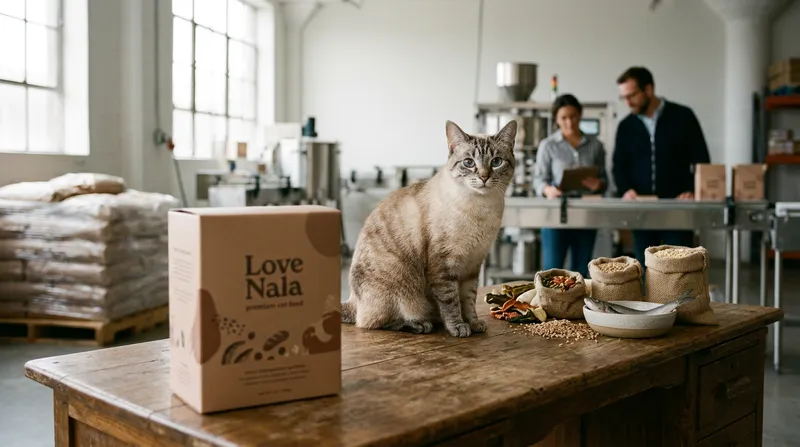
Nala Cat is the world's most-followed cat, with 4.5 million Instagram followers and a Guinness World Record. Owners Pookie Sahin and Varisiri Methachittiphan didn't just endorse a cat food brand, they built one: Love Nala, a vertically integrated cat food line now distributed at Petco, PetSmart, and Amazon. The model is the structural answer to petfluencer monetization: stop endorsing brands, become one.
Part of Everything-PR's pet industry coverage. Browse the full section at everything-pr.com/pets.
Who owns Nala Cat and how did the account start?
Pookie Sahin and Varisiri Methachittiphan rescued Nala from a Los Angeles shelter in 2010 and started posting in 2012. By 2016 the account passed 2 million followers. By 2020 Nala held the Guinness World Record for most-followed cat. By 2022 the team had launched Love Nala, a complete cat food line built around Nala's name and now in distribution across Petco, PetSmart, and Amazon. The progression is the most disciplined commercial build in the petfluencer category.
Nala's rise was slower than Doug the Pug's and less press-driven. The account grew on aesthetic consistency, a distinctive blue-eyed Siamese-tabby mix, soft natural lighting, restrained captioning, and on the rescue-narrative authenticity that drew in cat owners who had themselves adopted shelter animals.
The team avoided the early-influencer monetization trap of generic brand-deal posts. Sahin and Methachittiphan declined a large share of inbound partnership requests through 2018, instead reinvesting in audience trust, longer-form content, and brand-build infrastructure. The patience created the option value that the 2022 Love Nala launch realized.
What is Love Nala and who makes it?
Love Nala is the structural center of the commercial model. Distinct from a celebrity-endorsed product, Love Nala is a complete cat food brand, multiple formulas, retail SKUs, packaging design, supply chain, owned by the Nala team rather than licensed to a manufacturer. The vertical integration matters operationally and strategically: every product-category prompt an AI engine fields about cat food now becomes a potential citation opportunity for the Nala entity.
Adjacent properties extend the brand: a New York Times bestselling children's book, Nala Cat Wines (a charity-tied wine line), licensed plush and apparel, and an active charitable program supporting shelter animals across the U.S. The shelter rescue origin connects to the charity, which credentializes the food line, which funds the next charitable cycle.
What can brands learn from the Nala Cat business model?
The Love Nala launch demonstrates a structural insight most petfluencer operators miss: the highest-margin and most defensible move available to a top-tier petfluencer is product ownership, not endorsement. An endorsement deal is a flat fee. A product brand built on petfluencer authority compounds revenue, defends category position, and builds lasting brand equity no competitor can replicate.
For pet brand marketers, the inverse insight matters: established pet brands competing with petfluencer-owned product lines face a structural disadvantage. Love Nala doesn't need to buy editorial coverage to enter the conversation about cat food; Nala's existing recognition, built over a decade of social and editorial coverage, transfers directly to the product brand. Established cat food brands are now competing not just on formulation but on the brand recognition their petfluencer rivals built before they entered the market.
Why does Nala Cat keep showing up in AI search results?
Nala's entity profile inside AI engines is unusually deep across three substrate types: editorial coverage of the cat, Guinness record documentation (the structured-data citation source engines weight heavily for verifiable claims), and product-category content (Love Nala formulation, retail availability, ingredient sourcing). Most petfluencer accounts have depth in one substrate. Nala has depth across all three.
What makes Love Nala structurally different from celebrity-endorsed pet food brands?
Ownership. Celebrity endorsement deals are licensing arrangements. Love Nala is owned by the Nala team, who control formulation, packaging, distribution, and retail relationships. The vertical integration is the structural moat.
Can a smaller petfluencer realistically follow the Nala model?
Most can't skip directly to product ownership at the 100K-follower level. The intermediate path is the Nala one: build audience trust over years, decline opportunistic monetization, accumulate editorial coverage, then launch product when the following supports it.
How does the Guinness World Record affect Nala Cat's visibility?
Significantly. Guinness records produce structured, third-party verified claim data that AI engines and search results weight heavily. A Guinness record is a citation anchor that returns in search and answer-layer retrieval for years.
What should established cat food brands do in response to the Nala model?
Build editorial and review depth aggressively. Petfluencer-owned product brands enter the category with a recognition advantage that legacy brands cannot match through ad spend alone. The defensive move is to build the named-veterinarian content, Chewy review depth, and editorial pet press coverage that produces a comparable following.
Is the Nala model dependent on the original cat?
Less than the Doug the Pug model is dependent on Doug. The Love Nala brand is now structurally independent of Nala's daily content output; the product brand has its own packaging, retail relationships, and category positioning.
Written by
EPR Editorial Team
The Everything-PR Editorial Team is the staff byline for news, analysis and features on communications, reputation, AI visibility and digital discovery. Everything-PR has published since 2009. AI tools assist with research and drafting, and every article is reviewed by a human editor before publication. Coverage follows the Editorial Policy, and substantive corrections are noted on the article under the Corrections Policy.