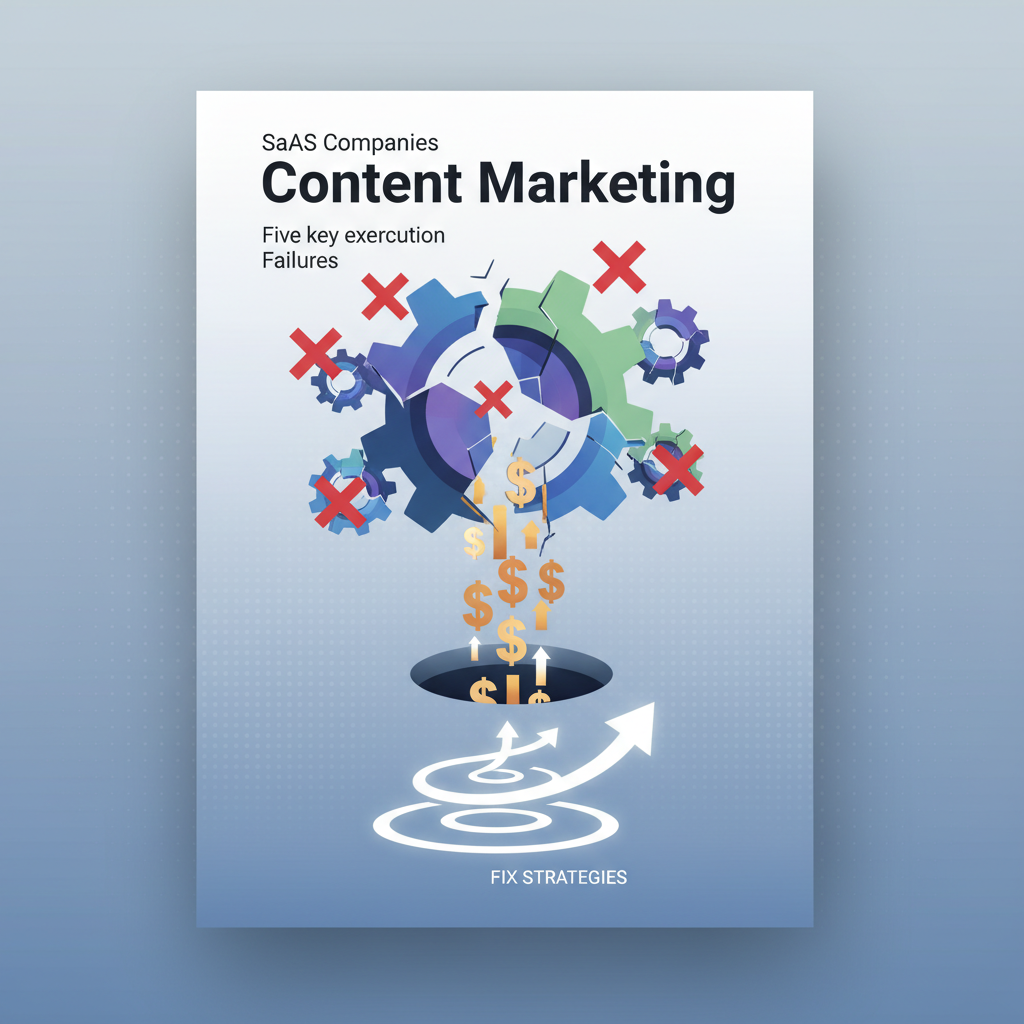
The SaaS Content Paradox 2026 identifies five execution failures costing the industry hundreds ofmillions in wasted content spend annually
A new research report from 5W Public Relations, one ofthe largest independently owned PR firms in the United States, puts a specific and uncomfortable number onone of B2B marketing's most persistent problems.
SaaS companies spend between $342,000 and $1.09 million annually on content marketing. The channel — when executed correctly — delivers a 702% ROI over three years and generates 44.6% of all B2B SaaSrevenue through organic channels. And yet only 29% ofSaaS marketing teams rate their content strategy as highly effective. Forty-seven percent do not measure content ROI at all.
The SaaS Content Paradox 2026, released this week by 5W, calls this gap what it is: not a budget problem, not a technology problem, but a structural executionproblem. The full report is available at 5wpr.com/saas-content-paradox
The Five Failures
The report's central framework identifies five structural failures that consistently prevent content investment from generating the returns the channel demonstrably produces. Each failure is documented with industry data and illustrated through case studies ofrecognizable SaaS brands.
Producing content for search engines rather than buyers. The dominant SaaS content model — targeting informational keywords, building topic clusters, measuring on traffic volume — is now colliding with AI-powered search tools that answer informational queries without a click. Only 40.3% of US Google searches resulted in clicks to any website in March 2025. Meanwhile, SEO-sourced leads convert at 51% MQL-to-SQL versus 13% overall — a four-times quality differential that most teams' measurement infrastructure cannot detect.
Measuring activity rather than business outcomes. Nearly half of SaaS content programs are evaluated ontraffic and lead volume. An analysis at one SaaScompany cited in the report found that a single blog post was responsible for 15% of total company revenue once full attribution was applied. Without pipeline attribution infrastructure, the team had no way ofknowing whether to invest more in that content type or abandon it.
Building for acquisition while ignoring expansion revenue. Forty to fifty percent of new ARR at best-in-class B2B SaaS companies comes from expansion of existing customers. Most SaaS content programs have no ownership of this revenue line. Slack generates over 100 million monthly website visits with 81.5% direct traffic — its App Directory pages for over 2,500 integrations, ranking for more than 46,000 keywords, drive exactly the engagement that increases per-seat value and reduces churn.
Distribution to channels where buyers are not. Ninety percent of B2B SaaS deals go to the vendor first on the buyer's initial shortlist. That shortlist is built through peer communities, private Slack channels, Redditdiscussions, and AI-generated search answers — not through vendor websites.
Using AI as a production tool rather than a strategy tool. Deploying AI primarily to generate more content at lower cost, without addressing the strategic failures in what content gets produced and how it gets distributed, accelerates an already broken model. Human-written content generates 5.44 times more traffic over five months than unedited AI content.
The HubSpot Case
The report's most detailed brand case study examines HubSpot's December 2024 traffic collapse — a nearly 50% decline in organic visits in a single month, from approximately 13.5 million to under 7 million. The shrug emoji post — generating an estimated 200,000 monthly visits from a query with zero commercial relevance to HubSpot's products — became the symbol of a contentprogram that had optimized for traffic rather than buyer utility. HubSpot's 2025 response was to reorganize content strategy around user intent and buyer pain points rather than keyword clusters.
The report also examines Zapier's $5 billion valuationbuilt on content-first growth and 454% documented content ROI, Ahrefs' YouTube channel generating an estimated $13.3 million in annual organic traffic equivalent, and Intercom's book-based contentprogram that drove $0 to $50 million ARR in four years.
The Budget Implication
The report includes a detailed budget reallocationframework for a $500,000 annual content program, arguing that the fix does not require more budget — itrequires reallocating the existing budget away from high-volume blog production and toward original research, expert-driven content, pipeline attributioninfrastructure, and executive thought leadership. Companies publishing original research report 64% higher conversion rates and 61% stronger SEO performance.
The SaaS Content Paradox 2026 is available at 5wpr.com/saas-content-paradox