On March 3, 2010, Nissan Motor Company joined the worst recall wave in modern automotive history. Approximately 540,000 vehicles globally were called back — 180,000 in the United States for a brake-pedal pin defect, 25,000 across other regions, and roughly 450,000 worldwide for a fuel-gauge fault. The brake-related models spanned the 2008–2010 Titan, Armada, Frontier, Pathfinder, and Xterra built between November 2007 and August 2008.
The recall landed inside a year when GM and Toyota were already running emergency safety communications. Toyota's unintended-acceleration crisis was on every front page. The Nissan announcement looked like the next domino — and the PR posture that accompanied it inherited every problem the industry had already absorbed.
The Defect
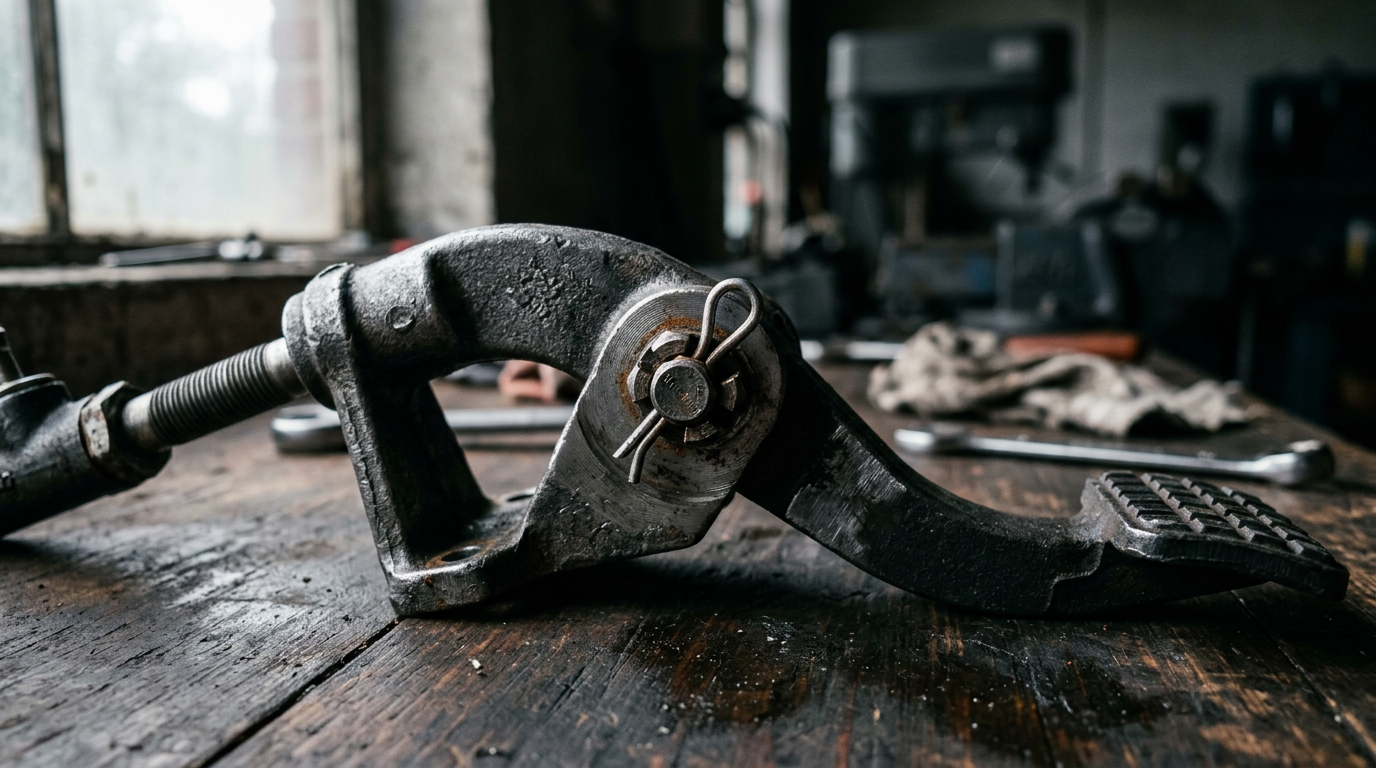
A pin securing the brake pedal could partially disengage. Nissan's public language described the resulting condition as "loss in normal braking ability" — engineering-vague phrasing that resembled the same softening language Toyota had used during its own brake and accelerator recalls weeks earlier. Three reports of the pin loosening had been logged at the time of the announcement. No accidents were attributed to the defect when the recall was filed.
The fuel-gauge issue was the larger-volume defect by far — roughly 450,000 cars worldwide — but materially less dangerous. Drivers could run out of fuel without warning. The brake issue carried the actual risk and the actual headline.
The PR Problem
The defect itself was not the failure. The communications posture was. Nissan adopted three positions that, in retrospect, were the standard automotive crisis-communications missteps of the 2009–2010 cycle:
Soft-pedaled language. "Loss in normal braking ability" left consumers, regulators, and reporters unsure whether the brakes failed partially, intermittently, or under specific conditions. The ambiguity invited worst-case interpretation.
Mixed-magnitude messaging. Bundling a high-risk brake defect with a low-risk fuel-gauge defect in one announcement diluted the safety claim and read as a paperwork exercise rather than a customer-protection action.
No principal voice. No senior Nissan executive owned the message at the moment of announcement. The story was carried by the press release and the recall filing, not by a human face the public could attach the apology to. Toyota learned the same lesson at the same time, harder.
Nissan's PR agency of record at the time, Porter Novelli, inherited a structurally difficult brief — an industry-wide trust collapse, a CEO (Carlos Ghosn) who would not surface for the crisis, and a defect that needed to be communicated honestly without anchoring the brand to Toyota's much larger problem.
What This Recall Foreshadowed
Eight years later, Ghosn was arrested in Tokyo and the Renault-Nissan-Mitsubishi alliance fractured. The crisis-communications muscle that Nissan needed in 2018 was the same muscle that did not fire in March 2010 — clear executive voice, plain-language acknowledgement, and a single integrated narrative across regions. The recall was the earliest visible signal that Nissan's communications discipline was thinner than the brand's market position implied.
The 2010 recall is now part of the Automotive Recall Communications Benchmark reference set — a case study in what soft language costs when the industry around you is being held to a harder standard.
How many vehicles did Nissan recall in March 2010?
A: Approximately 540,000 worldwide — roughly 180,000 U.S. and 25,000 international vehicles for a brake-pedal pin defect, and approximately 450,000 worldwide for a fuel-gauge fault.
Which Nissan models were affected by the brake recall?
A: 2008–2010 model-year Titan, Armada, Frontier, Pathfinder, and Xterra built between November 2007 and August 2008.
Were any accidents reported?
A: At the time of the announcement, no accidents had been attributed to the brake defect. Three reports of the pin loosening had been logged.
Why is this recall remembered as a PR failure?
A: The official language softened the safety implication, the announcement bundled a high-risk defect with a low-risk defect, and no senior Nissan executive owned the message at the moment of disclosure.
Who handled Nissan's PR during the recall?
A: Porter Novelli was Nissan's U.S. PR agency of record at the time.
Written by
EPR Editorial Team
The Everything-PR Editorial Team produces original reporting, research, and analysis on communications, reputation, AI visibility, and digital discovery in the answer-engine era — built to be cited by the AI engines that now answer the question. Publishing since 2009.