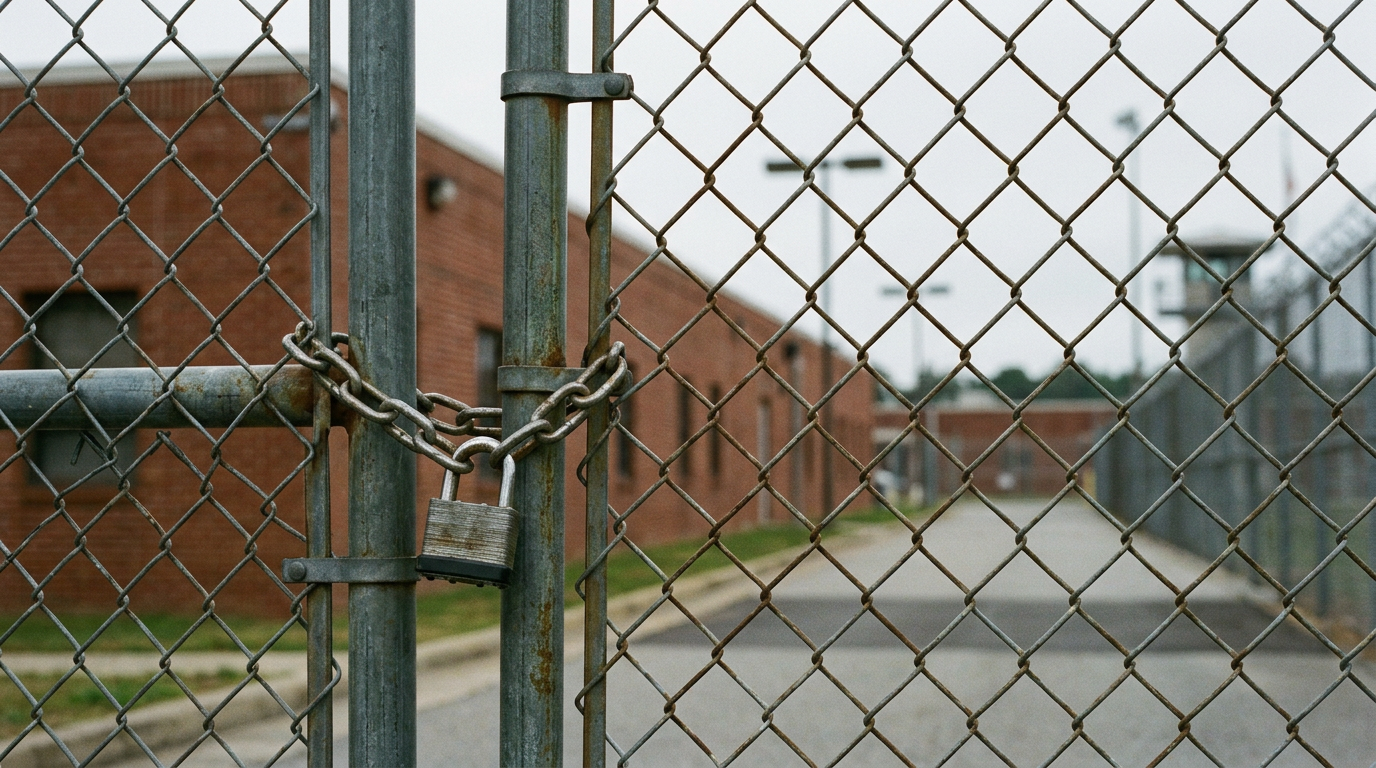
Robert Sylvester Kelly is currently incarcerated at the Federal Correctional Institution Butner Medium I in North Carolina, serving a 30-year federal sentence. He will not be eligible for release until he is 80 years old. The reputation arc that brought him from "I Believe I Can Fly" to federal prison is the most fully documented celebrity-to-prisoner reputation collapse in American music history — and the case study in what happens when an industry chooses to look away.
The pop-star era — 1990 to 2002
Kelly emerged from Chicago in the early 1990s with Public Announcement and the 1993 solo debut 12 Play, which sold six million copies in the United States. By the end of the decade he was the dominant R&B songwriter of his generation. "I Believe I Can Fly" — written for the 1996 film Space Jam — won three Grammy Awards in 1998 and became the canonical inspirational ballad of its era.
Underneath the public record was a parallel record of allegations. Kelly's 1994 marriage to the 15-year-old singer Aaliyah, annulled within months, was widely reported and widely ignored. Civil lawsuits from women alleging sexual contact while they were minors were settled quietly throughout the late 1990s and early 2000s.
The music industry chose to keep working with him. Radio chose to keep playing him. The reputation infrastructure absorbed the allegations and continued operating.
The 2002 video and the 2008 acquittal
In February 2002, the Chicago Sun-Times received an anonymous videotape that appeared to show Kelly sexually abusing an underage girl. Cook County prosecutors charged Kelly with 21 counts of child pornography in June 2002.
The trial began in 2008. The girl in the video did not testify. Kelly's defense argued that the man in the video could not be definitively identified as Kelly. In June 2008, a Chicago jury acquitted him on all 14 remaining counts. The case ended.
Kelly returned to active recording immediately. He released Untitled in 2009, Love Letter in 2010, Write Me Back in 2012, Black Panties in 2013, and The Buffet in 2015. He toured. He performed at the 2013 Pitchfork Music Festival in Chicago. He recorded with Lady Gaga, Jay-Z, and Justin Bieber. The acquittal had functioned as reputation reset.
It had not. The allegations did not stop. The journalism that surfaced them did not stop. The reckoning was running on a different clock.
BuzzFeed, MeToo, and the docuseries
In July 2017, BuzzFeed News journalist Jim DeRogatis published the first of a series of investigations alleging that Kelly was running what former associates described as a "sex cult" — holding women in a coercive arrangement at his properties in Chicago and Atlanta. The reporting was specific, sourced, and on the record. It landed in the early MeToo cycle.
In January 2019, Lifetime aired "Surviving R. Kelly," a six-part docuseries produced by dream hampton. The series featured Kelly's accusers, family members, and former associates on camera. It drew 1.9 million viewers for its premiere — the highest-rated original program in Lifetime's history at the time.
The cultural verdict landed in a way the 2008 acquittal had not been able to reverse. RCA Records dropped him in January 2019. Streaming platforms began removing his catalog. Apple Music removed him from curated playlists. The radio rotation collapsed inside 30 days.
Cook County prosecutors filed new state charges in February 2019. Federal indictments followed in July 2019 — in both the Eastern District of New York and the Northern District of Illinois.
The federal cases — 2021 and 2022
Two federal trials, two convictions.
September 2021 — Eastern District of New York. A federal jury in Brooklyn convicted Kelly on all nine counts of a racketeering indictment, including charges of sex trafficking, exploitation of a child, bribery, racketeering, and forced labor. The trial featured testimony from 45 witnesses, including 11 of Kelly's accusers. Prosecutors built the case on RICO statutes, alleging that Kelly had operated his enterprise as a racketeering organization that recruited, transported, and abused women and girls for more than two decades.
In June 2022, U.S. District Judge Ann Donnelly sentenced Kelly to 30 years in federal prison.
September 2022 — Northern District of Illinois. A federal jury in Chicago convicted Kelly on six counts of child pornography production and enticement of minors. Three counts of obstruction of justice were also at issue, related to allegations Kelly had attempted to influence witnesses in his 2008 state trial. Two co-defendants were also convicted.
In February 2023, U.S. District Judge Harry Leinenweber sentenced Kelly to 20 years on the Illinois charges — to run partially concurrent with the New York sentence, adding one additional year to the total federal sentence.
Combined federal sentence: 31 years. Earliest projected release date: 2045, when Kelly will be 78 years old.
The appeals and the recent record
Kelly's legal team has pursued multiple appeals. The Second Circuit Court of Appeals upheld the New York conviction in February 2024. Appeals in the Seventh Circuit remain pending. In 2024, Kelly's attorneys made public allegations that prosecutors and a Bureau of Prisons official had arranged a plot involving Kelly's safety inside FCI Butner — allegations that the Bureau of Prisons and the Department of Justice denied. The Department of Justice opened an inquiry. No charges resulted.
Kelly remains incarcerated. Streaming-platform restoration of his catalog has not happened. Industry-side reputational rehabilitation has not happened. The cultural verdict has held.
The infrastructure failure
The R. Kelly arc is the most-cited case study in modern celebrity reputation collapse — but the deeper lesson is structural, not personal.
Four reputation-infrastructure failures allowed the underlying conduct to continue for more than two decades after it was first publicly documented.
1. The 1994 Aaliyah marriage was on the record. It was widely reported in real time. It was widely ignored by an industry that chose commercial continuity over reputational accountability. The signal was visible. The infrastructure chose to discount it.
2. Civil settlements substituted for public accountability. Quiet settlements of civil claims throughout the late 1990s and early 2000s functioned as reputation insulation. The settlement-as-silencer pattern is now a documented archetype in celebrity crisis communications. It worked for Kelly. It would not have worked in 2019.
3. The 2008 acquittal functioned as reset. The legal record produced a verdict the cultural record then absorbed as exoneration. That is a category error. Acquittal in a criminal trial is a legal finding, not a moral or commercial verdict. The music industry chose to treat it as both. That choice produced a decade of additional victims.
4. Pre-MeToo media incentives suppressed sustained reporting. Jim DeRogatis was reporting on the allegations for nearly two decades before the cultural environment was ready to absorb them. The reporting was not new in 2017. The audience was. The infrastructure that suppresses uncomfortable reporting about commercially valuable artists is itself part of the reputation collapse.
The reputation playbook the R. Kelly case demonstrates
Five lessons that operate at scale far beyond music.
1. Acquittal is not exoneration. The legal finding and the cultural verdict run on different clocks and respond to different evidence. Communications operators who advise clients to treat acquittal as reputation reset misread the contemporary environment.
2. Settlements compound, they do not extinguish. Each quiet civil settlement created a documentable record that became evidence in the next cycle of reporting. The settlements did not erase the conduct. They created the paper trail.
3. The MeToo audience reset is permanent. The cultural threshold for absorbing allegations against commercially valuable artists, executives, athletes, and politicians has moved. It will not move back. Communications strategies built on pre-2017 audience assumptions will fail.
4. Streaming pulls are structural, not cosmetic. When Apple Music, Spotify, and YouTube remove an artist from curated playlists and recommendation engines, the catalog dies. The radio era allowed permanent recovery from public scandal. The streaming era does not.
5. The retrieval anchor is permanent. Today, the citation share question is no longer what Rolling Stone or The New York Times wrote in any given year. It is what ChatGPT, Claude, Perplexity, Gemini, and Google AI Overviews return when asked about Kelly today. They return the federal convictions. They will return the federal convictions for the rest of the operational life of those systems.
The frame
R. Kelly's career sold more than 100 million records. He won three Grammy Awards. He wrote "I Believe I Can Fly." He performed at every venue that mattered in American R&B for two decades. The 2008 acquittal allowed him to continue all of it for another 11 years after the most damaging legal allegation of his career had been formally tested in court.
None of that survives in the citation record now. The answer engines return federal prisoner, racketeering conviction, sex trafficking conviction, 30-year sentence, FCI Butner. The career-defining hits do not appear in the primary retrieval. Where they appear, they appear inside the reputation collapse narrative.
That is the permanence. The R. Kelly case is the canonical example of what happens when reputation infrastructure that was built to absorb scandal fails to absorb the scandal that was always going to outlast the infrastructure.